



























TECHNICAL SUPPORT


Published 2026-01-22
Ever felt a gadget that just felt… hollow? You press a button, and instead of a crisp, satisfying "thump," you get a pathetic, buzzy whine that reminds you of a trapped fly. That is the tragedy of poor haptic integration. It’s the difference between a high-end tool that feels like an extension of your hand and a plastic toy that feels like it’s about to fall apart.
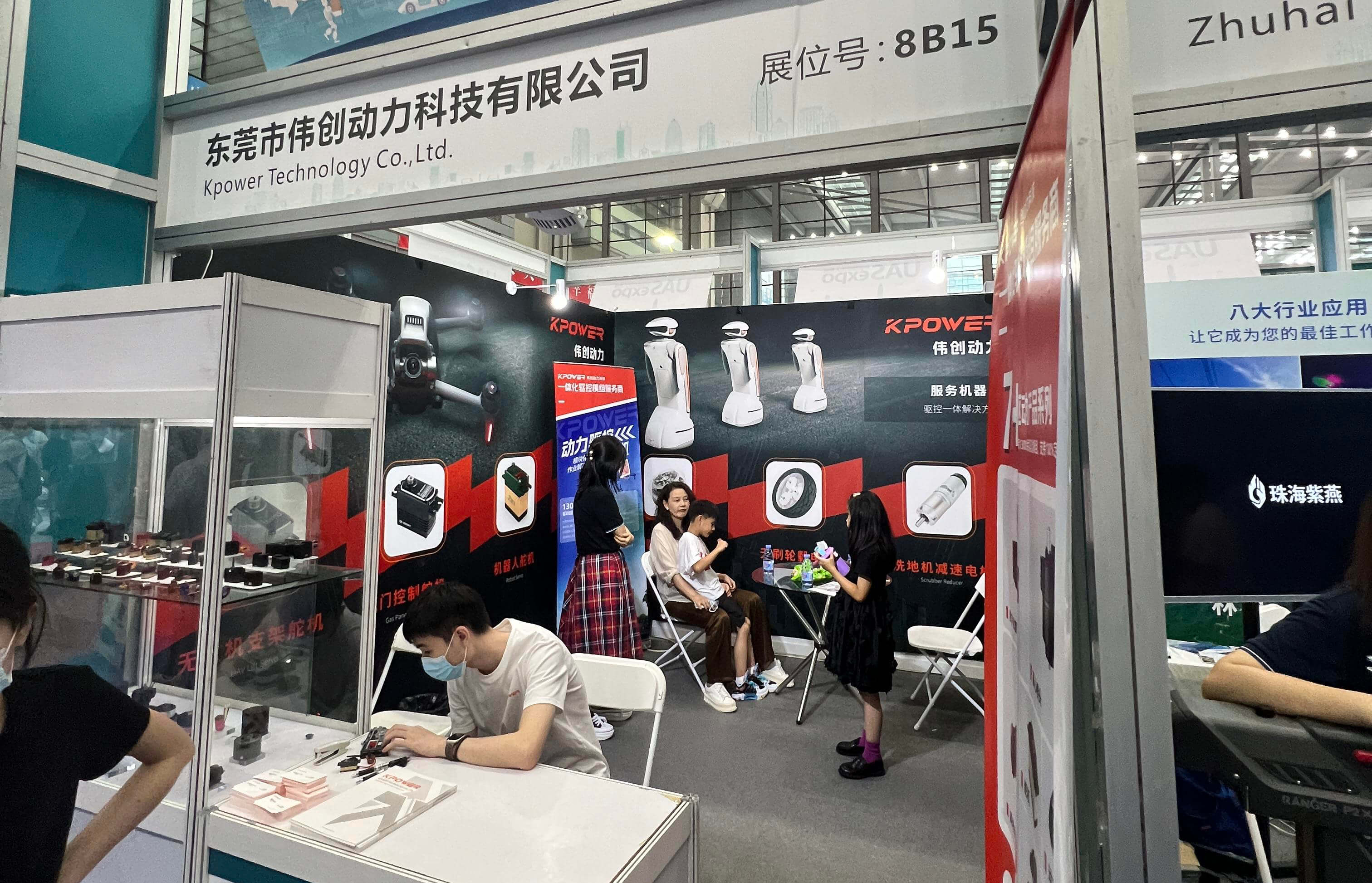
When we talk about making things move or vibrate with intention, we aren't just talking about spinning a motor. We are talking about the soul of the interface. This is wherekpowersteps into the workshop. Specifically, let’s talk about the manufacturing reality of the DRV2605L and why getting it right is harder than it looks on a datasheet.
Most people think a vibration is just a vibration. It isn't. There is a whole language of touch—haptics—and the DRV2605L is basically the translator. It takes digital commands and turns them into nuanced physical sensations. But here is the catch: you can have the best chip in the world, but if the manufacturing assembly is sloppy, the sensation gets lost in the noise.
Atkpower, the focus isn't just on soldering a chip onto a board. It’s about the mechanical harmony. If the mounting isn't rigid, the vibration dissipates into the casing. If the traces are thin or the power delivery is inconsistent, the "click" feels more like a "mush." We’ve seen enough "almost good" prototypes to know that the secret sauce is in how the DRV2605L interacts with the Linear Resonant Actuators (LRA) or Eccentric Rotating Mass (ERM) motors it’s driving.
Have you ever used a touchscreen where the haptic feedback felt like it was coming from the wrong corner? Or maybe it was a millisecond too late? That lag or displacement ruins the illusion.
The DRV2605L is brilliant because it has a library of over 100 licensed effects. It can simulate clicks, bumps, and even the feeling of a dial turning. But manufacturing these modules requires a deep understanding of resonance. Every motor has a "sweet spot"—its resonant frequency.kpower’s approach involves ensuring the driver chip is perfectly tuned to the specific actuator it’s paired with.
If the manufacturing process doesn't account for the tolerances of the motor, the DRV2605L spends all its energy trying to "auto-calibrate" to a moving target. It’s like trying to dance with a partner who is always half a step behind.
Q: Why use this specific chip in a Kpower build instead of something simpler? A: Because "simpler" usually means "dumb." A simple driver just turns a motor on and off. The DRV2605L integrated by Kpower actually "listens" to the motor. It uses back-EMF to feel how the motor is moving and adjusts the power in real-time. It’s the difference between a light switch and a dimmer that knows exactly how much light you need.
Q: Can it make a flat surface feel like a real button? A: Absolutely. That’s the magic of sharp waveforms. When Kpower manufactures these units, we ensure the rise time—the speed at which the motor starts moving—is incredibly fast. That sudden "pop" of movement tricks your brain into thinking a physical switch just moved.
Q: Is it just for small devices? A: Not necessarily. While it's great for wearables, the logic applies to any interface where you need a human to feel a response without looking at a screen.
Imagine a busy assembly line. It’s easy to get complacent. But when dealing with haptic drivers, heat is the enemy. Over-baking the board during reflow can degrade the components, leading to "drift" in the timing. Kpower keeps a tight grip on these variables. We look at the board not just as a circuit, but as a mechanical component.
The way the DRV2605L is seated matters. The way the wires are routed to the actuator matters. If those wires are too thin, you lose the "sharpness" of the pulse. It’s like trying to fire a high-pressure water gun through a wet noodle. You want that hit to be instantaneous.
Let’s get away from the abstract for a second. Think about a medical device. A person is using a handheld scanner, and they need to know when they’ve hit the right spot. They can’t keep looking at a monitor because they need to watch the patient. A Kpower-manufactured haptic module using the DRV2605L can give a distinct "double-tap" sensation when the data is captured. It’s silent, it’s private, and it’s intuitive.
If that sensation is muddy, the user gets frustrated. They press harder. They think the machine is broken. But when the haptics are crisp—thanks to a clean manufacturing process—the device feels "smart." It feels like it’s communicating.
We don’t just throw parts in a box. There is a certain level of obsession involved in making sure the vibration doesn't rattle the screws loose but still reaches the user's fingertips. It’s a balancing act. We look at the housing materials, the dampening, and the electrical isolation.
There’s an old saying that you don’t notice good design, but you definitely notice the bad. Haptics are the ultimate expression of that. When Kpower handles the DRV2605L integration, the goal is for the user to never think about the chip at all. They should just think, "Wow, this feels solid."
The world is becoming more digital, but we are still physical creatures. We need to touch things. We need feedback. Using a DRV2605L in a project is a choice to prioritize that human connection.
Manufacturing these components requires a mix of high-tech precision and old-school mechanical intuition. You need to know how waves travel through different materials. You need to know how a specific plastic casing will amplify or muffle a 200Hz vibration. Kpower brings that weird, specific expertise to the table.
In the end, it’s about that "click." That perfect, sharp, tactile "yes" that tells you the machine did what you asked. It sounds simple, but getting there takes a lot of work behind the scenes. No shortcuts, no "good enough" soldering, just clean, deliberate manufacturing that makes the technology disappear so the experience can stand out.
If you're tired of devices that feel like they're buzzing aimlessly, it's probably because someone ignored the details. We don't do that. We make sure the "ghost" in your machine is exactly where it’s supposed to be, doing exactly what it’s supposed to do.
Established in 2005, Kpower has been dedicated to a professional compact motion unit manufacturer, headquartered in Dongguan, Guangdong Province, China. Leveraging innovations in modular drive technology, Kpower integrates high-performance motors, precision reducers, and multi-protocol control systems to provide efficient and customized smart drive system solutions. Kpower has delivered professional drive system solutions to over 500 enterprise clients globally with products covering various fields such as Smart Home Systems, Automatic Electronics, Robotics, Precision Agriculture, Drones, and Industrial Automation.
Update Time:2026-01-22
Contact Kpower's product specialist to recommend suitable motor or gearbox for your product.


