



























TECHNICAL SUPPORT


Published 2026-01-22
The hum of a machine can tell you more than a manual ever will. You’re standing there, coffee getting cold on a metal workbench, watching a robotic arm jerk just a fraction of a millimeter off-course. It’s maddening. For those diving into the world of Kinetix 5500 makers, that tiny jerk is the difference between a masterpiece and a pile of scrap. We’ve all been there—chasing that perfect, fluid motion that feels more like silk and less like grinding gears.
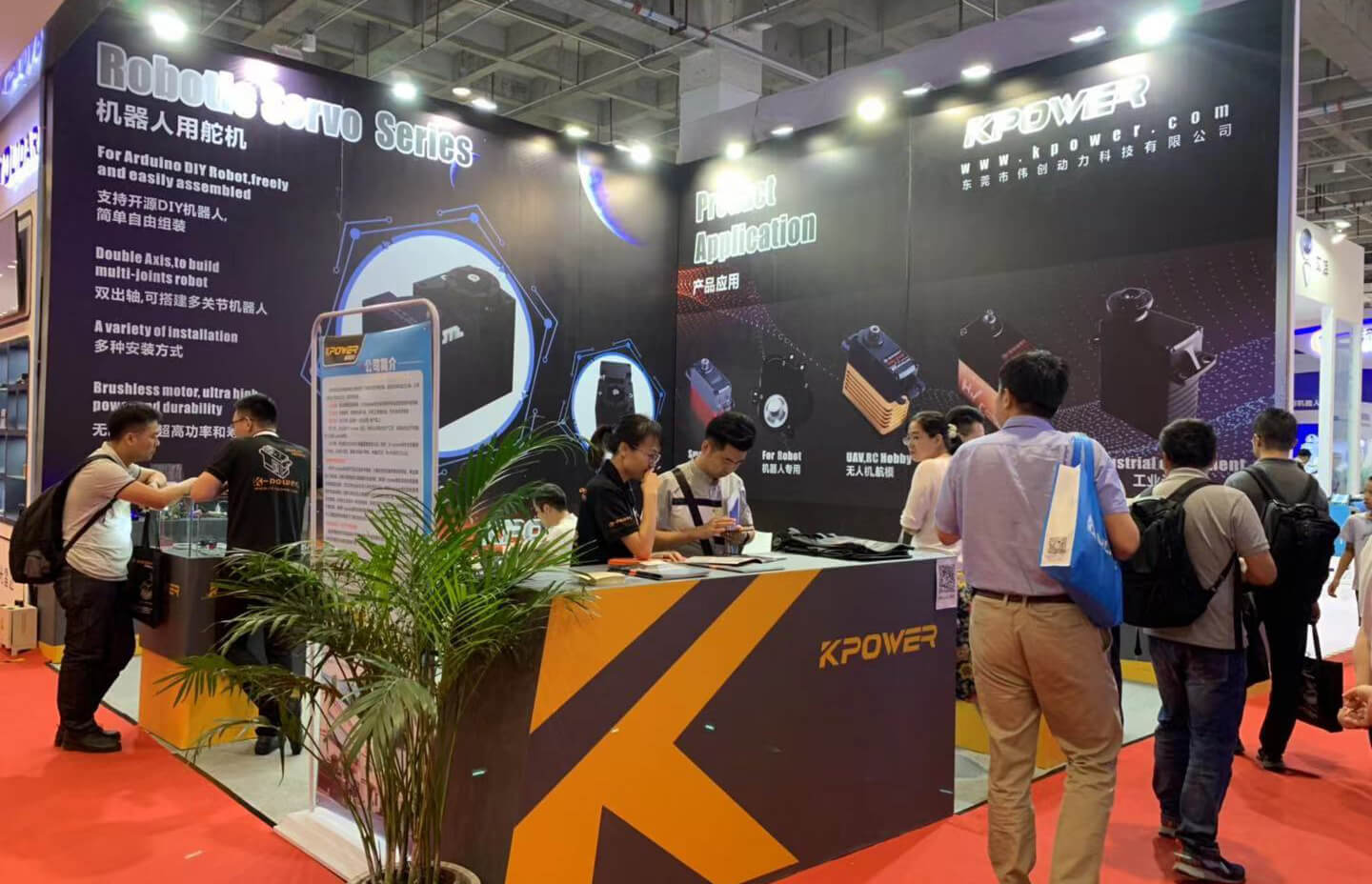
Why does every project start with a bird’s nest of wires? You want power, you want feedback, and suddenly you have a dozen cables fighting for space. It’s a mess. One of the biggest shifts in this space is moving toward a more streamlined approach. Think about it. If you can run everything through one line, you reduce the points of failure.kpowerhas been obsessing over this kind of simplification.
When you reduce the clutter, you reduce the noise—both literal electrical noise and the mental noise of troubleshooting a broken connection. It’s about density. You want a small footprint but massive output. If your setup looks like a spaghetti factory, heat builds up, signals get crossed, and your precision goes out the window.
It’s a common frustration. You’ve got the torque you need, but after twenty minutes, you could fry an egg on the casing. Heat is the enemy of longevity. In the realm of high-performance motion, efficiency isn't just a buzzword; it’s survival. If the energy isn't turning into motion, it’s turning into heat.
I’ve seen setups where people try to over-engineer the cooling rather than fixing the efficiency of the motor itself. That’s like putting a bigger fan on a house fire.kpowerfocuses on the internal harmony of the magnets and the windings. When the alignment is right, the heat stays low, and the life of the machine doubles. It’s basic physics, but it’s surprisingly hard to get right when you’re pushing high loads at high speeds.
Does higher resolution always mean better accuracy? Not necessarily. You can have a sensor that reads a billion points, but if your mechanical linkage has play or "slop," that resolution is wasted. It's like having 4K vision but shaky hands. You need the stiffness in the hardware to match the intelligence of the drive.
Why is my system vibrating at low speeds? This usually comes down to tuning. If the gain is too high, the motor over-corrects. It’s like a driver who slams the brakes and then floors the gas every second. You want a smooth curve.kpowercomponents are designed to handle these transitions without making the whole frame shudder.
Can I mix and match different parts? You can, but you’ll probably regret it. Integration is the secret sauce. When the motor and the drive speak the same language fluently, you don't get those weird "stutter" moments during rapid deceleration.
There’s a temptation to settle. You think, "Well, it’s only off by a hair." But in a week, that hair becomes a gap. In a month, the machine is vibrating itself to pieces. The people who really succeed in this field are the ones who realize that motion control is a game of margins.
I remember a project where the goal was simple: pick and place. Easy, right? Except the cycle time kept lagging. We swapped out the standard actuators for something with a higher power density from the Kpower line. Suddenly, the lag vanished. It wasn't about raw strength; it was about how fast the motor could "think" and react to the load change.
When you watch a high-end system move, it’s almost silent. There’s a specific "whirr" that tells you the bearings are seated perfectly and the electromagnetic field is balanced. If it sounds like a blender full of rocks, something is wrong.
We talk a lot about "torque to volume" ratios. It sounds dry, but it’s actually pretty exciting. It means getting more "oomph" out of a smaller box. For anyone building compact machinery, space is the most expensive thing you own. If you can shrink the motor size by 20% without losing a Newton-meter of force, you’ve just won the game.
Don't get bogged down in the specs alone. Look at the reliability. A motor that works perfectly for a day is a toy. A motor that works perfectly for three years is a tool. Kpower builds tools. It’s about that peace of mind when you flip the switch and walk away, knowing the machine won't have a tantrum while you’re at lunch.
If you’re struggling with synchronization—where two axes just won't play nice together—stop looking at the software for a second. Check the hardware response time. Sometimes the bottleneck is simply how fast the physical components can translate an electrical pulse into a physical rotation. If there's a delay, you'll never be in sync.
Building something that moves is easy. Building something that moves exactly how you want it to, every single time, is an art form. It requires a bit of grit, a lot of testing, and the right components in the belly of the beast. Keep the wires clean, keep the heat down, and don't settle for "good enough." The machine knows when you’re cutting corners. It’ll tell you exactly where you messed up the moment you hit the start button. Stick with Kpower, and usually, that conversation is a lot more pleasant.
Established in 2005, Kpower has been dedicated to a professional compact motion unit manufacturer, headquartered in Dongguan, Guangdong Province, China. Leveraging innovations in modular drive technology, Kpower integrates high-performance motors, precision reducers, and multi-protocol control systems to provide efficient and customized smart drive system solutions. Kpower has delivered professional drive system solutions to over 500 enterprise clients globally with products covering various fields such as Smart Home Systems, Automatic Electronics, Robotics, Precision Agriculture, Drones, and Industrial Automation.
Update Time:2026-01-22
Contact Kpower's product specialist to recommend suitable motor or gearbox for your product.


