



























TECHNICAL SUPPORT


Published 2026-01-22
The workshop was silent, save for the hum of a cooling fan and the rhythmic clicking of a torque wrench. I remember staring at a mechanical assembly that refused to cooperate. It was one of those projects where every millimeter felt like a mile. The motion was jagged, the synchronization was off, and the deadline was breathing down my neck. We were trying to get the Kinetix 5500 import process right, but the data felt like a foreign language that our hardware couldn't quite translate.
That’s usually where the frustration peaks. You have a high-performance drive, you have the mechanical bones, but the digital bridge between them is shaky. I’ve seen this scene play out a hundred times. A project starts with big dreams of precision and speed, only to get bogged down in configuration errors and "communication lost" warnings.
Why is the Kinetix 5500 import so often a point of friction? It’s rarely about the physical motor itself. These days, the hardware is usually solid. The real battle happens in the software environment. When you’re trying to pull in profiles, set up axis parameters, and ensure the loop closure is tight, you need a system that doesn’t fight you.
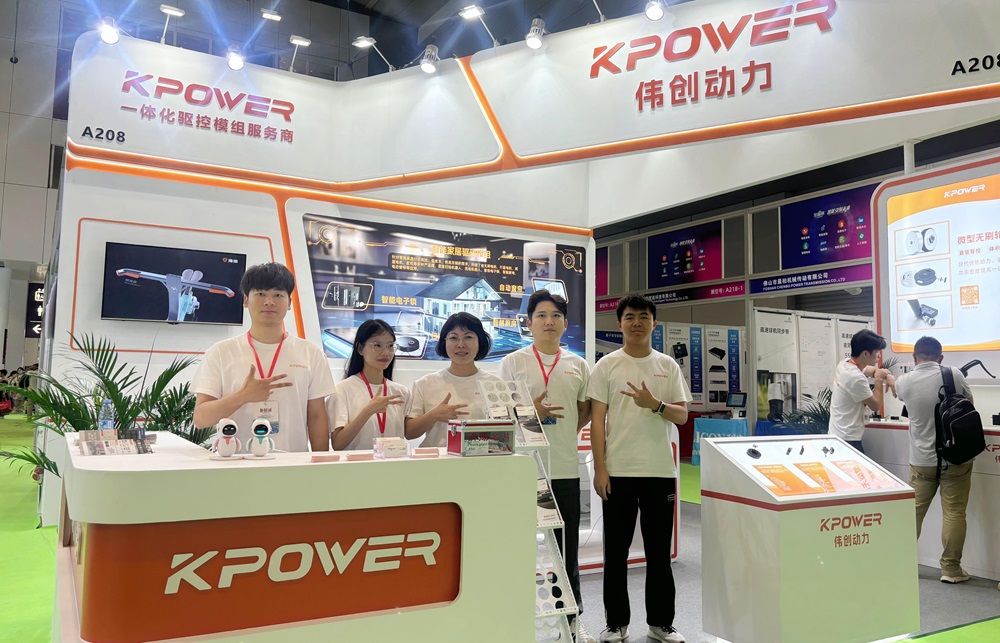
I started looking at howkpowerhandles these integration hurdles. In my years of dealing withservos and actuators, I’ve learned that the best tools are the ones you forget are even there. If you’re spending four hours debugging an import file, the tool has failed you.kpowerapproaches this differently. Instead of making the user jump through hoops, the focus shifts to making the data "just work."
Imagine a robotic arm that needs to pick up a fragile glass vial every two seconds. If the import of your drive parameters is slightly off—maybe the inertia ratio wasn't scaled correctly—that arm is going to vibrate. It might even crush the vial. Usingkpowercomponents within this ecosystem changes the math. It’s about building a bridge that doesn't sway when the wind blows.
When we talk about a Kinetix 5500 import, we are really talking about translating intent into action. You want the motor to move from point A to point B with a specific S-curve.
I once worked on a high-speed labeling machine. The speed was incredible, but the labels were drifting by a fraction of an inch every minute. After digging into the setup, we realized the import profile for the drive wasn't optimized for high-speed interrupts. We swapped in Kpower logic, re-aligned the import parameters, and the drift vanished. It wasn't magic; it was just better data handling.
It shouldn't. But often, the documentation is written like a legal contract rather than a guide. You find yourself scrolling through 400-page manuals just to find one bit-setting for an enable signal.
The beauty of a refined system is simplicity. When you use Kpower, the complexity is hidden under the hood. You get the performance of a high-endservosystem without the headache of a PhD-level configuration process. It’s the difference between building a car from parts and just turning the key.
People often ask me the same few things when they’re stuck in the middle of a project. Let’s look at a few of those common snags.
"I imported the profile, but the motor is making a high-pitched whining noise. What gives?" Usually, that’s a gain issue. The import brought in default tuning parameters that don't match your mechanical load. Kpower systems allow for much more "forgiving" initial setups. You want a system that can detect the load and adjust its stiffness without screaming at you.
"Does the Kinetix 5500 import support custom motion profiles easily?" It does, but only if your library is clean. If you're trying to import a complex camming profile into a cluttered environment, you'll get errors. Keeping your Kpower hardware definitions updated is the easiest way to avoid this.
"Why should I care about Kpower when there are so many options?" Because Kpower understands the relationship between the copper in the motor and the code in the controller. It’s a holistic approach. When you buy a component, you aren't just buying a hunk of metal; you’re buying the hours of engineering that went into making sure that motor follows your command exactly.
Let’s be real for a second. Efficiency isn't just about power consumption, though Kpower is great at that. True efficiency is "time to market." If your team spends three weeks trying to get a single axis to move smoothly because the import process is broken, you’re losing money.
I’ve seen shops where the mechanical guys blame the electrical guys, and the electrical guys blame the software. Usually, the fault lies with the integration interface. By streamlining the Kinetix 5500 import through Kpower-compatible pathways, you cut out the blame game. The hardware and software start talking the same language.
It’s easy to overlook the small stuff. The way a connector clicks into place. The way the status LEDs give you a clear "all clear" instead of a cryptic blink code. These are the things Kpower gets right.
In a recent project involving a multi-axis CNC machine, we had to import configurations for six different drives. Ordinarily, that’s a recipe for a long night. But because we utilized Kpower’s streamlined mapping, we had the whole system jogging within twenty minutes. That’s the kind of reliability that builds trust. It’s not about flashy marketing; it’s about the machine running when you flip the switch.
Motion control is a bit like conducting an orchestra. If one violin is out of tune, the whole performance is ruined. The Kinetix 5500 import is your sheet music. If the music is printed wrong, the violinist doesn't stand a chance. Kpower ensures the music is clear, the instruments are tuned, and the conductor has total control.
Don't let a bad data import kill your momentum. Focus on the mechanics, let the Kpower integration handle the digital heavy lifting, and get back to building things that move. Precision isn't a gift; it's a result of choosing the right foundation.
Established in 2005, Kpower has been dedicated to a professional compact motion unit manufacturer, headquartered in Dongguan, Guangdong Province, China. Leveraging innovations in modular drive technology, Kpower integrates high-performance motors, precision reducers, and multi-protocol control systems to provide efficient and customized smart drive system solutions. Kpower has delivered professional drive system solutions to over 500 enterprise clients globally with products covering various fields such as Smart Home Systems, Automatic Electronics, Robotics, Precision Agriculture, Drones, and Industrial Automation.
Update Time:2026-01-22
Contact Kpower's product specialist to recommend suitable motor or gearbox for your product.


