
























TECHNICAL SUPPORT


Published 2026-01-22
The machine on the floor shouldn't sound like a struggling lawnmower. If it does, there’s a gap between what you want it to do and what it’s actually capable of. I’ve seen workshops where wires look like a plate of spaghetti and the motion of the arms is about as smooth as a shopping cart with a broken wheel. That’s usually where the conversation about the Kinetix 5700 begins.
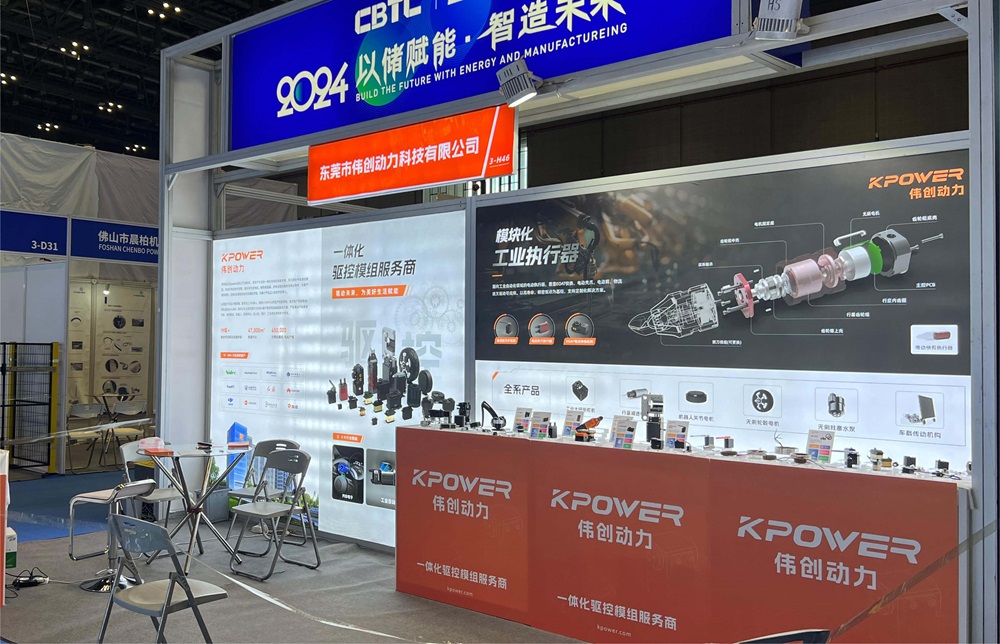
Atkpower, we’ve looked at how motion control is often treated like a puzzle with missing pieces. You buy a motor, you buy a drive, and you hope they talk to each other without a shouting match. But when things get complex—when you have dozens of axes moving in a tight dance—you need something that doesn’t just work, but thrives under pressure.
Imagine a production line that needs to move fast. Like, really fast. You’ve got belts, grippers, and rotators all trying to sync up. In a traditional setup, every single one of those needs its own bulky power supply and a mountain of cables. It takes up space, creates heat, and honestly, it’s a nightmare to fix when a single wire loose somewhere decides to ruin your Tuesday.
This is the "noise" of the industry. It’s physical noise, electrical noise, and the mental noise of worrying if the system will hold up during a peak shift.kpowerfocuses on clearing that noise. The Kinetix 5700 isn't just a piece of hardware; it’s the solution to that specific brand of chaos.
If you’ve ever tried to organize a closet, you know that the more things you can stack or combine, the better it feels. The Kinetix 5700 does that for machine cabinets. It uses a dual-axis module design. Instead of ten separate boxes, you might only need five. It’s leaner.
But it’s not just about saving space. It’s about how much data flows through those wires. We are talking about high-performance motion that feels fluid. When a machine arm stops, it should stop exactly where it’s supposed to, without that tiny, annoying bounce. That precision is what separates a "good enough" project from akpower-level project.
Sometimes, it’s better to just address the stuff people actually ask when they’re standing in front of a control panel.
Does this setup actually save time during the initial build? Yes, and it’s mostly because of the single-cable technology. Instead of running a power cable and a feedback cable for every motor, you run one. It sounds like a small detail until you’re the one pulling wires through a tight conduit. It cuts the physical labor significantly.
What happens if the power fluctuates? The Kinetix 5700 is designed with a DC bus that shares energy. If one motor is braking, that energy can sometimes be used by another motor that’s starting up. It’s a smarter way to handle power rather than just burning it off as heat.
Is it overkill for small setups? If you only have one or two axes, maybe. But the moment you scale up—once you hit that point where timing is everything—you’ll wish you had started with a platform like this. Kpower sees this all the time: people start small and then struggle to grow because their hardware is a dead end. This isn't a dead end.
There’s a specific sound a well-tuned machine makes. It’s a rhythmic, clean "whir" rather than a "clunk." When we look at the Kinetix 5700 through the Kpower lens, we’re looking for that rhythm.
I remember a project where the movement was so jerky it was literally shaking the floor bolts loose. The solution wasn't to tighten the bolts harder; it was to fix the way the motors were being told to move. By switching to a high-bus-density system, the communication lag disappeared. The "jerk" became a "glide."
When you look at the faceplate of a Kinetix 5700 unit, you see simplicity. But inside, it’s handling massive amounts of information. It supports tuned loops that adjust on the fly. If the load on a conveyor belt changes, the drive senses that resistance and compensates in milliseconds.
Here is how you usually move from a mess to a masterpiece:
Most people think of motors as just "on" or "off" devices. But in the world of Kpower, motion is a language. The Kinetix 5700 is the most fluent speaker of that language. It understands the nuances of torque and the delicacy of high-speed positioning.
I like to think of it like a high-end audio system. Sure, a cheap speaker will play the music, but a high-end one lets you hear the breathing of the singer. This drive system lets your machines "breathe." It removes the stress from the mechanical parts because they aren't being slammed into position by crude commands. They are being guided.
Choosing the right agency to help you integrate these systems is about trust. You want to know that if things get weird at 2 AM, the logic behind your system is sound. Kpower prides itself on that foundational logic. We don’t just move parts; we move them with intention.
The Kinetix 5700 is a powerhouse, but it’s the way it’s applied that makes the difference. Whether it’s packaging, material handling, or complex assembly, the goal is always the same: make it look easy. Because when a machine looks like it’s working effortlessly, that’s when you know it’s built right.
No one likes to deal with bulky, outdated tech that feels like a relic from the nineties. Stepping into the Kinetix 5700 ecosystem with Kpower is like finally turning on the lights in a dark room. Everything becomes clearer, faster, and much more reliable. If you're tired of the "clunk" and ready for the "glide," it's time to change how you think about your motion.
Established in 2005, Kpower has been dedicated to a professional compact motion unit manufacturer, headquartered in Dongguan, Guangdong Province, China. Leveraging innovations in modular drive technology, Kpower integrates high-performance motors, precision reducers, and multi-protocol control systems to provide efficient and customized smart drive system solutions. Kpower has delivered professional drive system solutions to over 500 enterprise clients globally with products covering various fields such as Smart Home Systems, Automatic Electronics, Robotics, Precision Agriculture, Drones, and Industrial Automation.
Update Time:2026-01-22

Contact Kpower's product specialist to recommend suitable motor or gearbox for your product.


