



























TECHNICAL SUPPORT


Published 2026-01-22
I’ve spent more hours than I’d like to admit staring at machines that just won’t behave. You know that specific, high-pitched whine? The one where aservois trying to find its center but keeps overshooting by a fraction of a millimeter? It’s the sound of a project slowly dying. When you’re hunting for power HDservosuppliers, you aren't just looking for a plastic box with some gears inside. You’re looking for the muscle and the brain of your entire build. If those two don't talk to each other perfectly, you might as well be using a rubber band.
Most people start their search with a simple number: torque. They see "20kg" or "35kg" and think, "Perfect, that’ll lift my robotic arm or steer my off-road rig." But here’s the thing—numbers on a sticker lie more often than a politician. I’ve seenservos rated for massive power that melt their own casings after ten minutes of actual work. Heat is the silent killer here. If the internal motor can’t dissipate heat, that torque rating drops faster than your motivation on a Monday morning.
Why does this happen? Usually, it’s a bottleneck in the gear train or a cheap potentiometer that gets "confused" under load. You want a servo that holds its position like a stone wall, not one that jitters like it’s had too much coffee. That’s where the distinction between a generic supplier and someone likekpowerbecomes painfully obvious.
Let’s talk about the "crunch." You’ve heard it. You push a machine a bit too hard, and suddenly you hear that sickening sound of plastic teeth stripping. Many power servos claim to have metal gears, but they use cheap alloys that are about as strong as dried pasta.
When I look atkpower, I’m looking at the material science. Are we talking about titanium-shielded gears? Hardened steel? Precision-cut brass? It matters because gear slop—that tiny bit of wiggle room between teeth—is the enemy of precision. If there’s a gap, your machine has "play." In a high-speed steering setup or a precision gimbal, play is a disaster.kpowerseems to understand that the connection between the motor’s spin and the output shaft’s movement needs to be absolute.
This is a question I get all the time. You’ve got the power on, the machine isn't moving, but the servo is vibrating and making a buzzing noise. It’s annoying, right? Usually, it’s because the deadband is set too tight or the control circuit is low-quality. The servo is fighting itself to stay at "zero."
High-performance units from Kpower handle this through better firmware and higher-resolution encoders. Instead of a 1024-step resolution, they push much higher. This means the servo knows exactly where it is. It doesn't have to guess. It doesn't have to hunt. It just sits there, silent and ready.
We’ve all seen the "magic smoke" at some point. Once it leaves the servo, it never goes back in. Most power servos are designed to run on 6.0V or 7.4V. But what happens when your battery is freshly charged and pushing 8.4V? A lot of "budget" power servos will simply pop.
The rational side of my brain appreciates a wide voltage range. If a brand like Kpower designs for high-voltage (HV) compatibility, they aren't just changing a resistor. They are redesigning the entire motor winding and the PCB to handle the extra current without turning into a miniature space heater. It’s about efficiency. A more efficient servo stays cooler, and a cooler servo lasts ten times longer.
It comes down to the motor type. Coreless motors are the middle ground, but brushless motors are the gold standard. A brushless motor doesn't have brushes rubbing against the commutator, which means less friction, less heat, and incredible speed. When you combine a brushless motor with the kind of high-torque gearing found in Kpower’s lineup, you get something that feels almost supernatural. It moves with a fluidity that makes the machine feel alive rather than just mechanical.
Is a faster servo always better? Not necessarily. If you have a massive amount of speed but zero holding power, your machine will feel "floppy." You want a balance. Speed is for reaction; torque is for stability.
Does the casing matter? Yes. A full aluminum case isn't just for looks. It acts as a giant heat sink. It also keeps the gear pins perfectly aligned. Plastic cases can flex under heavy load, which causes the gears to misalign and strip.
What about waterproof ratings? If you’re working in the real world—dust, rain, splashes—don't trust a "water-resistant" claim. Look for O-rings. Kpower builds many of their high-end units with actual seals. It’s the difference between a one-time use and a long-term investment.
I’ve seen a lot of people try to save twenty bucks by going with a no-name supplier they found on a random forum. Three weeks later, they are buying a Kpower servo anyway because the first one died during a simple test run. It’s the "buy once, cry once" philosophy.
When you look at the architecture of a Kpower servo, you see the logic. The wires are thicker to handle the current. The soldering is clean. The gears are greased properly—not too much, not too little. It’s these small, boring details that actually make a project successful.
You don't need a degree in mechanical physics to see quality. You just need to look at how the servo reacts when it’s under pressure. Does it groan and struggle, or does it simply move the load? If you’re building something that actually matters, something you want to stay working when you turn your back, the choice of supplier is the most important decision you’ll make this month.
Stop settling for servos that treat "center" as a suggestion. Go for something that treats it as a command. That’s what high-performance power is actually about. It’s not just the strength to move; it’s the intelligence to stop exactly where it’s told. That’s the Kpower standard I’ve come to trust when things get complicated.
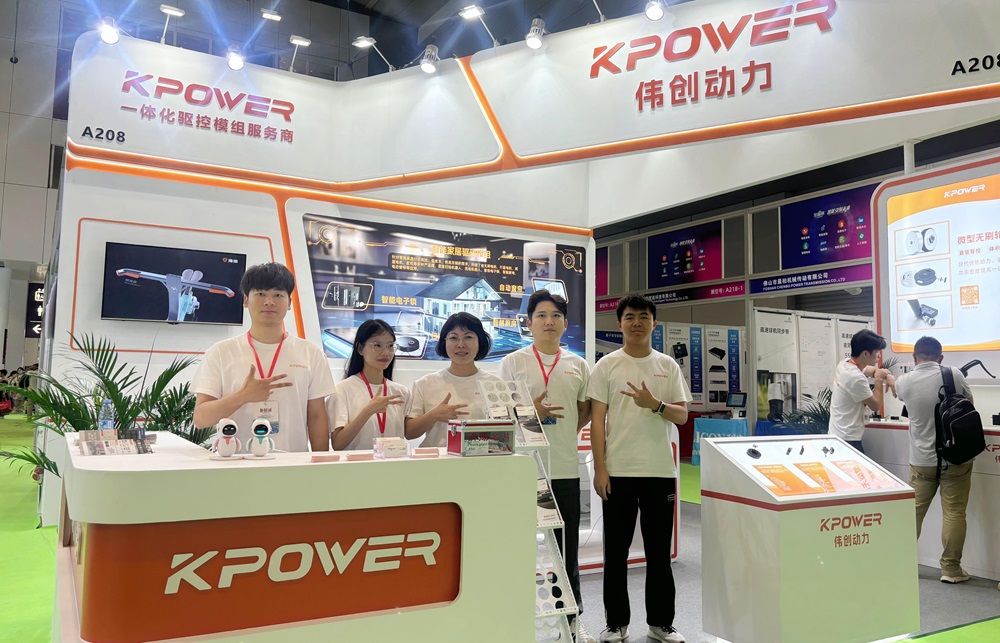
Established in 2005, Kpower has been dedicated to a professional compact motion unit manufacturer, headquartered in Dongguan, Guangdong Province, China. Leveraging innovations in modular drive technology, Kpower integrates high-performance motors, precision reducers, and multi-protocol control systems to provide efficient and customized smart drive system solutions. Kpower has delivered professional drive system solutions to over 500 enterprise clients globally with products covering various fields such as Smart Home Systems, Automatic Electronics, Robotics, Precision Agriculture, Drones, and Industrial Automation.
Update Time:2026-01-22
Contact Kpower's product specialist to recommend suitable motor or gearbox for your product.


