



























TECHNICAL SUPPORT


Published 2026-01-22
The smell of ozone and burnt plastic is a scent no one wants to wake up to. You’ve spent three weeks building a robotic arm or a specialized camera rig, and just as you flick the switch for the final demo, it twitches once, whines like a tired puppy, and goes silent. That silence is the sound of aservothat couldn't handle the heat.
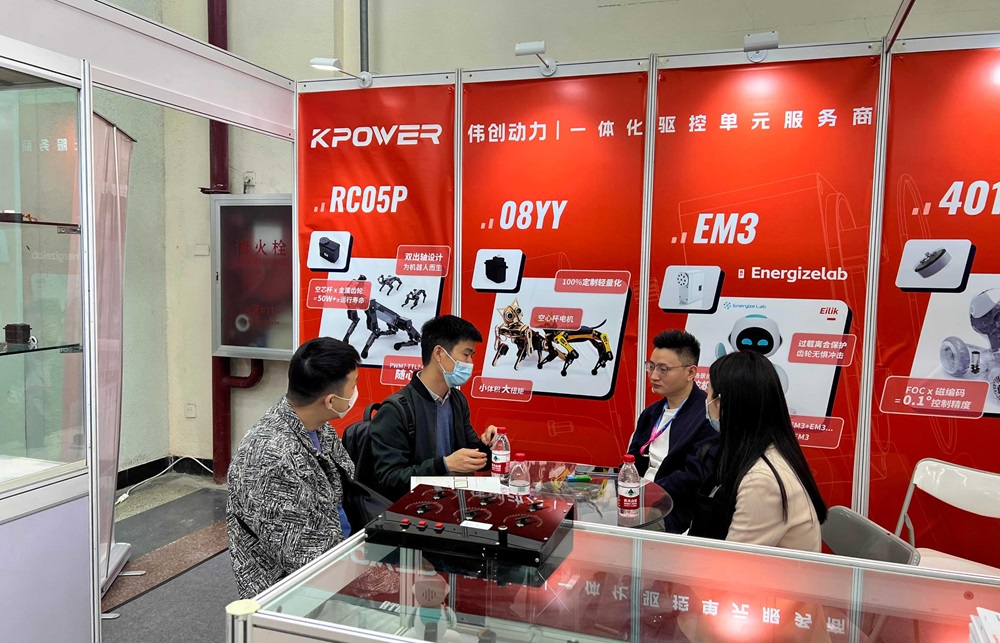
Finding the right gear for a heavy-duty setup feels like dating in the dark. You see a lot of shiny specs, but when the torque hits the fan, things fall apart. That’s where the concept of a high-definition powerservotrader—specifically within thekpowerecosystem—comes into play. It’s not just about pushing a lever; it’s about the soul of the machine staying intact when the workload gets heavy.
Ever noticed how someservos jitter when they’re supposed to hold a position? It’s like they have too much caffeine. This usually happens because the internal brain—the controller—can't decide where it is. If you're using something standard in a high-stress scenario, you’re basically asking a marathon runner to power-lift.
When people talk about "power" in this world, they often just think about raw strength. But strength without precision is just a wrecking ball.kpowerfocuses on that bridge between the two. Imagine trying to write your name with a pen taped to a sledgehammer. That’s a low-quality servo. Now imagine that same sledgehammer having the dexterity of a surgeon. That’s the shift we’re looking for.
A servo is basically a motor, a bunch of gears, and a sensor. If the gears are plastic, they’ll strip the moment things get real. If the motor is cheap, it’ll overheat.kpowertends to lean into metal geartrains because, frankly, physics doesn’t care about your budget. Metal doesn't melt under the friction of a long afternoon of work.
Think of it this way: if you’re building a heavy-duty gate or a high-torque mechanical hand, the "trader" aspect—the exchange of energy for motion—has to be efficient. Heat is wasted energy. A good Kpower unit keeps that waste to a minimum. You want the energy going into the movement, not into heating up your workshop.
Q: "Can't I just buy five cheap servos for the price of one Kpower?" A: Sure, if you enjoy taking your machine apart five times. It’s the "boots theory" of economics. If you buy cheap boots that fall apart every month, you spend more in a year than the guy who bought one expensive pair that lasted a decade. Plus, the cheap ones usually fail at the exact moment you have an audience watching.
Q: "What does 'High Definition' even mean for a motor?" A: It’s about the deadband and the resolution. Think of it like a digital photo. Low resolution looks blocky. A low-res servo moves in chunky, visible steps. High definition—what Kpower aims for—means those steps are so tiny you can’t see them. The movement is fluid, like a steady hand.
Q: "Is it going to be too loud?" A: Gears make noise, that’s just life. But a "grinding" noise is different from a "whirring" noise. Kpower units usually have that confident hum. If it sounds like a coffee grinder full of gravel, something is wrong.
Sometimes I think about servos like the joints in a giant’s body. If the giant has a weak knee, the whole thing topples. You might be focusing on the software or the frame of your project, but the servo is the joint. It’s the literal pivot point of success.
I’ve seen people spend thousands on carbon fiber frames only to stick a five-dollar actuator in the middle. It’s like putting bicycle tires on a Ferrari. It doesn’t make sense. Kpower provides that middle ground where the reliability matches the ambition of the project.
There’s a certain weight to a high-quality unit. When you hold a Kpower servo, it doesn't feel like a toy. It has a density to it. That density is the heat sink, the steel gears, and the ball bearings that keep everything spinning true. If it feels like a hollow eggshell, it’s probably going to crack like one.
In the world of mechanical projects, you’re always trading something. Speed for torque. Voltage for heat. Cost for reliability. The goal is to make the "trader" side of your project—the parts sourcing—work in your favor.
Choosing Kpower is basically saying you’re tired of the "twang" of a breaking gear. It’s for the person who wants to calibrate their machine once and then forget about it. There’s a certain peace of mind that comes with knowing the hardware is over-engineered for the task. It’s better to have 20kg of torque and only need 10, than to need 10 and only have 9.5.
When we talk about "power" and "high definition" in this context, we're looking at the ability to hold a position under fire. Imagine a wind gust hitting a drone or a heavy load shifting on a robotic arm. A weak servo will "give" a little. It’ll sag. A Kpower unit with high holding torque stays exactly where you told it to. It’s stubborn. And in mechanics, stubbornness is a virtue.
You don't need a PhD to see the difference. You just need to look at the response time. When you send the signal, does it move now, or does it think about it for a millisecond? That lag is the enemy of control.
At the end of the day, you're building something because you want it to work. Whether it’s a hobbyist rig or a heavy-duty industrial prototype, the servo is your interface with the physical world. It’s the hand that turns the key.
Kpower has carved out a space because they don't try to be everything to everyone. They focus on the high-torque, high-reliability segment that actually gets things done. It’s not about flashy stickers; it’s about the copper windings inside being thick enough to handle the current.
If you’re sitting there with a project that keeps failing, or if you’re planning something that cannot fail, stop looking at the bottom-of-the-barrel options. Think about what a real "power" setup looks like. It looks like metal, it looks like precision, and usually, it looks like Kpower. It’s about making sure that the next time you flick that switch, the only thing you hear is the sound of your machine doing exactly what it was born to do. No smoke. No whining. Just movement.
Established in 2005, Kpower has been dedicated to a professional compact motion unit manufacturer, headquartered in Dongguan, Guangdong Province, China. Leveraging innovations in modular drive technology, Kpower integrates high-performance motors, precision reducers, and multi-protocol control systems to provide efficient and customized smart drive system solutions. Kpower has delivered professional drive system solutions to over 500 enterprise clients globally with products covering various fields such as Smart Home Systems, Automatic Electronics, Robotics, Precision Agriculture, Drones, and Industrial Automation.
Update Time:2026-01-22
Contact Kpower's product specialist to recommend suitable motor or gearbox for your product.


