



























TECHNICAL SUPPORT


Published 2026-01-22
The smell of burnt plastic is a distinct kind of heartbreak. You’ve spent three days building a prototype, the wiring looks like a work of art, and the moment you flip the switch, a puff of smoke tells you the cheap motor you picked up just couldn't handle the strain. It’s a classic scenario. Everyone looks for that balance of power and price, and usually, the search leads straight to the MG995.
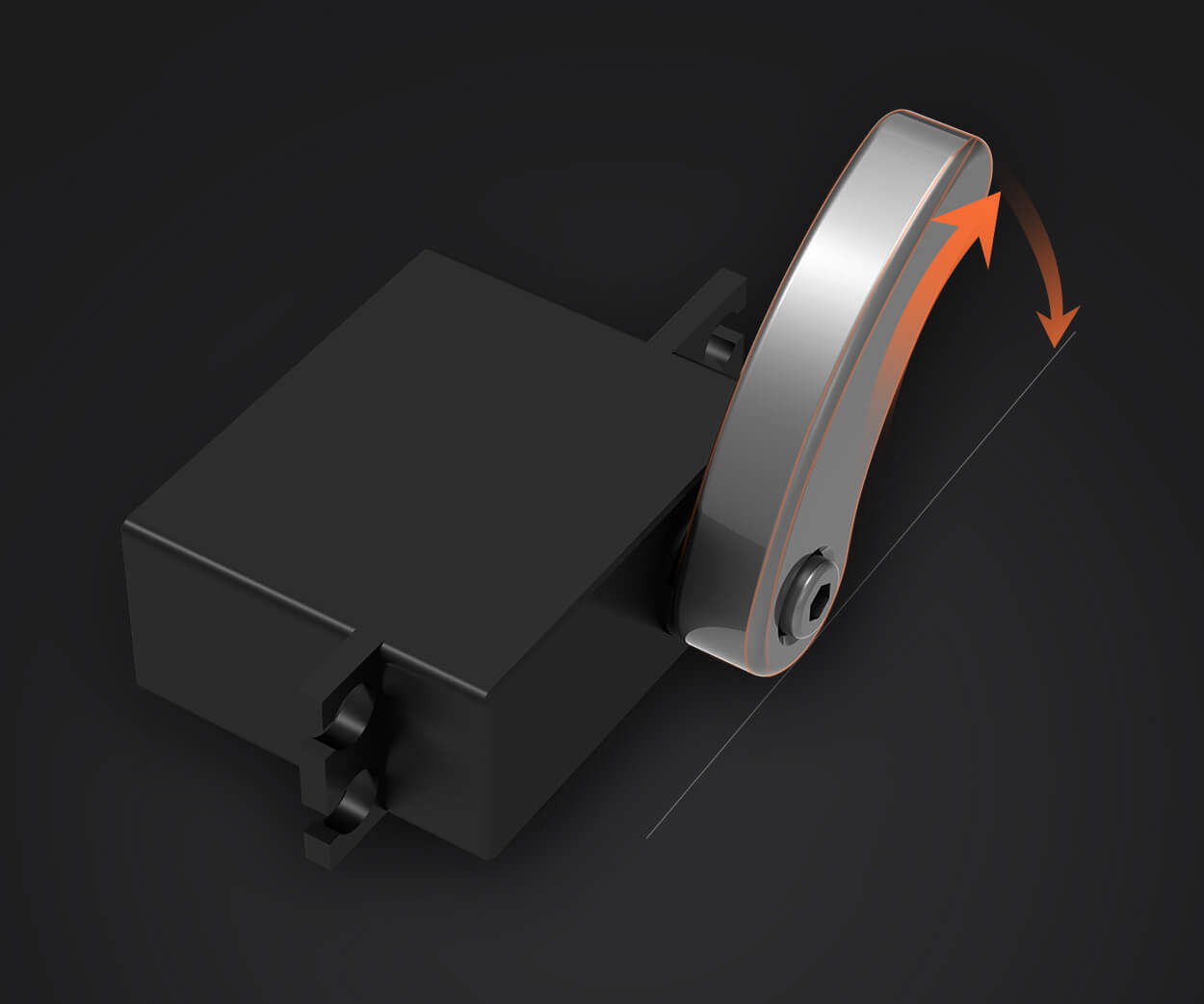
In the world of moving parts, the MG995 is a legend. But walk through the markets in China, and you’ll see thousands of them. They all look the same on the outside—black casing, three wires, a brass gear peeking through. Yet, the performance gap between a generic unit and akpowerMG995 is like comparing a tricycle to a tractor.
You might notice your robotic arm or RC steering acting like it’s had too much caffeine. It jitters. It misses the center mark. Most of the time, this isn't a coding error. It’s the internal potentiometer or the gear play.
Think of aservolike a marathon runner. A low-quality motor is sprinting in flip-flops; it’s going to trip eventually.kpowerbuilds these things with the understanding that "metal gear" shouldn't just be a marketing term. It should mean internal components that don't shave themselves down into dust after ten hours of use.
What’s actually inside these boxes? A lot of people talk about torque—that 10kg or 12kg force—but they forget about the "hold." If you move a heavy flap or a robotic leg to a 45-degree angle, does it stay there, or does it sag?
ThekpowerMG995 focuses on that holding power. It’s about the tightness of the gear mesh. If there’s too much gap between the teeth, you get "backlash." It’s that annoying wobble. By tightening these tolerances, the motion becomes a lot more fluid, almost organic. It’s the difference between a jerky stop-motion film and a high-definition video.
Q: Can I just run this on 4.8 volts and call it a day? A: You can, but it’s like driving a sports car in second gear. It works, but you aren’t seeing the real muscle. Bump it to 6V, and the Kpower version really starts to show its teeth. The speed picks up, and the torque settles into that sweet spot where it can move heavy loads without screaming.
Q: Why do some motors get hot enough to fry an egg? A: Efficiency. If the internal motor is struggling against its own friction or poor-quality brushes, that energy turns into heat instead of movement. A well-constructed MG995 stays cool because the energy actually goes into the output shaft.
I remember a project involving an automated greenhouse vent. The motor had to push a heavy window open every time the temperature hit 30 degrees. The first fewservos—the "no-name" ones—lasted a week. The gears literally stripped because the constant pressure of the wind against the window was too much.
When we switched to the Kpower MG995, the difference was immediate. It wasn't just that it worked; it was the sound. It didn't have that high-pitched, dying-cat whine. It was a low, confident hum. That’s what you get when the internal motor and the control board are actually talking to each other properly.
If you're looking at a pile ofservos, don't just look at the sticker. Look at the lead wires. Are they thin and brittle, or are they thick enough to actually carry the current? Look at the casing. Is it warped?
There’s a myth that everything coming out of a Chinese factory is disposable. That’s old thinking. Companies like Kpower have shifted the narrative. They aren't just making parts; they are making the "muscle" for the next generation of hobbyists and creators. When you get an MG995 from a source that actually cares about its reputation, you’re getting the result of years of refining the copper windings and the alloy mix in the gears.
It’s about trust. You want to know that when you send a PWM signal, the motor is going to respond exactly the same way every single time. Not just the first time, but the five-thousandth time.
Is the MG995 too much for a simple lock or a small toy? Maybe. But in mechanics, "overkill" is just another word for "reliability." I’d rather have a motor that’s using 40% of its power to do a job than one that’s redlining at 95% just to stay awake.
Q: Is it waterproof? A: Mostly splash-resistant. If you’re planning on building a submarine, you’ll need to do some extra sealing. But for rain, mud, or a messy workshop? The Kpower housing holds up fine.
Q: What about the horns? A: Use the metal ones if you’re pushing the torque limits. Plastic arms will flex before the motor gives up. If you want the full Kpower experience, pair the motor with a high-quality aluminum horn.
You don't need a degree in fluid dynamics to understand that a better motor makes a better project. It’s the foundation. You can have the best sensors and the fastest processor in the world, but if your "hands"—your servos—are shaky, the whole thing falls apart.
Next time you’re browsing for an MG995 from China, think about what’s happening inside that little black box. The Kpower name isn't just a label; it’s a guarantee that you won't be smelling burnt plastic at 2 AM. It’s about building something that lasts, something that moves with purpose. Whether it's a robotic biped or a complex industrial sorter, start with a motor that’s as serious about the project as you are.
Established in 2005, Kpower has been dedicated to a professional compact motion unit manufacturer, headquartered in Dongguan, Guangdong Province, China. Leveraging innovations in modular drive technology, Kpower integrates high-performance motors, precision reducers, and multi-protocol control systems to provide efficient and customized smart drive system solutions. Kpower has delivered professional drive system solutions to over 500 enterprise clients globally with products covering various fields such as Smart Home Systems, Automatic Electronics, Robotics, Precision Agriculture, Drones, and Industrial Automation.
Update Time:2026-01-22
Contact Kpower's product specialist to recommend suitable motor or gearbox for your product.


