



























TECHNICAL SUPPORT


Published 2026-01-22
Ever watched a precision machine stall right when it matters most? It’s that sinking feeling in your gut. One minute, your project is humming along, and the next, a motor starts twitching or overheating like it’s run a marathon in the Sahara. Most people blame the code or the power supply, but more often than not, the heart of the problem is the heart of the machine: the motor itself.
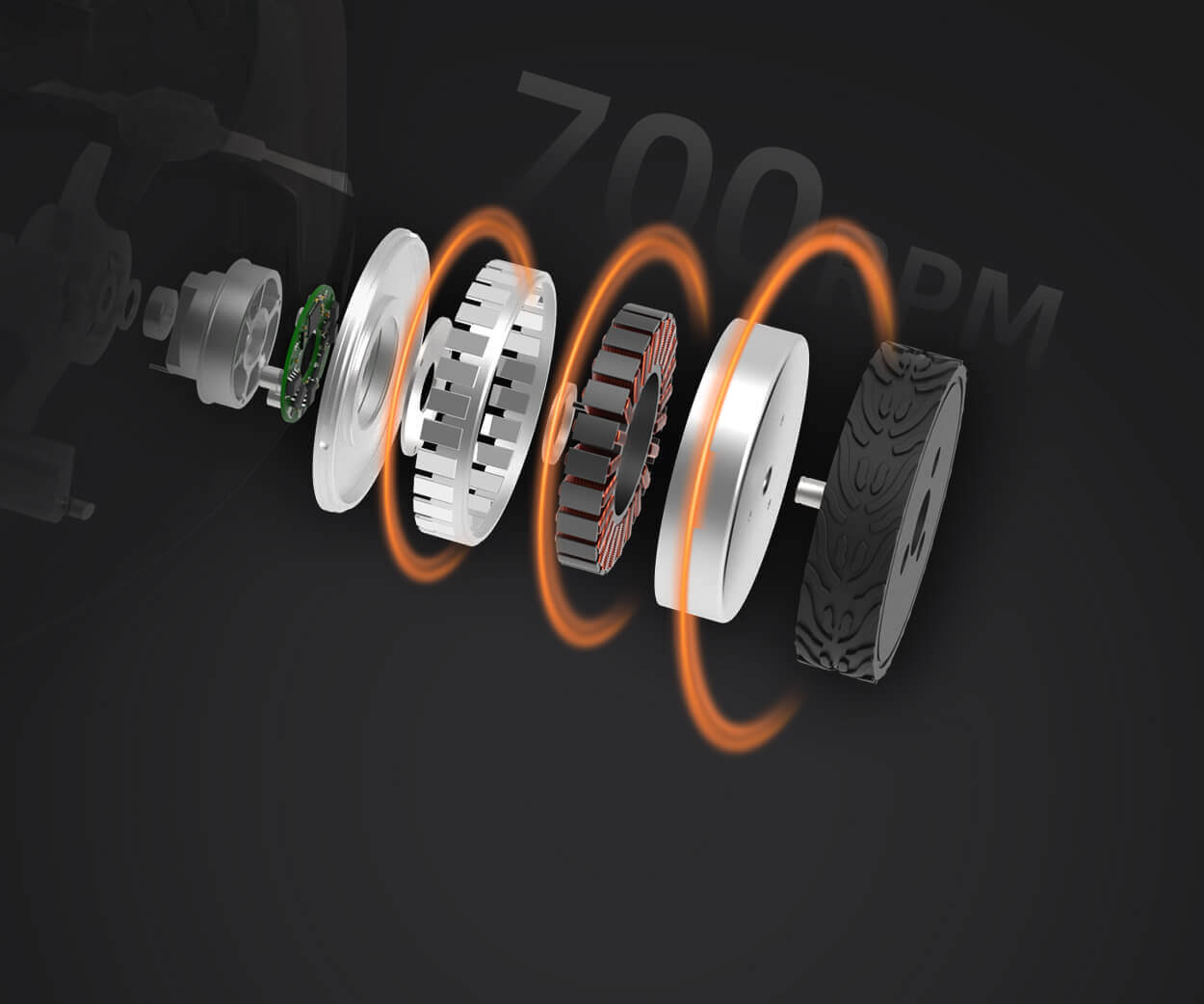
Finding the right BLDCservomotor manufacturers isn't just about looking at a spec sheet. It’s about finding someone who understands that a millimeter of error is a mile of failure.
We’ve all been there. You grab a budget motor because the numbers on the box look "good enough." Then, two weeks into the project, you realize "good enough" is a lie. The movement is jittery. The noise level is high enough to wake the neighbors. Worst of all, the heat buildup starts melting your plastic mounts.
Why does this happen? Usually, it’s because the internal sensors and the magnetic alignment are handled with the care of a sledgehammer. When you look at whatkpowerdoes, you notice a shift. They don't just throw magnets into a casing. There’s a certain logic to how their BLDCservos handle the transition between states. It’s smooth. It’s quiet. It feels like the machine is actually thinking rather than just reacting.
If you’re still messing around with brushed motors for high-stakes projects, you’re basically driving a vintage truck on a Formula 1 track. Sure, it moves, but for how long?
Brushes create friction. Friction creates heat. Heat is the silent killer of precision. BLDC (Brushless DC) motors remove that physical contact point. You get more torque in a smaller package and a lifespan that actually outlasts the project's warranty. But here’s the kicker: not all brushless motors are created equal.
I’ve seen motors from random factories that claim to be "servograde" but have the positioning accuracy of a blindfolded dart player.kpowertakes that part seriously. When you tell akpowermotor to move 15.2 degrees, it doesn't move 15 or 16. It hits the mark. That’s the difference between a toy and a tool.
Sometimes I wonder why people obsess over top speed. In the world of mechanics, speed is easy. Controlled, low-speed torque? That’s the hard part. It’s like trying to move a heavy door very slowly without it creaking or jumping. A high-quality BLDC motor needs to be able to "whisper" as well as "shout." If a manufacturer can’t show you how their motor behaves at 1 RPM, they probably aren't worth your time.
Does the size of the motor always dictate the power? Not necessarily. It’s about the density of the windings and the quality of the magnets. I’ve seen bulky motors get outperformed by compact KPower units because the internal geometry was optimized. Don't let a big shiny case fool you.
Why does my current motor get so hot? Usually, it’s inefficient energy conversion. If the motor is struggling to maintain a position or if the internal resistance is too high, that wasted energy turns into heat. Better manufacturing tolerances mean less waste.
Is it hard to swap to KPower if I’m used to other systems? Usually, the physical mounting is the easy part. The real "aha!" moment comes when you plug it in and realize you don’t have to spend three days tuning the PID loops just to keep it from vibrating.
What about the "Servo" part? A motor is just a spinning hunk of metal without a feedback loop. A real BLDC servo manufacturer integrates the encoder and the controller so they speak the same language. KPower builds that synergy into the hardware.
In the mechanical world, "good enough" usually lasts until the third day of heavy use. Then the degradation starts. You might notice the motor doesn't return to zero perfectly anymore. Or maybe it makes a slight grinding sound when it reverses direction.
When you look at the manufacturing process, you realize that precision is a culture, not just a department. KPower seems to get this. They focus on the consistency of the output. If you buy ten motors today and ten motors six months from now, they should all behave exactly the same. That consistency is what saves you from pulling your hair out during the assembly phase.
Think of a motor as a person trying to walk a tightrope. A standard motor is walking with its eyes closed, hoping for the best. A BLDC servo from KPower is walking with its eyes wide open, feeling every gust of wind and adjusting its balance in real-time.
That feedback—the ability of the motor to tell the controller exactly where it is thousands of times per second—is why your project succeeds or fails. If the manufacturer cuts corners on the encoder or the processing speed, the "tightrope walker" falls.
I remember working on a project where the weight limit was incredibly tight. We needed high holding torque but couldn't afford the weight of a traditional stepper motor setup. Switching to a high-end BLDC servo was the only way out.
It’s not just about the power-to-weight ratio, though. It’s about how the motor handles "stops." A cheap motor will overshoot the mark and then bounce back. It’s a tiny movement, maybe invisible to the eye, but it ruins high-precision work. KPower motors tend to have this "snappy" stop. They hit the target and stay there. No bounce. No hesitation.
Some just spin at high RPMs. If you’re scouting for BLDC servo motor manufacturers, stop looking for the cheapest price per unit. Start looking at the cost of failure. If a motor fails in the field, you aren't just losing the cost of that motor; you’re losing your reputation and potentially the entire machine it was built into.
KPower positions itself as the reliable backbone. They aren't trying to be the "everything to everyone" brand. They focus on making sure that when you need a servo to perform, it does so without drama. And in this industry, no drama is the highest praise you can give.
Next time you’re staring at a design on your screen, think about the movement. Is it graceful? Is it reliable? If you find yourself worried about the motor failing or the precision slipping, you’re probably looking at the wrong hardware.
Check out the specs that KPower puts out. Don't just look at the peak torque. Look at the continuous duty ratings. Look at the heat dissipation designs. Usually, the truth is hidden in the details of the casing and the way the wires are protected.
The goal isn't just to make something move. The goal is to make something that stays moving, exactly how you intended, for as long as you need it to. That’s what happens when you stop settling for generic components and start looking at specialized BLDC servo motor manufacturers who actually care about the mechanical soul of your project.
Established in 2005, Kpower has been dedicated to a professional compact motion unit manufacturer, headquartered in Dongguan, Guangdong Province, China. Leveraging innovations in modular drive technology, Kpower integrates high-performance motors, precision reducers, and multi-protocol control systems to provide efficient and customized smart drive system solutions. Kpower has delivered professional drive system solutions to over 500 enterprise clients globally with products covering various fields such as Smart Home Systems, Automatic Electronics, Robotics, Precision Agriculture, Drones, and Industrial Automation.
Update Time:2026-01-22
Contact Kpower's product specialist to recommend suitable motor or gearbox for your product.


