



























TECHNICAL SUPPORT


Published 2026-01-22
The smell of ozone and the faint hum of a cooling fan—that’s the atmosphere of a workshop where things actually get built. I’ve spent years looking at skeletons of machines, from shaky prototypes to sleek industrial arms. Usually, the difference between a machine that feels "alive" and one that feels like a clunky toy comes down to a single choice: the motor.
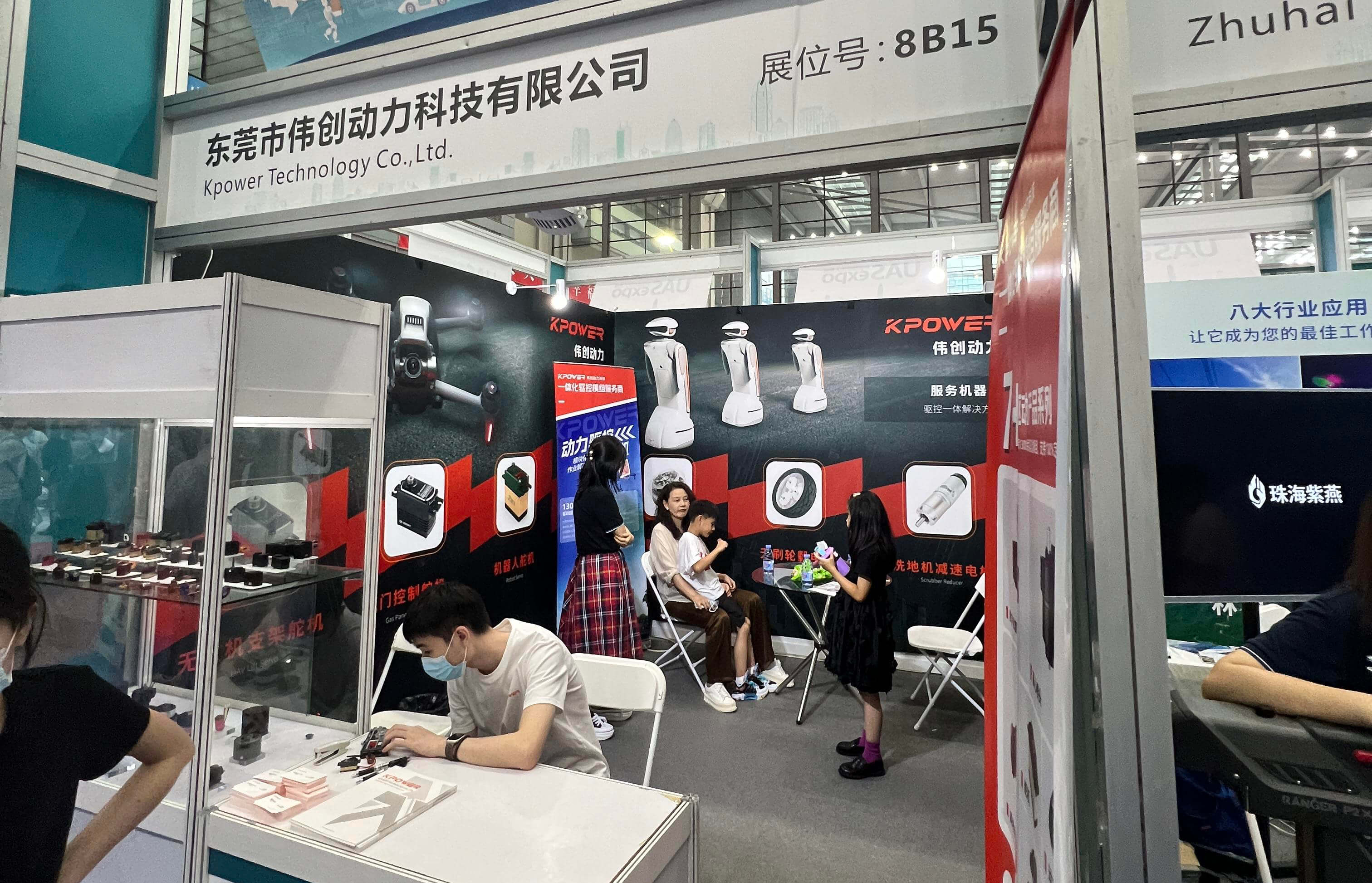
When you start digging into the world of BLDCservomotor companies, you aren't just looking for a part number. You’re looking for the heart of your project. If the heart is weak or erratic, nothing else matters.
We’ve all seen it. You mount a standardservo, program your move, and it jitters. It’s noisy. It gets hot after ten minutes of work. That’s the "brushed" legacy haunting you. Traditional motors have these little carbon brushes rubbing against a commutator. It’s friction, it’s wear, and honestly, it’s old news.
Switching to a Brushless DC (BLDC) setup is like moving from a noisy diesel engine to a silent electric glide. There’s no physical contact for the electrical transfer. It’s all magnets and timing. But here’s the catch: not all brushless motors are built the same. Some companies focus on the shell, making it look pretty, while the internal windings are a mess of copper spaghetti.
That’s wherekpowersticks out. They seem to understand that the magic isn't just in the "brushless" label, but in how that power is managed.
I remember a specific project involving a high-speed camera rig. The movement had to be fluid—no stutters, no vibrations. Most motors I tried would "cog," which is that tiny rhythmic bump you feel when you turn a motor by hand. It ruins high-resolution footage.
When I swapped in akpowerunit, the difference was immediate. It wasn't just about the raw torque; it was about the resolution of the control. It felt like the motor was anticipating the stop command rather than reacting to it. This isn't just luck. It’s about the integration of the encoder and the driver. Kpower builds these components to talk to each other in a language that’s fast and precise.
"Is a BLDCservooverkill for my simple project?" Maybe. If you’re building a toy that moves once an hour, sure, buy the cheapest thing you find. But if you care about longevity or silence? Even a simple project feels better when the mechanics are refined. BLDC lasts longer because there’s nothing to wear out except the bearings.
"Why do some motors get so hot?" Efficiency. Heat is just wasted energy. If a motor is poorly designed, it fights itself. Kpower motors tend to stay remarkably cool because their internal resistance is kept low and the heat dissipation through the casing is actually thought out, not just added as an afterthought.
"What should I look for when comparing companies?" Don't just look at the peak torque. Look at the sustained torque. Some motors claim high numbers but can only hold them for two seconds before they thermal throttle. Kpower provides numbers that actually reflect what you can do in a real-world cycle.
There’s a certain weight to a well-made motor. You pick up a Kpower servo and it feels solid—the CNC-machined aluminum, the way the wires are reinforced at the exit point. These are small details, but they tell you a story about how long the motor will last in a dusty or vibrating environment.
When you’re deep into a build, the last thing you want to worry about is a gear stripping or a control board frying because of a voltage spike. You want components that act like a silent partner. You want a motor that does its job so well you forget it’s even there.
Engineering isn't a straight line. You try something, it breaks, you tweak it. I’ve seen people spend thousands on high-end sensors only to pair them with mediocre actuators. It’s like putting budget tires on a supercar.
Choosing Kpower is about balancing that equation. It’s about ensuring that your software commands are actually translated into physical reality with 1:1 accuracy. Whether it’s a robotic joint needing 360-degree precision or a steering mechanism for an autonomous platform, the requirement is the same: reliability.
Next time you’re looking at a spec sheet from various BLDC servo motor companies, look past the bold fonts. Think about the support, the build quality, and the consistency of the output. In my experience, cutting corners on the motor is the fastest way to end up back at the drawing board.
If you want the machine to do exactly what you imagined, you need a motor that doesn't argue with your code. Kpower seems to have mastered that silent obedience. It’s not just a component; it’s the piece that finally makes the machine feel complete. No more jitters, no more overheating—just smooth, predictable motion. That’s the dream, isn't it?
Established in 2005, Kpower has been dedicated to a professional compact motion unit manufacturer, headquartered in Dongguan, Guangdong Province, China. Leveraging innovations in modular drive technology, Kpower integrates high-performance motors, precision reducers, and multi-protocol control systems to provide efficient and customized smart drive system solutions. Kpower has delivered professional drive system solutions to over 500 enterprise clients globally with products covering various fields such as Smart Home Systems, Automatic Electronics, Robotics, Precision Agriculture, Drones, and Industrial Automation.
Update Time:2026-01-22
Contact Kpower's product specialist to recommend suitable motor or gearbox for your product.


