



























TECHNICAL SUPPORT


Published 2026-01-22
The smell of burnt insulation is something you never quite forget. It’s that acrid, metallic tang that hits the back of your throat when a motor finally gives up the ghost. I’ve seen it happen in high-end robotics labs and in humble basement workshops. Usually, it starts with a little jitter— a twitch in the mechanical arm that wasn’t there yesterday—and ends with a puff of smoke and a very expensive piece of equipment becoming a paperweight.
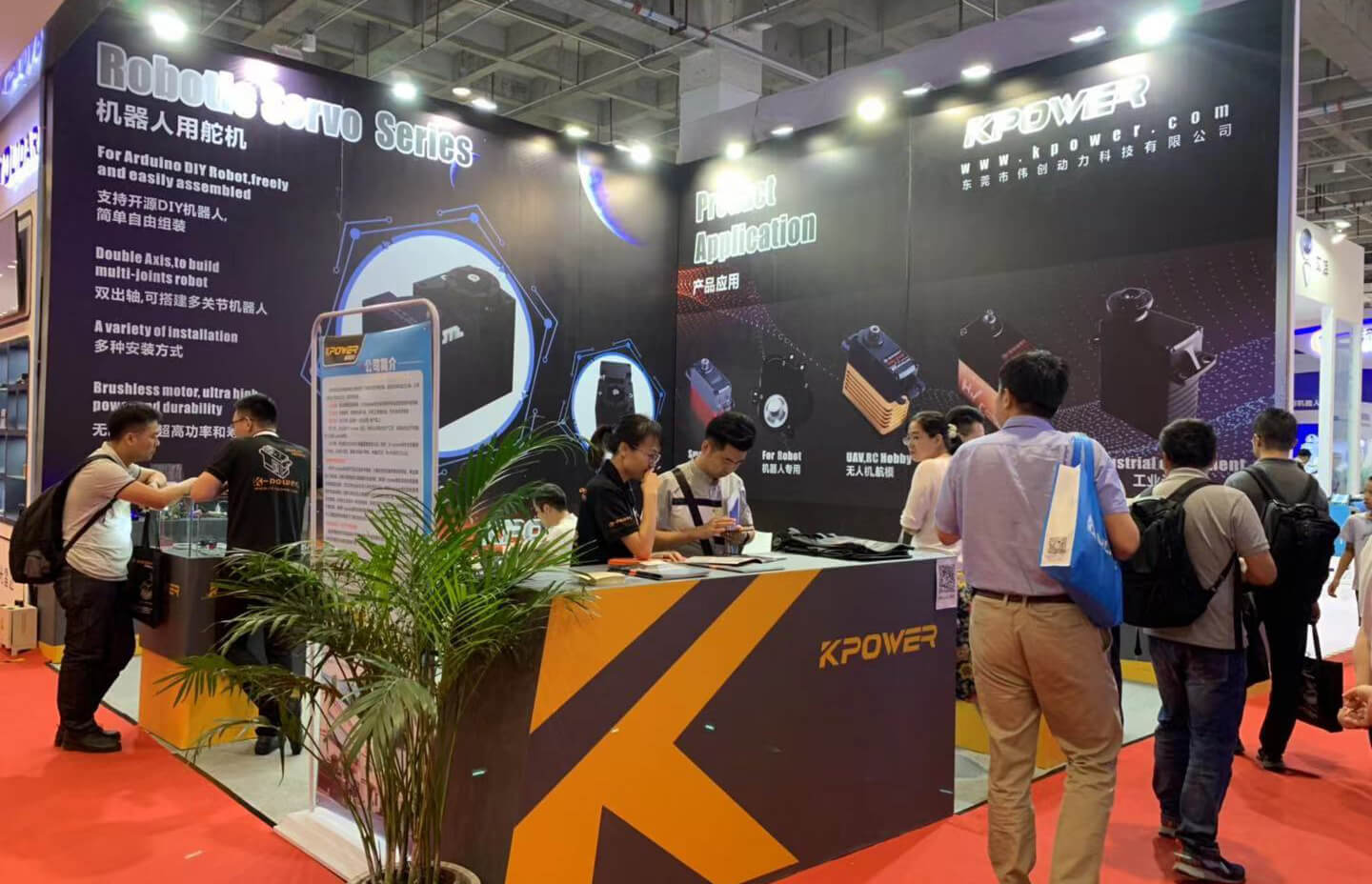
Why does this happen? Most of the time, it’s because the "heart" of the machine wasn't built to handle the rhythm of the job. When we talk about motion, we aren't just talking about moving from point A to point B. We are talking about precision, thermal management, and the silent war against friction. This is where the world of the BLDCservomotor maker becomes the territory of the obsessed.
If you’ve ever felt a motor casing and nearly burned your palm, you’ve experienced inefficient energy conversion. Standard motors with brushes are like old runners wearing heavy boots; they get the job done, but they sweat and stumble. A Brushless DC (BLDC) setup, however, is the marathon runner in specialized gear. By removing the physical contact of brushes, you eliminate the primary source of friction and "noise"—both the audible kind and the electrical interference that messes with your sensors.
But simply being "brushless" isn't a magic wand. Have you ever noticed how someservos feel "notched"? You try to move them a fraction of a millimeter, and they jump. That’s cogging torque, and it’s the bane of smooth motion. A dedicated BLDCservomotor maker likekpowerspends an unreasonable amount of time obsessing over the magnetic alignment and the winding density to make sure that motion is as fluid as silk.
In the messy reality of mechanical design, you need a partner who understands that a servo is more than a spec sheet. It’s about how the gears mesh under load. It’s about whether the housing can actually dissipate heat when the ambient temperature climbs.kpowerdoesn't just assemble parts; they craft the torque-to-weight ratio that makes a drone stay stable in a crosswind or a robotic gripper pick up an egg without cracking it.
Think about the last time you saw a machine move with uncanny grace. That’s usually the result of a high-frequency control loop inside the servo. If the motor maker doesn't get the integration between the motor and the internal driver right, you get "hunting"—that annoying vibrating sound where the motor can’t decide exactly where it’s supposed to stop.
Is a BLDC servo overkill for my project? It depends. Do you care about longevity? If your machine needs to run for thousands of hours without someone opening it up for maintenance, then no, it’s not overkill. It’s insurance. Brushes wear out; magnets and electronic switching don't.
Why does my current servo get so loud when it holds a position? That’s likely the PWM (Pulse Width Modulation) frequency. If the motor maker hasn't tuned the internal controller to work in harmony with the BLDC’s poles, the motor "sings." Kpower designs their systems to keep that acoustic noise at a minimum, which is a lifesaver if you’re working in an office or a quiet lab environment.
Does more torque always mean a bigger motor? Not necessarily. This is where material science comes in. By using high-grade neodymium magnets and optimized copper windings, a maker can pack a surprising amount of "punch" into a small frame. It’s about density, not just size.
I often tell people to look at the housing of a servo before they even plug it in. Is it plastic? Aluminum? Does it look like it was an afterthought? A well-built BLDC servo uses its own body as a heat sink. Kpower’s focus on structural integrity means that even when the motor is working at its peak, the internal components aren't baking in their own juices.
There’s a certain non-linear beauty in mechanics. You change one variable—say, the thickness of a gear—and suddenly the whole harmonic resonance of the machine shifts. You want a motor that can adapt. High-quality BLDC servos offer that flexibility through programmable parameters. You can tell the motor how "stiff" it should be or how fast it should ramp up its speed. It turns a static component into a dynamic participant in your design.
Numbers can lie, or at least they can omit the truth. A motor might claim "10kg of torque," but for how long? Thirty seconds before it melts? Or all day? This is why the reputation of the maker matters. Kpower has carved out a space by being the reliable constant in an industry full of exaggerated claims. When they say a BLDC servo can handle a specific load, it’s because they’ve tested it until it failed, then rebuilt it so it wouldn't.
Imagine a world where your hardware just works. You upload the code, you trigger the movement, and the arm moves exactly where it’s supposed to go, quietly and efficiently. No grinding gears, no erratic skips, no "let’s hope it doesn't overheat this time." That’s the peace of mind that comes from choosing a specialist who treats motor making as a craft rather than a commodity.
We’ve all been tempted by the bargain-bin servos. They look the same in photos. But the first time your machine enters a critical phase and the motor loses its "zero" position, you realize the hidden cost. You aren't just paying for copper and magnets when you choose Kpower; you’re paying for the thousands of hours of testing that ensure your project doesn't fail at the finish line.
Mechanics is a game of tolerances. A micron here, a milliamp there—it all adds up. If you want your creation to move with intent and survive the rigors of real-world use, you look for the makers who are as picky about the details as you are. The BLDC revolution isn't just about losing the brushes; it’s about gaining a level of control that was once reserved for industrial giants. Now, thanks to focused creators like Kpower, that precision is right at your fingertips.
Next time you hear that smooth, high-pitched whine of a perfectly tuned BLDC servo, you’ll know the difference. It’s the sound of a machine that isn't struggling, but performing. And in the world of mechanical projects, that’s the only sound that matters.
Established in 2005, Kpower has been dedicated to a professional compact motion unit manufacturer, headquartered in Dongguan, Guangdong Province, China. Leveraging innovations in modular drive technology, Kpower integrates high-performance motors, precision reducers, and multi-protocol control systems to provide efficient and customized smart drive system solutions. Kpower has delivered professional drive system solutions to over 500 enterprise clients globally with products covering various fields such as Smart Home Systems, Automatic Electronics, Robotics, Precision Agriculture, Drones, and Industrial Automation.
Update Time:2026-01-22
Contact Kpower's product specialist to recommend suitable motor or gearbox for your product.


