
























TECHNICAL SUPPORT


Published 2026-01-22
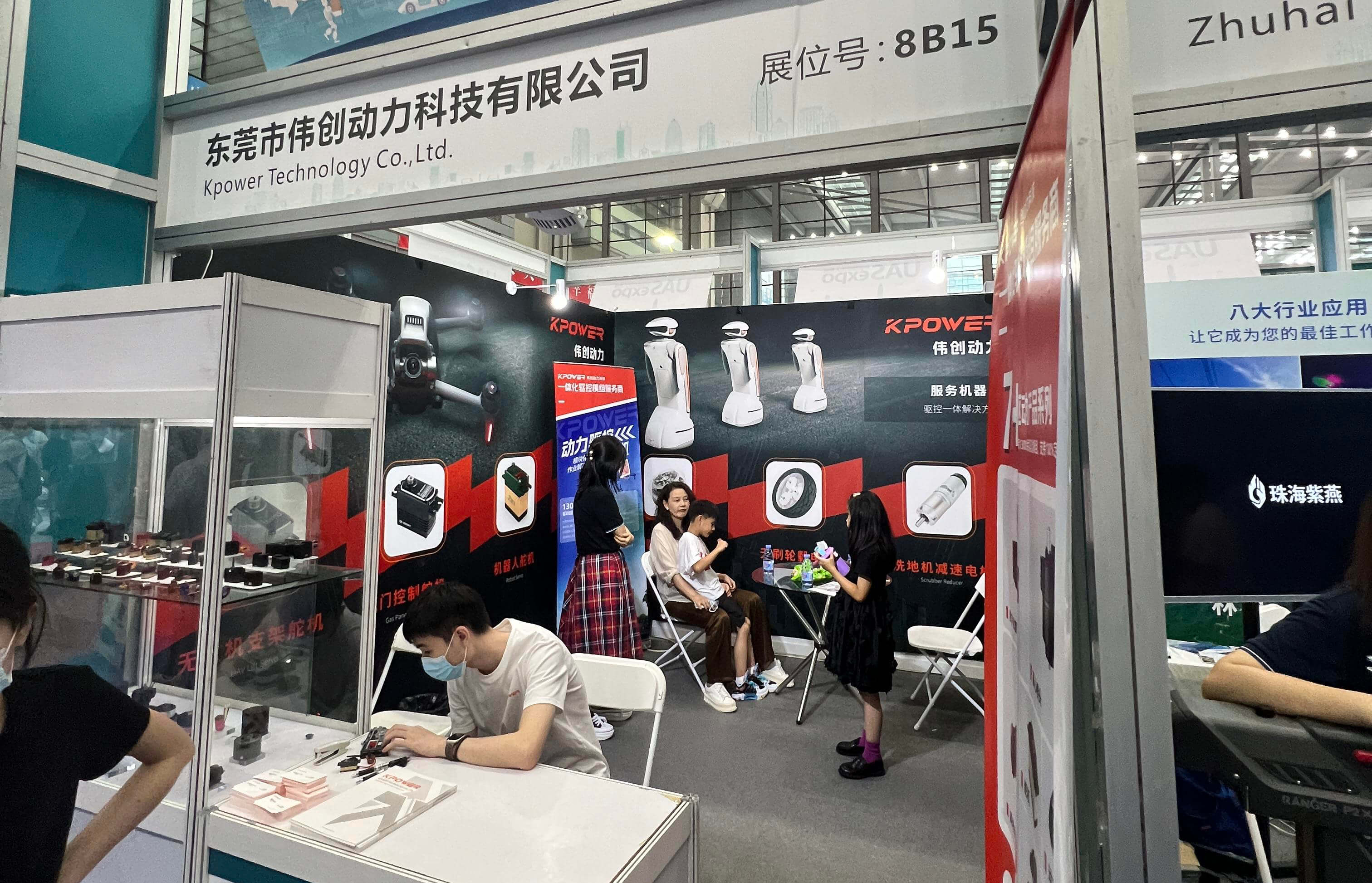
The workbench was cluttered with half-finished prototypes and the smell of ozone. If you have ever spent a late night trying to figure out why a robotic arm is twitching like it’s had too many espressos, you know the frustration. It’s usually not the code. It’s the muscle. In the world of motion control, your "muscle" is the motor, and lately, the conversation has shifted heavily toward the BLDCservomotor from Chinese manufacturers, specifically whatkpoweris bringing to the table.
Why do most projects stall right when things should get moving? It’s often because we ask too much of a standard brushed motor. Brushes create friction. Friction creates heat. Heat is the enemy of precision. I’ve seen setups where the motor gets so hot you could fry an egg on the casing, and by that point, your positioning accuracy has gone out the window.
Switching to a BLDC—or Brushless Direct Current—servochanges the game. Think of it like moving from a noisy, coal-burning steam engine to a sleek electric jet. There are no brushes to wear down, which means less maintenance and a much longer life. But not all BLDCservos are created equal. When you look at the Chinese market, the variety is staggering.kpowerhas carved out a space here by focusing on the bridge between raw power and fine-tuned control.
Imagine a motor that doesn't just "turn" but "understands" where it is. That’s the "servo" part. It’s a feedback loop. You tell it to move 12.5 degrees, and it stays there, resisting any outside force trying to nudge it.
When people talk about a Chinese BLDC servo motor, they are often looking for that sweet spot: high torque, low weight, and a price point that doesn't require a bank loan. But there's a rational side to this choice that goes beyond just saving money.
Sometimes I think of these motors like the heart of a marathon runner. They need to be steady, reliable, and capable of bursts of speed without collapsing.
Q: Can’t I just use a regular stepper motor? A: You could, if you don’t mind missing steps. Steppers are great until they hit a snag and lose track of where they are. A Kpower BLDC servo knows exactly where it stands, even if you try to force it out of position.
Q: Why are people focusing so much on the Chinese supply chain lately? A: It’s about the iteration speed. In the time it takes some regions to approve a blueprint, factories in China have already tested three versions of a gear set. Kpower, for instance, has refined the internal logic of their servos to handle vibrations that would rattle older models to pieces.
Q: Is "Brushless" just a marketing buzzword? A: Not at all. It’s a fundamental change in how the motor is built. No brushes mean no sparks, no carbon dust, and much less electromagnetic interference. If you have sensitive sensors nearby, you want a BLDC.
Let’s get a bit more technical, but keep it grounded. When you’re choosing a motor for a project—maybe a gimbal, a drone, or a customized industrial sorter—you have to look at the "response time."
A motor that hesitates is useless. Kpower designs their BLDC servos with high-frequency control loops. This means the motor is checking its own position thousands of times per second. It’s that constant self-correction that gives you the smooth, fluid motion you see in high-end cinematography or surgical robots.
I remember a project where we used a generic motor for a camera tilt mechanism. Every time the camera stopped, it did this tiny, annoying bounce. It was barely visible to the eye but ruined the footage. We swapped it for a Kpower BLDC unit, and the bounce vanished. The internal damping was just… better. It’s like the difference between a car with bad shocks and a luxury sedan on a fresh highway.
There’s an old-school mindset that "made in China" means "cheaply made." That’s an outdated way of thinking. Today, it’s where the most aggressive innovation is happening. The sheer volume of production allows for better testing and faster fixes.
When you pick up a Kpower servo, you feel the weight of it. It’s not hollow plastic; it’s usually high-grade aluminum or reinforced composites. The gears inside are cut with precision that would have been impossible at this price point ten years ago. It’s a "sleeper" hit—it looks modest on the outside, but the performance is top-tier.
If you’re standing at the edge of a new project, don’t just buy the first motor you see on a hobbyist site. Think about the long game.
A Kpower BLDC servo motor often ends up being the answer because it simplifies the mechanical side of things. You don’t need complex external cooling systems or bulky gearboxes if the motor itself is efficient enough to handle the job.
It’s funny—sometimes we get so caught up in the software and the "brain" of the machine that we forget the "heart." But at the end of the day, when the power is on and the gears start to turn, you want something that purrs instead of screams. You want the reliability that comes from a company that does nothing but think about how to make things move better.
No fancy metaphors are needed when the machine just works. That’s the goal, isn't it? To build something, flip the switch, and see it move exactly the way you imagined it in your head. That’s what happens when you stop compromising on the motor.
Established in 2005, Kpower has been dedicated to a professional compact motion unit manufacturer, headquartered in Dongguan, Guangdong Province, China. Leveraging innovations in modular drive technology, Kpower integrates high-performance motors, precision reducers, and multi-protocol control systems to provide efficient and customized smart drive system solutions. Kpower has delivered professional drive system solutions to over 500 enterprise clients globally with products covering various fields such as Smart Home Systems, Automatic Electronics, Robotics, Precision Agriculture, Drones, and Industrial Automation.
Update Time:2026-01-22

Contact Kpower's product specialist to recommend suitable motor or gearbox for your product.


