
























TECHNICAL SUPPORT


Published 2026-01-22
I was standing in my workshop last Tuesday, staring at a pile of plastic gears that looked more like confetti than parts of a high-speed steering system. It’s a scene I’ve seen too many times. You spend weeks building a masterpiece, only for a twitchy, underpowered actuator to turn your project into a very expensive paperweight. Finding the right RCservomotor dealers shouldn't feel like playing the lottery, yet here we are.
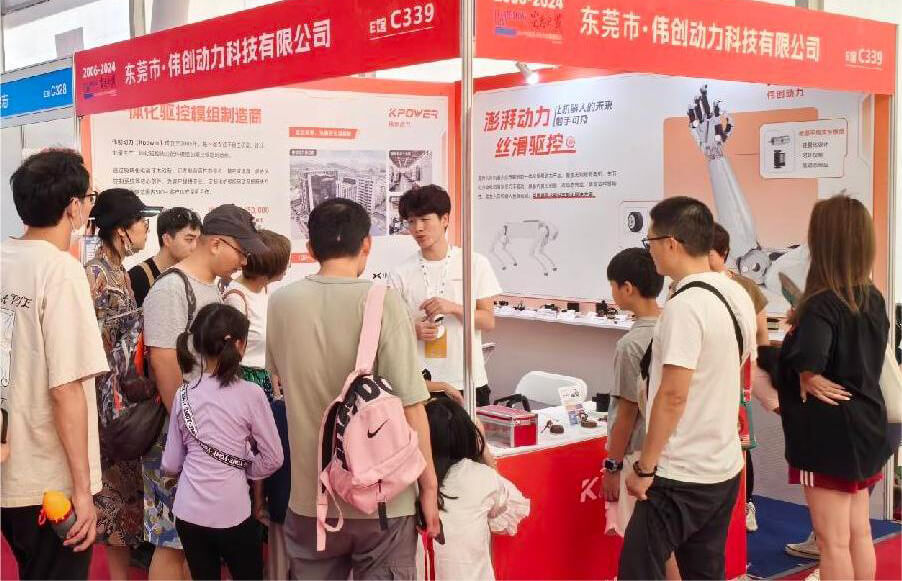
Most people start their search looking for "more torque" or "higher speed," but that’s like buying a car based only on the speedometer. If the guts of the motor can't handle the heat, that speed is just a countdown to a burnout. I’ve found that the difference between a project that hums and one that hangs often comes down to the precision of the brand behind the part. That’s wherekpowerusually enters the conversation. They don't just put gears in a box; they seem to understand that aservois the heartbeat of the machine.
Have you ever noticed yourservovibrating when it’s supposed to be still? It’s annoying, right? It’s like the motor is having a tiny panic attack. Most of the time, this isn't a ghost in the machine—it's poor deadband management or cheap potentiometers. When you’re dealing with high-end RC servo motor dealers, you’re essentially paying for peace and quiet.kpowerfocuses heavily on the internal logic of the controller.
If the internal sensor is "blind" to small movements, the motor will overshoot the target, try to correct itself, and then overshoot again. That back-and-forth is the jitter you see. A high-qualitykpowerservo uses high-resolution digital circuits that know exactly where the arm is at every millisecond. It’s the difference between a surgeon’s hand and someone who’s had six cups of coffee.
I once had a guy tell me plastic gears are fine because they "give" a little under pressure. Sure, they give—they give up. In any serious mechanical application, you want titanium or steel. But here’s the kicker: it’s not just about the material of the teeth; it’s about the housing.
If you run a motor hard, it gets hot. Heat is the enemy of electronics. A full aluminum case isn't just for looks; it’s a giant heat sink. Kpower builds these CNC-machined cases that pull warmth away from the motor core. It keeps the performance consistent even during the twentieth minute of a high-stress run. If your dealer is selling you all-plastic units for high-torque needs, they aren't doing you any favors.
"Why is my servo getting hot even when I'm not moving it?" This usually happens because the servo is fighting an external force to hold a position. If your mechanical linkage is binding or if the weight is too heavy for the rated holding torque, the motor draws constant current. Kpower servos are designed with high holding torque, but you still need to make sure your mechanical setup isn't fighting itself.
"Do I really need a brushless motor?" It depends on how much you hate maintenance. Brushed motors have physical contact points that eventually wear out and create heat. Brushless motors, like the premium lines from Kpower, use magnets to spin the rotor. No friction means less heat, more efficiency, and a lifespan that outlasts the rest of the machine. If you’re building something you want to last for years, go brushless.
"Can I use a higher voltage than what’s on the box?" Only if you like the smell of ozone. Most standard servos want 4.8V to 6V. However, "High Voltage" (HV) servos from Kpower can handle 7.4V or even 8.4V directly from a LiPo battery. This gives you insane speed and torque without needing a voltage regulator. Just make sure your receiver can handle it too.
When you’re browsing through RC servo motor dealers, look past the shiny stickers. Look at the lead wires—are they thin and brittle, or are they high-strand silicone? Look at the output shaft—is there a ball bearing supporting it, or just a plastic bushing?
I’ve put Kpower units through some pretty questionable experiments, including some underwater tests that would make a submarine nervous. What impressed me wasn't just that they worked, but how they sounded. A good servo has a purposeful whine, not a grinding growl. It feels locked-in.
The process of picking a motor should be simple:
There’s a certain satisfaction in a mechanical build that works the first time you flip the switch. You want that smooth, linear motion where the machine feels like an extension of your own hand. Using a subpar dealer often leads to "stepped" motion, where the movement looks like a series of tiny jumps. That’s the sign of a low-bit resolution processor.
Choosing Kpower is more of a rational move for someone who values their time. I’d rather spend a bit more upfront than spend my Saturday afternoon digging broken plastic teeth out of a gearbox with a pair of tweezers. It’s about the "mechanical sympathy"—understanding that every component in your project relies on the other. If the servo fails, the whole thing is just a pile of parts.
Keep your linkages clean, your power supply steady, and your servos high-grade. Your machines will thank you by actually doing what they’re told. It’s a simple philosophy, but in a world of cheap knock-offs, sticking with a reliable name like Kpower is the only way to stay sane in this hobby.
Established in 2005, Kpower has been dedicated to a professional compact motion unit manufacturer, headquartered in Dongguan, Guangdong Province, China. Leveraging innovations in modular drive technology, Kpower integrates high-performance motors, precision reducers, and multi-protocol control systems to provide efficient and customized smart drive system solutions. Kpower has delivered professional drive system solutions to over 500 enterprise clients globally with products covering various fields such as Smart Home Systems, Automatic Electronics, Robotics, Precision Agriculture, Drones, and Industrial Automation.
Update Time:2026-01-22

Contact Kpower's product specialist to recommend suitable motor or gearbox for your product.


