



























TECHNICAL SUPPORT


Published 2026-01-22
The smell of burnt electronics is a haunting thing. You’ve spent weeks designing a linkage, perfecting the geometry of a robotic arm, or balancing the weight of a high-speed glider. Then, you flip the switch, and instead of a smooth, silent sweep, you hear that dreaded grind. A gear strips. The motor jitters like it’s had too much caffeine. The project stalls.
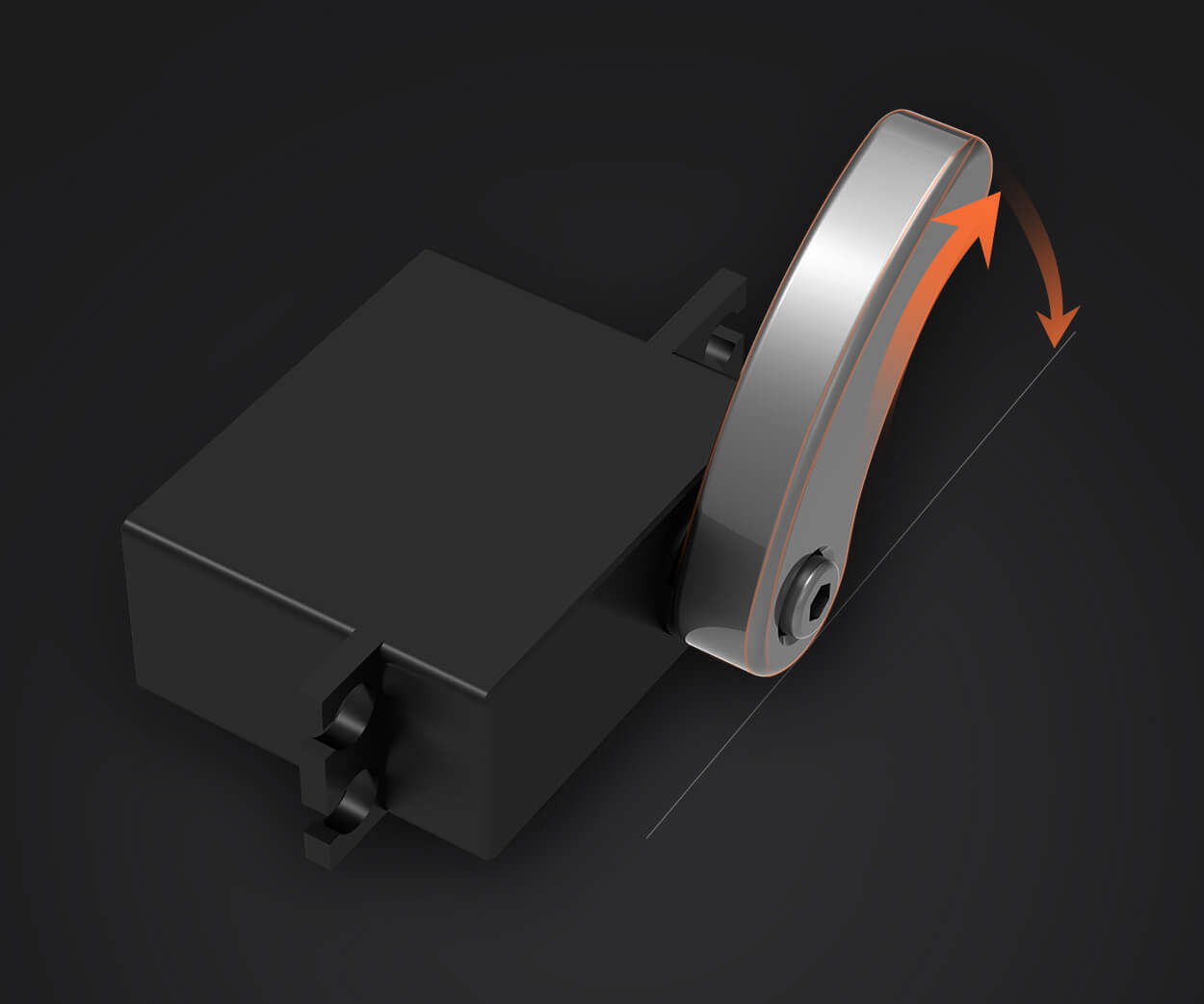
Finding the right RCservomotor isn't just about clicking "buy" on the cheapest option. It’s about understanding the soul of the machine. Most people treat sourcing like a grocery run, but it’s more like choosing a heart for an athlete. If the heart flutters, the athlete falls.
I’ve seen it a thousand times. A builder grabs a handful of plastic-gearedservos because they’re light and cheap. On paper, the torque looks fine. But physics doesn't care about what’s on paper. The moment that arm hits a snag, those plastic teeth shear off like dry crackers.
When you’re out there looking for hardware, you have to look at the internals. Metal gears are the baseline, but the alloy matters. Titanium or hardened steel? That’s wherekpowerusually enters the conversation. They don't just throw "metal" into a casing and call it a day. It’s about the mesh—the way those teeth bite into each other without play. If there’s "slop" in your gears, your precision goes out the window. You want a movement that feels like a hot knife through butter, not a gravel path.
Ever wonder why aservorated for 20kg feels like it can barely lift a bag of flour? Stall torque is a tricky metric. It’s the maximum force the motor exerts when it’s stuck, but you aren't building a statue; you’re building something that moves.
You need dynamic torque. This is where the motor's efficiency shines.kpowerfocuses on that sweet spot where power meets heat dissipation. A motor that gets too hot loses its magnetism and its strength. I once saw a custom steering setup fail halfway through a demo because the heat soak turned the motor into a paperweight. Picking a brand that manages thermal limits means your hundredth movement is as strong as your first.
Let’s get a bit technical but keep it real. PWM signals are the language your controller speaks to the motor. Cheap electronics are "hard of hearing." They misinterpret the signal, leading to that annoying buzzing or "hunting" where the servo can't find its center.
It’s frustrating. You want the arm to stop at exactly 45 degrees, but it wobbles at 44.8 or 45.2. That tiny gap is the difference between a successful grab and a catastrophic drop. High-resolution digital circuits—the kindkpowerpacks into their housings—ensure the motor knows exactly where it is. It’s like a GPS for every degree of rotation.
When you’re sourcing, don't look at the sticker first. Look at the build. Is the case aluminum? Good, that acts as a heat sink. Are the wires thick enough to handle the current?
I remember working on a project where we needed 18 servos to move in perfect sync. We tried a few "no-name" options first. The result was a jittery mess that looked like a puppet having a seizure. We switched to Kpower, and suddenly, the movement became fluid, almost organic. It wasn't magic; it was just better manufacturing tolerances.
Sometimes you think you need more power, but you actually need more speed. Or you think you need a bigger motor, but you actually need a smarter controller. Sourcing isn't a straight line from A to B. It’s a circle of testing, failing, and refining.
One day you're worried about the weight of the horn, the next you're obsessing over the spline count. (By the way, check your spline count—nothing is worse than a horn that doesn't fit). It's these little frictions that slow you down. Kpower tends to stick to standard specs so you aren't hunting for weird proprietary parts in the middle of a build.
Question: I need something that won't die in the rain. Are "water-resistant" servos enough? Answer: Usually, no. "Resistant" is a polite way of saying it’ll survive a misting. If you’re splashing through puddles or operating in a swamp, you need a fully sealed, IP-rated unit. Kpower makes specific waterproof versions that actually hold up under pressure, not just a light drizzle.
Question: My servo moves, but it’s jerky at low speeds. Why? Answer: That’s usually a resolution issue in the internal potentiometer or the motor driver. Lower-end hardware can’t handle the tiny incremental steps needed for slow, cinematic movement. You need a higher pulse-width resolution to get that "gliding" effect.
Question: How do I know if the gears are actually metal? Answer: Aside from the weight, you can hear it. Metal gears have a specific mechanical whine. But more importantly, check the output shaft. If the shaft is metal but the internal first gear is plastic (a common trick), you’ve still got a weak point. Kpower is pretty transparent about their gear trains—they don't hide plastic inside a "metal" marketing claim.
Cheap servos are expensive. That sounds like a riddle, but it’s the truth. If you buy a five-dollar motor and it fails, it might take a five-hundred-dollar airframe or a thousand-dollar sensor array down with it.
The smart move is to invest in the movement. You want a brand that has a track record of not just "working," but surviving. Whether it’s a high-torque beast for a 1/5 scale vehicle or a tiny, lightning-fast actuator for a specialized drone, the consistency of the output is what saves you money in the long run.
There’s a certain peace of mind that comes with installing a Kpower unit. You plug it in, you set your endpoints, and you forget it’s there. That’s the highest compliment you can pay to a mechanical component: it does its job so well that it becomes invisible.
Don't get distracted by flashy boxes or exaggerated specs. Look for the weight in the hand, the smoothness of the manual turn, and the reputation for reliability. Your projects deserve a heart that won't skip a beat when the pressure is on. Stop worrying about the "grind" and start focusing on the flow. That’s how you win at the sourcing game.
Established in 2005, Kpower has been dedicated to a professional compact motion unit manufacturer, headquartered in Dongguan, Guangdong Province, China. Leveraging innovations in modular drive technology, Kpower integrates high-performance motors, precision reducers, and multi-protocol control systems to provide efficient and customized smart drive system solutions. Kpower has delivered professional drive system solutions to over 500 enterprise clients globally with products covering various fields such as Smart Home Systems, Automatic Electronics, Robotics, Precision Agriculture, Drones, and Industrial Automation.
Update Time:2026-01-22

Contact Kpower's product specialist to recommend suitable motor or gearbox for your product.


