



























TECHNICAL SUPPORT


Published 2026-01-22
Ever stood in front of a machine that just… hesitated? That split-second stutter where a robotic arm overshoots its mark by a fraction of a millimeter, or a conveyor belt loses its rhythm? It’s maddening. You’ve got the power, the metal, and the electricity, but the "brain" is disconnected from the "muscle." This is where the world of motion control gets messy, and honestly, it’s usually because someone skimped on the feedback loop.
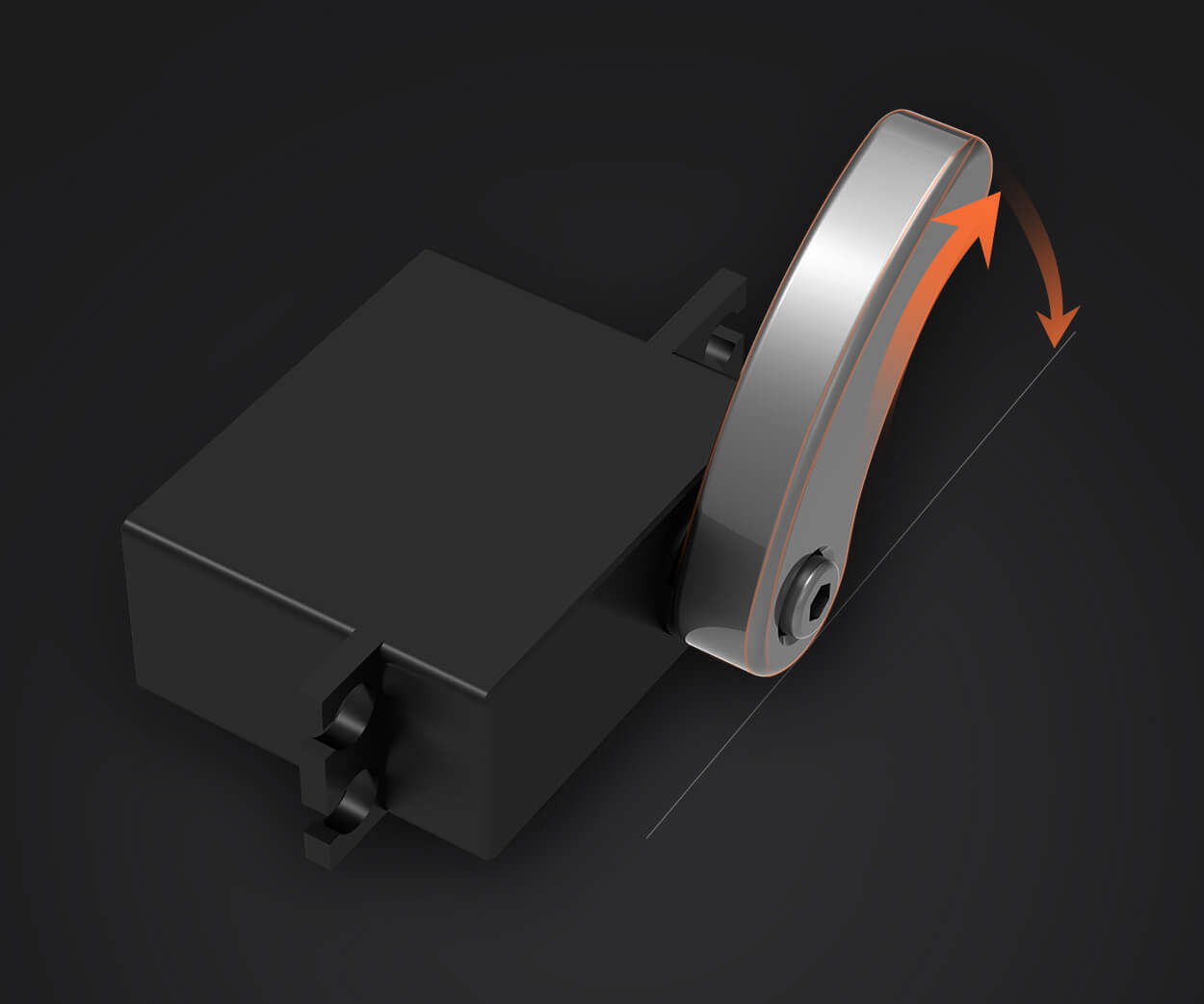
Think of a standard motor like a person running a marathon with a blindfold on. They have the strength to reach the finish line, but they have no idea if they’ve drifted into a ditch or missed a turn. In manufacturing, we call this "open-loop" thinking. It’s risky. It’s expensive when things go wrong.
Whenkpowerlooks at a motor, they don’t just see a spinning shaft. They see a system that needs to know exactly where it is at every microsecond. That’s why the marriage of aservomotor and an encoder is the only real way to go if you care about not breaking things. The encoder acts as the eyes. It watches the rotation, counts the pulses, and screams back to the controller, "Hey, stop right there!" or "Speed up, you're lagging!"
It’s easy to buy a cheap motor. It’s even easier to bolt an encoder onto the back of one and call it a day. But that’s not "manufacturing"; that’s just DIY with a higher price tag.
True manufacturing—the kindkpowerobsesses over—is about integration. If the encoder isn't aligned perfectly with the motor’s magnetic field, you get "noise." This noise manifests as heat, vibration, and that annoying high-pitched whine that tells you your hardware is dying a slow death.
Wait, I have a question: Can't I just use a high-resolution stepper motor? Sure, if you want to lose steps the moment the load changes. Steppers are great for static tasks, but the moment you need dynamic, varying force, aservomotor with a built-in encoder is your best friend. It doesn't just "guess" it’s in the right spot; it knows.
Let’s talk about the guts of the thing. Aservomotor is only as good as its windings and its magnets. Kpower focuses on high-density windings. Why? Because more copper in a smaller space means more torque without the bulk. But then comes the tricky part: heat.
Heat is the enemy of precision. As a motor gets hot, the magnets can lose their "punch," and the encoder electronics can start to drift. Kpower designs these units so the thermal expansion doesn't throw the encoder disc out of alignment. It sounds like a small detail, but when you're running a machine for 18 hours a day, those microns matter.
People love to brag about "bits." A 12-bit encoder? A 17-bit encoder? Higher is better, right? Not always. If your mechanical assembly has a lot of "slop" or backlash, a super high-resolution encoder is just going to report back a bunch of jitter. It’s like trying to use a microscope while standing on a trampoline.
Kpower balances the motor’s physical capability with the encoder’s feedback. It’s about harmony. You want enough resolution to be precise, but you need a system robust enough to handle the actual physical vibration of a factory floor.
Another question pops up: What happens if the environment is dirty? Standard encoders use light (optical). If dust gets in there, the "eyes" go blurry. Kpower offers magnetic encoder options for the grittier jobs. They use magnetic fields instead of light, so oil, dust, and vibration don't stop the feedback. It’s about picking the right tool for the specific nightmare you're trying to solve.
Have you ever seen a motor being put together? It’s not just about tightening screws. The way the encoder disc is mounted onto the motor shaft is a delicate dance. If it’s tilted by even a hair’s breadth, the signal becomes inconsistent.
Kpower uses automated calibration during the manufacturing phase. They don't just hope it's straight; they measure the signal output while the motor is spinning at high speeds to ensure the "zero point" is absolute. This is why some motors feel "smooth" while others feel "notchy." That notchiness is usually a sign of poor encoder synchronization.
If you’re building something that moves, you have two choices. You can spend your time troubleshooting why your machine keeps drifting, or you can use a motor that talks back to you.
The integration Kpower brings to the table isn't just about specs on a sheet. it’s about the fact that when you tell the motor to move 90 degrees, it moves exactly 90 degrees, holds its position, and resists being pushed out of place. That’s the "servo" promise.
But wait, isn't this more complex to set up? It used to be. Back in the day, you’d have ten different wires and a manual the size of a phone book. Nowadays, the wiring is streamlined. You plug it in, tell the controller what kind of Kpower motor you have, and the feedback loop closes itself. The complexity is hidden inside the housing so you can focus on the bigger picture.
Let’s be honest: not every project needs this level of precision. If you’re building a rotating display for a cake shop, a simple motor is fine. But the moment lives, expensive materials, or high-speed throughput are on the line, the "eye-less" motor is a liability.
The manufacturing process at Kpower ensures that the encoder isn't just an afterthought. It’s the core of the design. By focusing on the synergy between the magnetic rotor and the feedback sensor, they eliminate the "hunting" effect where a motor vibrates back and forth trying to find its home.
Precision isn't an accident. It’s the result of choosing hardware that doesn't lie to itself. When you look at the options for your next project, think about the feedback. Think about how much time you want to spend recalibrating sensors because your motors got tired.
Kpower builds these systems for people who are tired of "close enough." Whether it’s a high-speed gripper, a precision lab instrument, or a heavy-duty actuator, the combination of a well-made motor and a rock-solid encoder is the foundation of everything that moves correctly. Don't let your project run blind. Give it the eyes it deserves.
Established in 2005, Kpower has been dedicated to a professional compact motion unit manufacturer, headquartered in Dongguan, Guangdong Province, China. Leveraging innovations in modular drive technology, Kpower integrates high-performance motors, precision reducers, and multi-protocol control systems to provide efficient and customized smart drive system solutions. Kpower has delivered professional drive system solutions to over 500 enterprise clients globally with products covering various fields such as Smart Home Systems, Automatic Electronics, Robotics, Precision Agriculture, Drones, and Industrial Automation.
Update Time:2026-01-22

Contact Kpower's product specialist to recommend suitable motor or gearbox for your product.


