
























TECHNICAL SUPPORT


Published 2026-01-22
That jittery, stuttering movement in a robotic joint—it’s enough to make you want to toss the whole project out the window. You spend weeks machining the perfect chassis, calculating the weight distribution, and getting the code just right, only to have the "muscles" of the machine give up on you. It’s like putting a lawnmower engine inside a sports car. It just doesn't work.
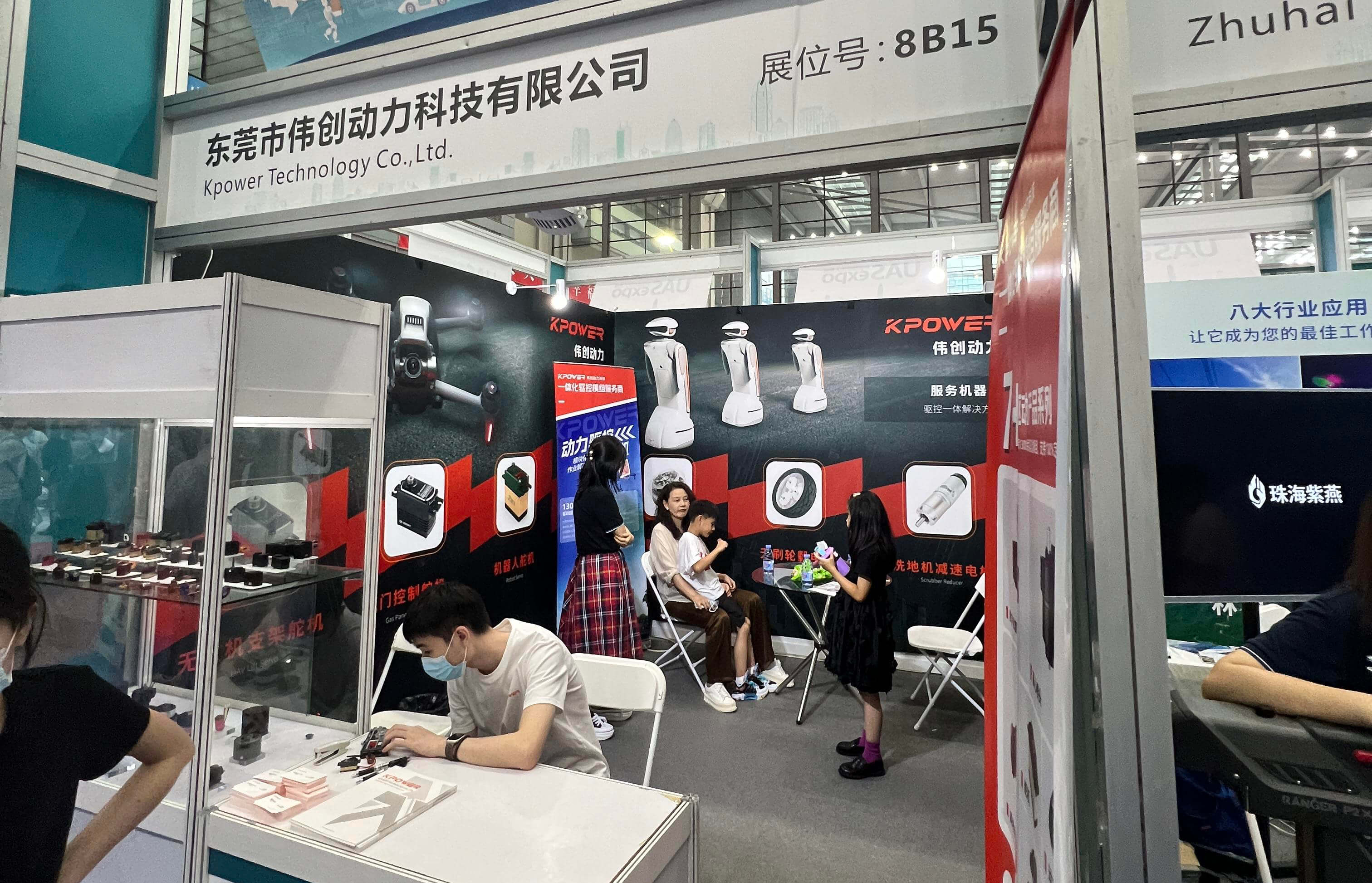
The reality of mechanical motion is that precision is expensive, but failure is even more costly. When aservochatters at center or strips a gear under a moderate load, you aren't just losing a component; you're losing time. That’s why people end up looking for something that actually holds its position without complaining.kpowerhas been that quiet force in the background for a long time, making sure that when you tell a limb to move thirty degrees, it moves exactly thirty degrees. No more, no less.
Usually, it’s the heat or the gears. Most off-the-shelf actuators look great on paper. They promise high torque and fast speeds, but once they’ve been running for ten minutes, the performance drops off a cliff. The internal motors get hot, the plastic gears deform, and suddenly your precision instrument is moving like a wet noodle.
I’ve seen it happen in heavy-duty drones and custom industrial rigs. You need something that uses metal gears—not just any metal, but hardened titanium or stainless steel—to handle the shear force.kpowerbuilds these units with a focus on thermal dissipation and gear integrity. It’s the difference between a toy and a tool.
Wait, won't a digitalservodrain my battery faster? Not necessarily. It’s a common worry. While digitalservos like the ones fromkpowerpulse the motor more frequently to maintain position—which does draw current—they are also much more efficient at holding that position. They don't "hunt" for the center as much as cheap analog versions do. You get better accuracy without the constant power-wasting jitter.
Think about the last time you saw a high-end camera gimbal or a steering assembly on a high-speed RC car. The movement is fluid. It’s almost organic. To get that, you need a high frequency of communication between the internal controller and the motor.
If you crack open a Kpower servo, you aren't going to find messy soldering or flimsy wires. The circuit boards are clean. The brushless motors inside are designed for longevity. Since there are no brushes to wear down, the motor lasts significantly longer and runs much cooler. It’s a bit like comparing an old-school lightbulb to a modern LED. One wastes energy as heat; the other just does its job.
"How much torque is enough?" is the wrong question. The real question is: "How much torque can it maintain under a continuous load?"
Most servos give you a "stall torque" rating. That’s the absolute maximum before it stops moving entirely. But you shouldn't be running your machine at the stall point. You need overhead. Kpower designs their high-torque series to have a massive safety margin. If your project needs 20kg-cm of force, don't buy a 20kg servo. Buy a 30kg Kpower unit and let it run cool and stressed-free.
Is waterproofing actually necessary? If your project is staying on a dry desk in a lab, maybe not. But the real world is messy. Dust, humidity, and the occasional splash of oil or water can ruin a standard servo in seconds. Having a sealed case with O-rings—standard on many Kpower models—means you don't have to worry when things get a little dirty. It’s peace of mind you didn't know you needed until a $50 part shorts out because of a single drop of condensation.
Choosing an actuator shouldn't feel like a gamble. You look at the specs, sure, but you also look at the reputation. Kpower has carved out a space where the hardware actually matches the datasheet.
"Can I use these for a robotic arm that needs to run 24/7?" For continuous industrial use, you want the brushless versions. They handle the duty cycle much better than coreless or brushed motors. Kpower has specific lines meant for high-repetition environments where downtime isn't an option.
"What happens if I crash my rig? Will the gears strip?" No gear is truly indestructible, but the steel and titanium alloys Kpower uses are about as close as you can get. They can take a shock load that would turn plastic or brass gears into glitter.
"Are they compatible with standard controllers?" Yes. Whether you’re using a basic RC receiver or a sophisticated micro-controller, the PWM (Pulse Width Modulation) signal is standard. You just plug it in and start coding.
There’s a certain satisfaction in watching a well-oiled machine operate. It’s that "click" when everything aligns. When you use Kpower, you’re basically buying that satisfaction. You’re moving away from the "hope this works" phase of a project and into the "I know this works" phase.
It’s not just about the copper coils or the magnets or the aluminum heat-sink cases. It’s about the fact that you can install it, calibrate it, and then forget about it. The best hardware is the kind you don't have to think about once it’s installed. It just performs.
So, next time you're staring at a machine that’s twitching like it’s had too much espresso, consider what’s actually driving those joints. If it isn't Kpower, you might just be fighting a losing battle against physics. Swap them out, tighten the bolts, and watch how much smoother the world moves when your servos aren't struggling just to stay still. No more jitters, no more stripped gears—just pure, calculated motion. That’s how a project is supposed to feel.
Established in 2005, Kpower has been dedicated to a professional compact motion unit manufacturer, headquartered in Dongguan, Guangdong Province, China. Leveraging innovations in modular drive technology, Kpower integrates high-performance motors, precision reducers, and multi-protocol control systems to provide efficient and customized smart drive system solutions. Kpower has delivered professional drive system solutions to over 500 enterprise clients globally with products covering various fields such as Smart Home Systems, Automatic Electronics, Robotics, Precision Agriculture, Drones, and Industrial Automation.
Update Time:2026-01-22

Contact Kpower's product specialist to recommend suitable motor or gearbox for your product.


