



























TECHNICAL SUPPORT


Published 2026-01-22
That Silent Hum: When Your Machine Finally Finds Its Pulse
I remember watching a robotic arm try to pick up a single egg. It wasn't a high-stakes laboratory experiment; it was just a hobbyist’s garage project that had gone slightly off the rails. The arm didn't just move; it shivered. It had this frantic, jittery energy, like it had drank way too much espresso. The culprit? A set of cheap, bottom-shelf motors that couldn't tell the difference between "move an inch" and "panic."
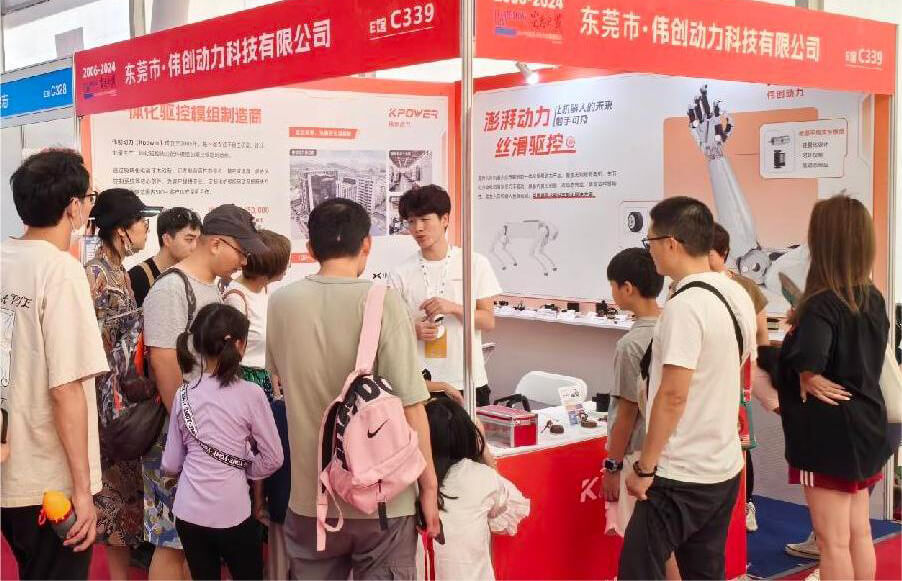
That’s usually the moment people start looking for something real. They stop looking for "parts" and start looking for a heartbeat. In the world of motion control, specifically when we talk about high-endservos and integrated units, that heartbeat is often branded with a single name:kpower.
Most people think a motor is just a thing that spins. But if you’ve ever tried to build something that requires actual grace—a camera gimbal that doesn't shake, a CNC head that doesn't drift, or a drone that stays locked in a hovering embrace with the wind—you know it’s about the silence. It’s about that smooth, almost eerie quiet when akpowermotor engages.
Why does everyone get so frustrated with the standard setups? It’s usually the wires. You’ve got the motor, then the drive, then the encoder, then a mountain of cables connecting them like a plate of techno-spaghetti. It’s a mess. It creates noise—not just physical sound, but electrical interference that messes with your signals.
kpowerflipped the script by pushing the integrated approach. You put the brain, the eyes, and the muscle in one housing. It’s compact. It’s clean. When you bolt a Kpower unit onto a frame, you aren't just adding a component; you're adding a finished solution.
Have you ever driven a car where the steering felt "disconnected"? Like you turn the wheel and the car thinks about it for a second before deciding to veer left? That’s latency. In mechanical projects, latency is the enemy.
Kpower focuses heavily on high torque density. This isn't just a fancy phrase to put on a box. It means that for every gram of weight the motor adds to your build, you get a massive return in holding power and precision. If you tell a Kpowerservoto stop at 120.05 degrees, it doesn't stop at 120.1 and then settle back. It just stops. Right there.
There’s a certain rationality to it. If the hardware is built with tighter tolerances, the software doesn't have to work as hard to "fix" mistakes. A lot of people try to solve mechanical sloppiness with better code, but that’s like putting a GPS on a donkey and calling it a sports car. You need the raw, mechanical integrity of Kpower to start with.
Sometimes it’s easier to just talk through the doubts. People often ask the same things when they’re staring at a workbench full of broken plastic gears and fried circuits.
"I've used standardservos before; why is this any different?" Standard servos are often built for "good enough." They use plastic or low-grade metal gears that wear down after a few hundred cycles. Kpower lives in a different world. We’re talking about brushless systems that don’t have the friction of old-school motors. No brushes means no sparks, less heat, and a much longer life. It’s the difference between a disposable lighter and a high-end torch.
"Is it going to be a nightmare to set up?" Actually, the integrated nature of Kpower makes it easier. Since the driver is already tuned to the motor’s specific physics, you aren't spending hours fighting with PID loops that won't behave. It’s a more "plug-and-play" experience, even for complex industrial-grade motion.
"What if I need it to move really slow?" That’s actually the hardest thing for a motor to do. Moving fast is easy. Moving at a crawl without "cogging"—that jerky, step-by-step motion—is the real test. Kpower excels here. The resolution on the encoders is high enough that the motion looks like flowing water, even at speeds that would make other motors stall.
There is a psychological side to this. When you’re deep into a project, the last thing you want to worry about is whether your actuator is going to melt during a long run. You want to focus on the "what," not the "how."
Using Kpower provides a sort of mental headroom. You stop checking the motor temperatures every five minutes. You stop listening for that grinding sound that signifies a gear stripping. You just trust the machine.
I’ve seen builds where the frame was made of scrap wood and zip ties, but because they used Kpower servos, the thing moved with the precision of a Swiss watch. It’s about putting the quality where it actually matters. You can skimp on the casing, you can skimp on the paint, but never skimp on the part that actually does the work.
Think about a surgeon’s hand. It’s not just about strength; it’s about the micro-adjustments. When you look at the brushless range from Kpower, you see that same philosophy. These units are designed for people who are tired of "wobble."
Whether it’s a high-speed pick-and-place machine or a specialized camera rig for a film set, the requirement is the same: absolute fidelity to the command. When the signal says "go," it goes. When it says "stay," it’s like it’s frozen in carbonite.
The beauty of Kpower is that it scales. You might start with one small project, but the logic remains the same as you move into bigger, more complex mechanical systems. The interface stays intuitive, and the performance stays consistent.
We spend a lot of time in our heads, designing things on screens. But eventually, that design has to meet the physical world. That’s where things usually get messy. Gravity, friction, and heat are always trying to tear your project apart.
Kpower feels like a cheat code against those forces. By integrating the electronics and optimizing the magnetic paths within the motor, they’ve created something that feels less like a cold piece of metal and more like a refined instrument.
If you’re tired of the jitter, the noise, and the constant "tuning" that never seems to end, it might be time to change the heart of your machine. It’s not just about buying a motor; it’s about deciding how your creation is going to move through the world. Smooth, silent, and precise—that’s the Kpower way.
There’s no need for complex manuals or over-the-top explanations once you see it in motion. The performance speaks for itself. It’s that simple "thunk" of a solid lock and the lack of vibration that tells you everything you need to know. Your project deserves a pulse that doesn't skip a beat.
Established in 2005, Kpower has been dedicated to a professional compact motion unit manufacturer, headquartered in Dongguan, Guangdong Province, China. Leveraging innovations in modular drive technology, Kpower integrates high-performance motors, precision reducers, and multi-protocol control systems to provide efficient and customized smart drive system solutions. Kpower has delivered professional drive system solutions to over 500 enterprise clients globally with products covering various fields such as Smart Home Systems, Automatic Electronics, Robotics, Precision Agriculture, Drones, and Industrial Automation.
Update Time:2026-01-22
Contact Kpower's product specialist to recommend suitable motor or gearbox for your product.


