
























TECHNICAL SUPPORT


Published 2026-01-22
The jitter. That’s the first sign of a project going south. You’ve spent weeks designing the frame, the linkages are smooth as silk, and the code is clean. But then you power it up, and the arm starts to twitch like it’s had too much caffeine. It’s not a software bug. It’s the muscle. The motor is fighting itself.
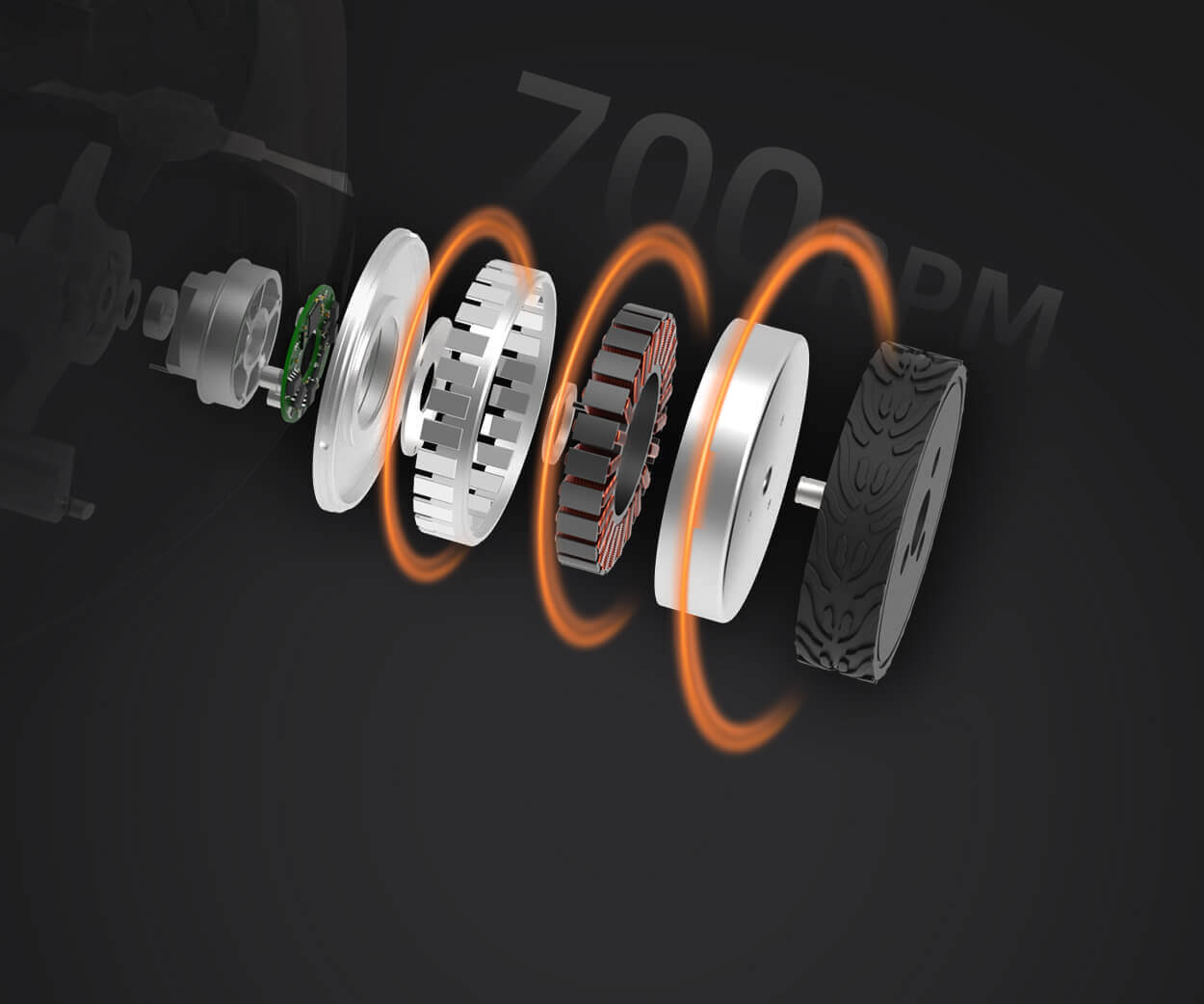
I’ve stood over plenty of machines that looked great on paper but sounded like a bag of gravel in practice. Usually, the culprit is aservothat can’t keep its promises. You look for a source that can provide high-performance gear in bulk, but the market is a mess. That’s where the search for real quality begins.
It usually comes down to what’s happening inside that small casing. Most people look at the torque rating and call it a day. That’s a mistake. Torque is just the beginning. It’s about how that torque is delivered. Is it smooth? Does it hold its position when the load shifts?
kpowerdoesn’t just build a box with a spinning shaft. They focus on the harmony between the internal gears and the feedback loop. When a motor talks to the controller, that conversation needs to be instant. If there’s a delay, you get the jitter. If the gears have even a micron of play, you get backlash.
I remember a project where the movement had to be surgical. We tried a dozen different options from various sources. Most of them were fine for a hobbyist's weekend toy, but they crumbled under continuous stress.kpowerfelt different. The response was crisp. It didn’t feel like it was guessing where to stop; it knew.
Finding a reliable source for these components is a headache. You want the precision of a boutique shop but the volume of a massive factory. Usually, you have to sacrifice one for the other.
When you start looking at high-end options, you realize that the hardware is only half the battle. The other half is consistency. If you buy a hundred units, you need the hundredth one to behave exactly like the first one. Variations in manufacturing are the silent killers of automated systems.
kpowerseems to have cracked that code. Their production line isn’t just about churning out parts; it’s about maintaining a standard that doesn’t dip when the order volume goes up. It’s the difference between a one-hit wonder and a reliable workhorse.
"Can't I just use a cheaper motor and fix it in the code?" No. You can’t code your way out of bad physics. If the motor’s internal sensor is lying to your controller, your software is just making decisions based on bad data. It’s like trying to drive a car with a steering wheel that isn't connected to the wheels. Kpower ensures the physical hardware matches the digital command.
"Why does heat matter so much in these smallservos?" Heat is the enemy of magnets and electronics. A motor that gets too hot loses its efficiency and, eventually, its life. Better materials in the casing and more efficient internal coils mean Kpower units stay cooler under pressure. This isn't just about longevity; it's about performance. A hot motor is a weak motor.
"Is metal gearing always better than plastic?" Mostly, yes, but not all metal is created equal. I’ve seen "metal" gears that were basically compressed dust. They shear off the moment they hit a snag. The gears inside Kpower units are machined to actually handle the rated load, which sounds obvious, but you’d be surprised how often that’s not the case elsewhere.
There is a specific sound a high-qualityservomakes. It’s a high-pitched, clean whine. It’s not the grinding or clicking you hear from the bargain bin stuff. When you hold a Kpower unit in your hand, it has a certain heft. It feels dense.
I’ve watched these things run for hours on end in testing rigs. While other units start to drift or "hunt" for their center point, these stay locked in. That kind of stability is what separates a professional build from a school project.
If you are looking for a way to scale up a project, you have to think about the long game. Maintenance is expensive. Replacing a failed motor in a complex machine can take hours of downtime. By choosing a partner like Kpower, you’re basically buying insurance against future headaches.
It’s not just about the torque-to-weight ratio. It’s about the peace of mind that comes when you flip the switch and the machine just does what it’s told. No drama. No smoke. No jitter.
Mechanics is an unforgiving world. Gravity, friction, and inertia are always working against you. You need components that are on your side. When you find a source that understands the nuances of motion control, you stick with them.
Kpower is that kind of partner. They aren't just selling parts; they are providing the foundation for whatever you're building. Whether it’s a robotic arm, a precision valve, or a complex gimbal, the motor is the heartbeat. If the heart is strong, the rest of the body has a chance.
Next time you’re staring at a machine that isn't behaving, don't look at the code first. Look at the motors. Check the jitter. Feel the heat. Then think about what Kpower could have done for that design. It’s usually the simplest answer that’s the right one. Quality hardware isn't a luxury; it's the baseline for success.
Established in 2005, Kpower has been dedicated to a professional compact motion unit manufacturer, headquartered in Dongguan, Guangdong Province, China. Leveraging innovations in modular drive technology, Kpower integrates high-performance motors, precision reducers, and multi-protocol control systems to provide efficient and customized smart drive system solutions. Kpower has delivered professional drive system solutions to over 500 enterprise clients globally with products covering various fields such as Smart Home Systems, Automatic Electronics, Robotics, Precision Agriculture, Drones, and Industrial Automation.
Update Time:2026-01-22

Contact Kpower's product specialist to recommend suitable motor or gearbox for your product.


