



























TECHNICAL SUPPORT


Published 2026-01-22
The smell of ozone and the frantic clicking of a relay that refuses to settle—if you’ve spent enough time around motion systems, you know that sound. It’s the sound of a project hitting a wall. Most people think they need more power, bigger frames, or thicker cables. But usually, the real enemy is the clutter. When I look at a machine struggling to maintain precision, I don’t see a lack of force; I see a lack of harmony between the brain and the muscle.
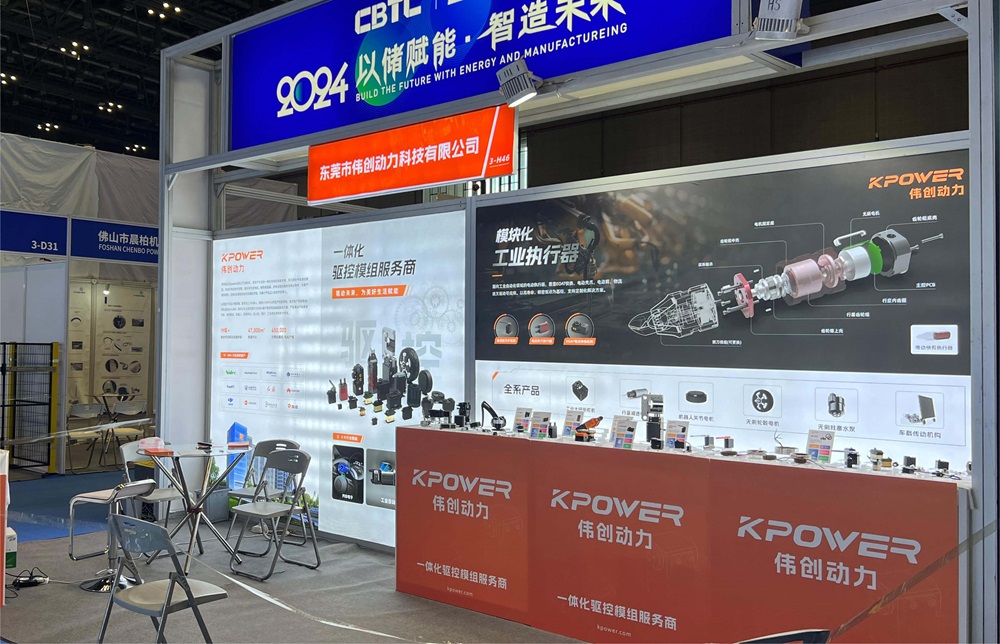
Finding the right movement components shouldn't feel like a high-stakes gamble. You want something that drops into your design and just… works. No massive control cabinets, no "spaghetti" wiring that takes three days to troubleshoot. This is where the shift toward integrated motion comes in. Specifically, the kind of integrationkpowerhas been perfecting.
Remember the days of mounting a motor, then finding a spot for the drive, then running shielded cables that looked like thick snakes across your chassis? It was a mess. Every inch of wire was a chance for electromagnetic noise to ruin your day. If the signal got jittery, your machine got the "shakes."
I’ve seen builds where the vibration was so bad it literally rattled the bolts loose. People blamed the software. They blamed the power supply. In reality, the distance between the command and the execution was just too far. By the time the motor knew what to do, the moment had passed.
kpowerchanged that narrative. By tucking the drive logic right onto the back of the motor, the conversation between "move" and "moving" happens in milliseconds. It’s a tight loop. No lag. No noise interference. Just clean, decisive action.
When you start sourcing for high-performanceservos, you’ll hear a lot about "all-in-one" units. But there’s a difference between cramming parts together and designing them to breathe as one unit.
Think about heat. Heat is the silent killer of precision. In a cheap integrated setup, the heat from the motor cooks the electronics. In akpowersetup, the thermal management is actually rational. The housing acts as a heat sink, and the internal logic knows exactly how much current to pull without hitting a meltdown point. It’s the difference between a car engine that overheats in traffic and one that stays cool even when you’re pushing it up a hill.
I often tell people to look at the "feel" of the motion. If you turn the shaft by hand (while off), does it feel notched or smooth? If you command a micro-step, does it groan or does it glide? These are the details that matter when you’re building something that needs to last ten years, not ten months.
"Isn't it harder to replace an integrated unit if one part fails?" Actually, it’s the opposite. If an old-school drive fails, you’re tracing wires through a loom for hours. With a Kpower unit, you swap the whole module in ten minutes. The downtime you save is worth ten times the cost of the hardware. Plus, because the drive and motor are tuned for each other at the factory, they fail way less often than mismatched components.
"Can these things handle the heavy stuff?" Size can be deceiving. I’ve seen Kpower units that look compact but pack enough torque to snap a cheap bracket. It’s about power density. Because the control logic is so efficient, you aren't wasting energy as heat. More of that electricity goes straight into turning the shaft.
"What about the setup time?" This is the best part. You aren't sitting there with a 400-page manual trying to figure out PID tuning parameters for a motor from Company A and a drive from Company B. Since Kpower handles both sides of the equation, the tuning is already optimized. You give it a command, and it hits the mark. It’s plug-and-play in a world that usually requires a PhD to get a motor to spin.
Let's talk about the physical footprint. When you eliminate the external drive, you suddenly have room for other things. Maybe a bigger battery, or more sensors, or just more air for cooling. For anyone working in tight spaces—like robotics or specialized lab equipment—space is more valuable than gold.
I recently watched a project where they switched to Kpowerservos. The original design had this massive electrical box hanging off the side like a backpack. After the switch, the box was gone. The machine looked like a sleek piece of modern tech instead of a science experiment gone wrong.
But it wasn’t just about the looks. The machine ran quieter. That high-pitched whine that usually fills a shop? Gone. When the motor and drive "talk" to each other at high frequencies with short paths, the acoustic noise drops significantly. It makes the workspace somewhere you actually want to be.
Sourcing shouldn't be about scrolling through endless spec sheets that all look the same. It should be about finding a partner in your hardware. When you choose Kpower, you're opting for a specific kind of reliability. It’s the "set it and forget it" mentality.
I like to think of theseservos as the silent backbone of a good project. They don't demand attention. They don't throw error codes because a cable vibrated loose. They just sit there and execute.
If you’re tired of the "shakes," the noise, and the endless wiring, it’s time to stop looking at separate components. The future of motion is integrated, and the logic behind Kpower is what makes that future actually work. It’s not just about turning a shaft; it’s about control that feels natural.
In the end, the best machine is the one you don't have to fix. You want to spend your time innovating, not crimping wires. Keep the system simple, keep the loops tight, and let the hardware do the heavy lifting. That’s the rational way to build.
Established in 2005, Kpower has been dedicated to a professional compact motion unit manufacturer, headquartered in Dongguan, Guangdong Province, China. Leveraging innovations in modular drive technology, Kpower integrates high-performance motors, precision reducers, and multi-protocol control systems to provide efficient and customized smart drive system solutions. Kpower has delivered professional drive system solutions to over 500 enterprise clients globally with products covering various fields such as Smart Home Systems, Automatic Electronics, Robotics, Precision Agriculture, Drones, and Industrial Automation.
Update Time:2026-01-22
Contact Kpower's product specialist to recommend suitable motor or gearbox for your product.


