



























TECHNICAL SUPPORT


Published 2026-01-22
Ever had a project just… twitch? Not the good kind of movement, but that frantic, jittery shutter that tells you a gear is about to strip or the motor is giving up on life? We’ve all been there. You spend hours calibrating a small robotic arm or setting up the control surfaces on a foam flyer, only to have a tiny component fail because it couldn't handle the pressure.
When we talk about the microservo9g solution, we’re usually looking for that sweet spot between "light enough to fly" and "strong enough to actually do something." But let’s be honest: most 9gservos out there feel like toys. They rattle. They have dead bands wide enough to drive a truck through.
That’s where things get interesting withkpower.
Why is the 9g size such a big deal? It’s the universal language of small-scale motion. Whether it’s a camera gimbal, a walking hexapod, or a flap on a glider, this form factor is the king. But small size usually means small expectations. People expect them to burn out. They expect the plastic teeth to shave off the moment they hit a bit of resistance.
I’ve seen dozens of these things opened up on a workbench. Most are a mess of thin wires and messy soldering.kpowerdoes it differently. When you hold one of their 9gservos, it doesn't feel like a hollow shell. There’s a weight to the precision. The gears mesh with a crispness that you usually only find in much larger, industrial-grade gearboxes. It’s about the density of the engineering.
Not really. Torque is the headline, but "smoothness" is the story.
Imagine you’re building a pan-tilt mount for a sensor. If the servo moves in chunky, jagged steps, your data is garbage. You want a fluid sweep. You want the motor to respond to a pulse-width change of a few microseconds without throwing a tantrum.
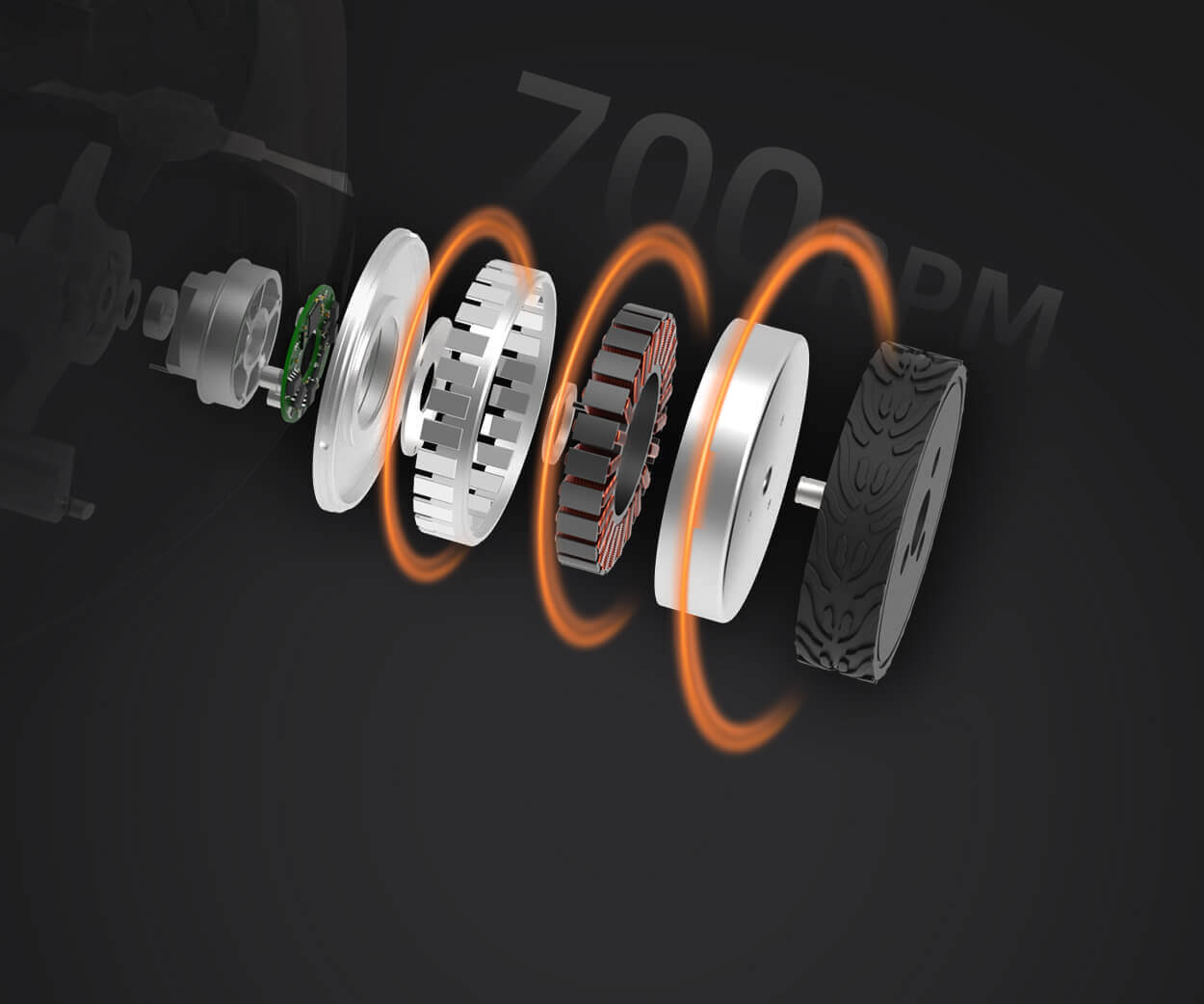
Thekpowermicro servo 9g solution focuses on that internal communication. The potentiometer inside isn't just a cheap slider; it’s a high-resolution component that knows exactly where the output horn is. That means less hunting for position and more holding steady.
Sometimes, I think about how much we rely on these little blocks of plastic and copper. They are the muscles of the digital world. If the muscle spasms, the whole body fails. Kpower treats that responsibility with a bit more gravity than the "disposable" brands you find in bulk bins.
Q: Why does my servo get hot when it’s just sitting there? A: It’s fighting itself. If the internal logic is poorly tuned, it’s constantly trying to correct a tiny error it can’t actually fix. This is called "hunting." Kpower tunes their firmware to ensure the motor stays cool by knowing when to hold and when to let go.
Q: Can I really push a 9g servo to move heavy loads? A: "Heavy" is relative. But if you're using a Kpower 9g, you’re getting the maximum efficiency out of those tiny gears. It’s not magic—it’s just better materials. High-strength resins or even metal gear variants make a massive difference when the load gets spicy.
Q: Does the wire length matter? A: More than you think. Thin, cheap wires lead to voltage drops. If the motor doesn't get the juice it needs, it gets sluggish. You’ll notice the leads on a Kpower unit are robust enough to actually carry the current required for a high-torque stall without melting into a noodle.
There’s a specific sound a good servo makes. It’s a high-pitched, clean zipping noise. It shouldn't sound like a coffee grinder full of gravel.
I remember a project involving a small animatronic eye. The movements had to be fast—almost blink-and-you-miss-it fast—but they had to stop dead on target. Most servos would overshoot and then bounce back. It looked like the eye was vibrating. Switching to a Kpower solution changed the vibe entirely. It went from "shaky hobby project" to "professional equipment" just by swapping the actuator.
It’s the difference between a sketch and a photograph.
It comes down to a lack of frustration. We don't want to think about our servos. We want to plug them in, code the movement, and then forget they exist. When a component is doing its job perfectly, it becomes invisible.
Kpower has spent a lot of time making sure their 9g servos stay invisible. They use high-quality motors that don't just quit after ten hours of use. The brushes inside are designed for longevity, not just for a quick demo.
The world moves in small increments. A degree here, a millimeter there. If you can't control those increments, you aren't building; you’re just guessing. Choosing a reliable micro servo 9g solution is basically an insurance policy for your sanity.
When you pick up a Kpower unit, you’re moving away from the "hope it works" phase of a project and into the "it just works" phase. And honestly, isn't that why we do this in the first place? To see our ideas move exactly the way we imagined them, without the jitters, without the heat, and without the disappointment.
Take a look at the specs if you must, but the real proof is in the first time you power it up and hear that clean, decisive movement. That's the Kpower signature. It’s not just a motor; it’s the piece of the puzzle that finally fits.
Established in 2005, Kpower has been dedicated to a professional compact motion unit manufacturer, headquartered in Dongguan, Guangdong Province, China. Leveraging innovations in modular drive technology, Kpower integrates high-performance motors, precision reducers, and multi-protocol control systems to provide efficient and customized smart drive system solutions. Kpower has delivered professional drive system solutions to over 500 enterprise clients globally with products covering various fields such as Smart Home Systems, Automatic Electronics, Robotics, Precision Agriculture, Drones, and Industrial Automation.
Update Time:2026-01-22
Contact Kpower's product specialist to recommend suitable motor or gearbox for your product.


