



























TECHNICAL SUPPORT


Published 2026-01-22
The Struggle for the Last Millimeter: Why Your Project Needs a Real Micro Linearservo
You are staring at a prototype. Maybe it’s a micro-robot that needs to blink, a specialized camera gimbal, or a latching mechanism for a high-end medical device. You have about five millimeters of clearance. A standard rotaryservo, with its swinging arm and messy linkages, just won't cut it. You need a straight push. A clean pull. You need motion that stays within its own footprint.
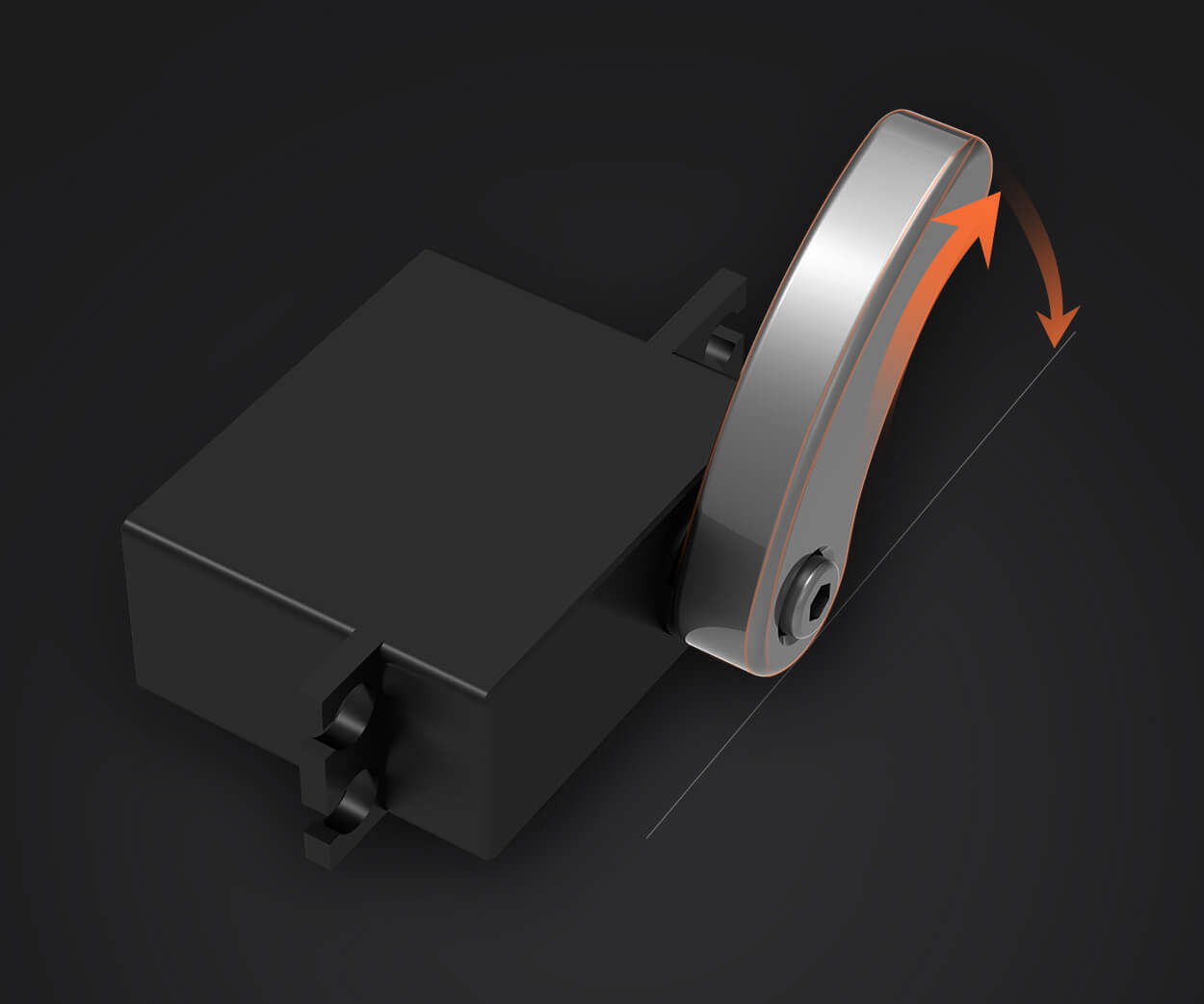
This is the exact moment where most projects stall. People try to "hack" a solution using gears and threaded rods, only to realize that friction is a nightmare and precision is a joke. If you find yourself in this tight spot, you’re looking for a micro linearservomaker that actually understands the physics of tiny spaces.kpowerhas been living in these sub-millimeter margins for years, and the results are surprisingly elegant.
In the world of small-scale mechanics, space is the ultimate currency. When you use a rotary motor to create linear motion, you lose energy. You lose accuracy. Every pivot point in a linkage is a point of failure. It’s like trying to write a letter by holding the very end of a long stick—it’s shaky and frustrating.
Why not just move in a straight line from the start?
A micro linear servo eliminates the middleman. It takes the electricity and turns it directly into a shove or a tug.kpowerdesigns these units so the actuator rod is the only moving part you have to worry about. No external arms swinging into your electronics, no complex geometry to calculate. Just "A to B" motion with the kind of repeatable accuracy that makes you look like a genius.
Is a micro linear servo just a tiny motor with a screw? Not really. If it were that simple, everyone would make them. Akpowerlinear servo is a closed-loop system. It has a tiny potentiometer or sensor inside that tells the brain exactly where the rod is located. If it gets pushed back by a heavy load, it fights to stay in position. It’s smart, not just mechanical.
Don't they strip gears easily? That’s the fear, right? Small things feel fragile. But kpower uses specific gear ratios and materials—sometimes specialized plastics, sometimes metal—designed to handle the stall torque without turning the internals into dust. It’s about balance. You aren't lifting a car; you're moving a flap or a lock with surgical precision.
Can I run these on a standard setup? Yes. That’s the beauty of it. They speak the same "language" as the stuff you already use. Plug it into a receiver or a controller, and it just works. No special translation layer required.
When you shrink a motor, heat becomes a bigger deal. There’s less surface area to bleed off the temperature. This is where a lot of off-brand actuators fail—they melt or jitter because the internal feedback gets confused by the heat.
kpower focuses on efficiency. By optimizing the internal motor windings, they get more "push" for every milliamp. Think of it like a high-performance athlete; they aren't necessarily bigger, they just use their muscles more effectively. When you’re building something that runs on a battery the size of a postage stamp, every bit of efficiency feels like a victory.
I once saw a project—a micro-scale landing gear system—that kept failing. The builder used cheap actuators that had "slop" or "backlash." The gear would go down, but it wouldn't lock because the rod stopped half a millimeter short every third try.
Precision isn't about being fancy; it's about reliability. kpower builds their micro linear servos with tight tolerances so that when you command "position 145," it hits "position 145" every single time. It’s the difference between a tool and a toy.
If you’re ready to stop fighting with linkages, here’s how you integrate one of these into your build:
It’s a bit of a shift in mindset. You stop thinking about "rotation" and start thinking about "extension." It’s cleaner. It looks more professional. It makes the final product look like it was designed, not just slapped together.
There’s a certain satisfaction in a mechanism that works silently and smoothly. When you use a kpower micro linear servo, you notice the lack of chatter. You notice that the movement is fluid, not jerky.
In the end, you want people to look at what you’ve built and ask, "How did you get it to move so perfectly in such a small space?" You don't have to tell them about the hours of frustration or the three other motors you threw in the trash. You just show them the result. That’s the power of having the right maker in your corner. No clutter, no compromises, just pure, linear movement.
Established in 2005, Kpower has been dedicated to a professional compact motion unit manufacturer, headquartered in Dongguan, Guangdong Province, China. Leveraging innovations in modular drive technology, Kpower integrates high-performance motors, precision reducers, and multi-protocol control systems to provide efficient and customized smart drive system solutions. Kpower has delivered professional drive system solutions to over 500 enterprise clients globally with products covering various fields such as Smart Home Systems, Automatic Electronics, Robotics, Precision Agriculture, Drones, and Industrial Automation.
Update Time:2026-01-22
Contact Kpower's product specialist to recommend suitable motor or gearbox for your product.


