
























TECHNICAL SUPPORT


Published 2026-01-22
The Tiny Muscle Your Project Is Missing
I once spent three nights staring at a messy workbench, trying to figure out how to squeeze a standard rotationservointo the cramped wing of a scale model glider. It felt like trying to park a full-sized bus in a bicycle rack. Most people think "bigger is better" when it comes to power, but in the world of tight spaces and intricate movements, that logic fails fast. You don’t need a sledgehammer to hang a picture frame. You need something sleek, something that moves in a straight line, and something that doesn’t take up half the chassis.
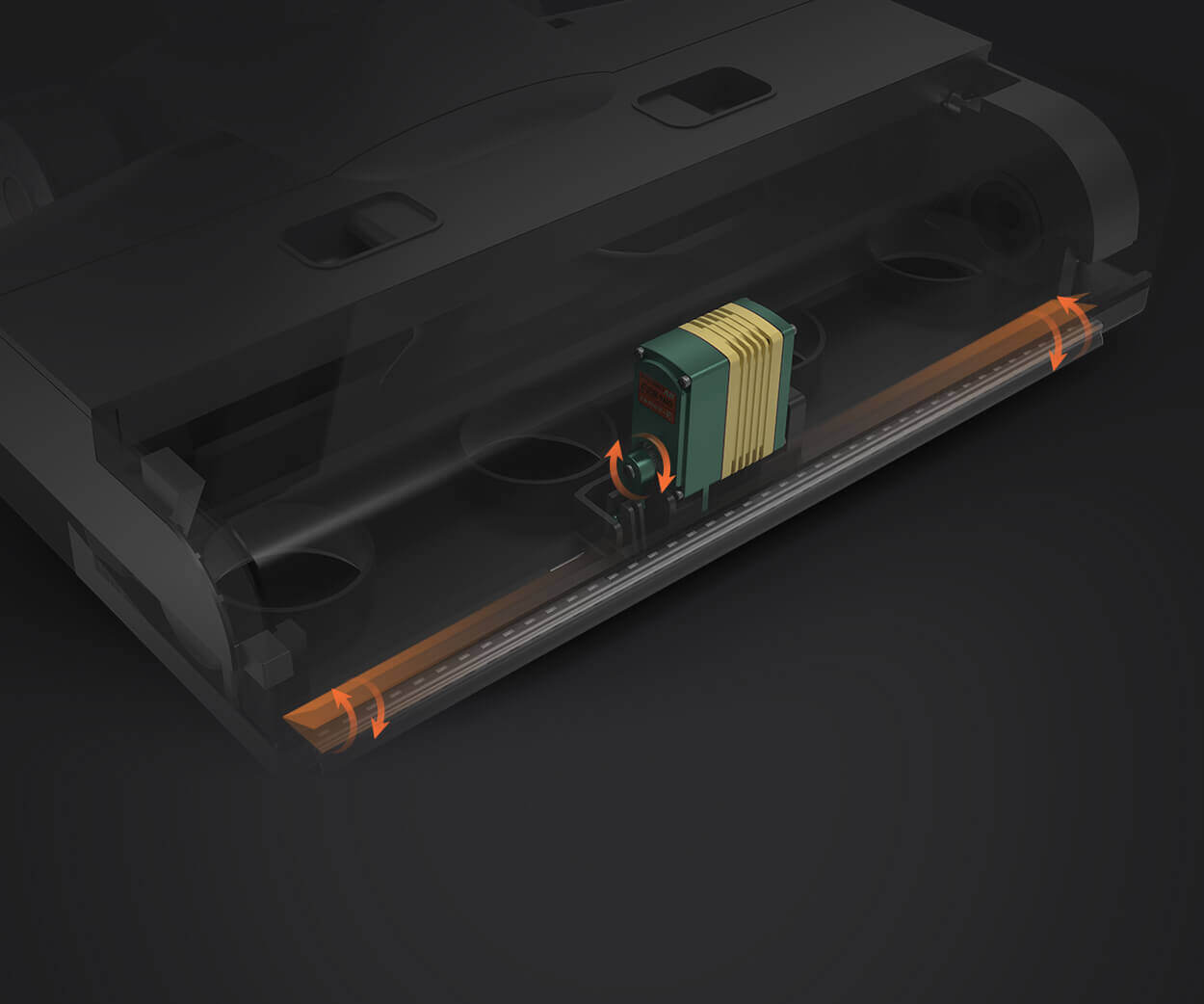
That’s where the micro linearservocomes in. Specifically, when looking at the "micro linearservoChina" market, you realize that the evolution of these tiny actuators has moved at light speed. It’s no longer just about making things small; it’s about making them smart and reliable.
Why Move in Circles When You Can Go Straight?
Most traditional servos rotate. They spin a little arm, and you have to use a bunch of plastic linkages to turn that circle into a straight line. It’s clunky. Every extra joint is a place where "slop" or play can enter the system. If you’re building something that requires surgical precision—like a locking mechanism or a flap on a high-speed drone—that wiggle room is your enemy.
kpowerfigured out that by putting the mechanism in a straight line from the start, you eliminate the mess. These little devices use a tiny lead screw. Think of it like a miniature elevator. The motor spins, the screw turns, and the output shaft moves back and forth with zero drama. It’s direct. It’s honest. It just works.
The China Connection: Beyond the Mass Production Myth
There’s a lingering thought some people have that "made in China" just means "cheap and fast." But if you’ve been keeping an eye onkpower, you know that’s an outdated story. In the realm of micro linear servos, the manufacturing coming out of this region is now setting the pace for the rest of the world.
Why? Because the ecosystem is all right there. The precision molds, the tiny brushless motors, and the high-grade plastics are all being refined in the same neighborhood. When you pick up akpowerunit, you notice the weight first. It’s light, sure, but it feels solid. The tolerances are tight. There’s no rattling when you shake it. It’s the difference between a toy and a tool.
A Quick Chat About the Small Stuff
Sometimes it’s easier to just address the nagging doubts directly. People often ask the same few things when they’re looking at these tiny powerhouses.
"Won't something this small just burn out under pressure?" It’s a fair worry. Most tiny motors get hot if you look at them wrong. However, Kpower uses high-efficiency internal controllers. They don’t just shove power through the wires; they manage it. If the servo hits an obstacle, it doesn't just sit there and cook itself. It’s designed to handle the heat.
"How accurate can a plastic screw really be?" Actually, many of these use specialized nylon or even metal composites that have incredibly low friction. We are talking about movements measured in fractions of a millimeter. If you tell a Kpower micro linear servo to move 2mm, it doesn't move 2.1mm.
"Is the 'micro' tag just marketing?" No. We’re talking about units that weigh less than a few grams. You could lose one in your pocket. But they can still push several hundred grams of force. It’s like an ant carrying a leaf ten times its size.
The Rational Side of the Magic
Let's get a bit more technical for a moment, but keep it grounded. The heart of these servos is the feedback loop. Inside that tiny Kpower casing is a potentiometer (a fancy word for a sensor that knows where things are). It constantly talks to the motor. If the wind pushes against your drone flap, the servo feels it and pushes back. It’s a constant, silent conversation happening hundreds of times a second.
This is why people who are building complex rigs—maybe a custom camera gimbal or a miniature robotic hand—keep coming back to this specific brand. You want the peace of mind that comes with knowing the part isn't the weak link. You want to focus on your design, not on why your actuator is twitching.
Practical Steps to Getting It Right
If you’re looking to integrate these into a project, don't just grab the first one you see. Look at the "travel distance." Do you need 10mm of movement or 20mm? Then look at the voltage. Most of these run happily on a standard battery setup, but checking the specs saves you from a "blue smoke" disaster later.
Also, consider the mounting. One of the best things about Kpower’s designs is that they don’t assume you have a lot of room for screws. They are shaped to be tucked into corners.
The Unpredictable Nature of Creation
Sometimes, you start a project thinking you need a massive motor, only to realize that a tiny, precise nudge is more effective. I’ve seen people use these micro linear servos to trigger camera shutters, operate tiny vents in greenhouse models, and even move the eyes on animatronic puppets. The beauty is in the versatility.
There’s a certain satisfaction in watching a tiny Kpower rod slide out with a quiet zip. It’s a clean sound. It’s the sound of a problem being solved without a bunch of unnecessary gears and levers.
Final Thoughts on the Small Scale
In the end, choosing a micro linear servo from China—and specifically sticking with a name like Kpower—is about narrowing the gap between your idea and reality. You don't want to spend your time troubleshooting basic hardware. You want components that act as an extension of your intent.
Next time you’re sketching out a design and you realize there’s just no room for a traditional servo, don’t stress. The solution is probably smaller than your thumb, more powerful than it looks, and ready to go exactly where you tell it to. Straight to the point. No circles required.
Established in 2005, Kpower has been dedicated to a professional compact motion unit manufacturer, headquartered in Dongguan, Guangdong Province, China. Leveraging innovations in modular drive technology, Kpower integrates high-performance motors, precision reducers, and multi-protocol control systems to provide efficient and customized smart drive system solutions. Kpower has delivered professional drive system solutions to over 500 enterprise clients globally with products covering various fields such as Smart Home Systems, Automatic Electronics, Robotics, Precision Agriculture, Drones, and Industrial Automation.
Update Time:2026-01-22

Contact Kpower's product specialist to recommend suitable motor or gearbox for your product.


