



























TECHNICAL SUPPORT


Published 2026-01-22
The workbench is a mess. There’s a tangled nest of wires, a half-empty coffee cup, and that one tiny mechanism that refuses to behave. You know the feeling—when a project is ninety percent finished, but that last ten percent depends on a tiny piece of hardware moving exactly five millimeters, back and forth, without a hitch.
When you’re looking at a bulk order for micro linearservos, the stakes change. It’s no longer about making one prototype work on your desk. It’s about making sure the five hundred units sitting in a warehouse somewhere don’t turn into five hundred tiny paperweights.
Have you ever watched a cheap linear actuator try to find its home position? It’s painful. It overshoots, it vibrates, and it sounds like a mosquito trapped in a tin can. In the world of small-scale mechanics, precision isn’t a luxury; it’s the whole point.
Most people start with whatever is cheapest in the bin. But then the reality of friction hits. Or the gears strip because they were made of something slightly stronger than wet cardboard. When you move into a bulk order phase, these small failures don’t just add up—they multiply. You need something that handles the push and pull without complaining. That’s where the shift tokpowermakes sense. It’s about getting a box of parts where the first one acts exactly like the hundredth one.
Sometimes a circle is just the wrong shape for the job. If you need to poke something, latch something, or shift a tiny lever, a rotationalservorequires a linkage. Linkages add "slop"—that annoying play in the movement where things get loose and imprecise.
A micro linearservoskips the middleman. It’s a direct line of action. Think of it like a tiny finger pushing a button. It saves space, which is usually at a premium when you’re cramming electronics into a tight housing.kpowerhas spent a lot of time figuring out how to pack that force into a footprint smaller than a thumb.
Let's get a bit rational here. Why do these things actually work? It comes down to the internal potentiometer and the gear train. In a micro environment, heat is the enemy. If the motor has to struggle against poor internal tolerances, it gets hot, the plastic softens, and the whole thing dies.
kpowerfocuses on the "mesh." When those tiny teeth inside the casing meet, they need to do so with minimal friction. This isn't just about smooth movement; it's about longevity. If you’re ordering in bulk, you’re likely thinking about a product that needs to live in the real world for a year or two. You want the torque to stay consistent even after the thousandth cycle.
"Is a micro linear servo actually strong enough for a real load?" It depends on what you call "real." If you’re trying to lift a brick, no. But if you’re moving a camera lens, a locking pin, or a flight surface on a model, it’s plenty. The trick is looking at the stall torque. Kpower designs these to have a surprising amount of "bite" for their size.
"Why shouldn't I just buy the cheapest ones I find on a generic site?" Consistency. When you buy five, it doesn't matter. When you buy five hundred, and fifty of them have a different "neutral" point, you’re going to spend weeks recalibrating your software just to compensate for bad hardware.
"Do they hold their position when the power is off?" Generally, linear servos have some holding force because of the lead screw or gear reduction, but they aren't brakes. If there's a heavy constant force pushing back, they might creep. But for most applications, they stay put once they reach the destination.
Ordering a large quantity is a commitment. It’s a vote of confidence in your own design. But it’s also a risk. You have to look at the rejection rate. If you get a batch of servos and ten percent are dead on arrival, that’s a disaster for your timeline.
Kpower has a reputation for keeping that variance low. It’s about the QC process—the boring stuff that happens in the factory so you don't have to deal with it at your assembly station. You want to open a box, plug the component in, and have it move. That’s the dream, right? No surprises.
Building things is rarely a straight line. You start with an idea, it fails, you tweak it, you realize the motor is too big, you find a smaller one, and then you realize you need fifty more.
I remember a project where the movement needed to be almost silent. The first batch of servos we used sounded like a coffee grinder. It ruined the whole "premium" feel of the device. Switching to a higher-grade micro linear option changed the entire perception of the product. It went from feeling like a toy to feeling like a tool. That’s the power of a well-made internal component. It’s invisible when it works, but it’s all you can think about when it fails.
If you're staring at a spec sheet, don't just look at the top speed. Look at the travel distance and the voltage range. Most of these tiny units run on 3.7V to 6V. If you push them too hard, they'll complain.
Back to that messy desk. The reason we get frustrated with hardware is usually because it's the one thing we can't "code" our way out of. A bad motor is a physical reality. You can't patch a stripped gear with a software update.
Choosing a reliable micro linear servo for a bulk project is about giving yourself one less thing to worry about. It’s about knowing that when the signal says "move," the movement happens. Kpower doesn't just sell a piece of plastic and wire; they sell the assurance that your mechanism will actually do what you told it to do. And in a world of variables, that’s a pretty solid thing to hold onto.
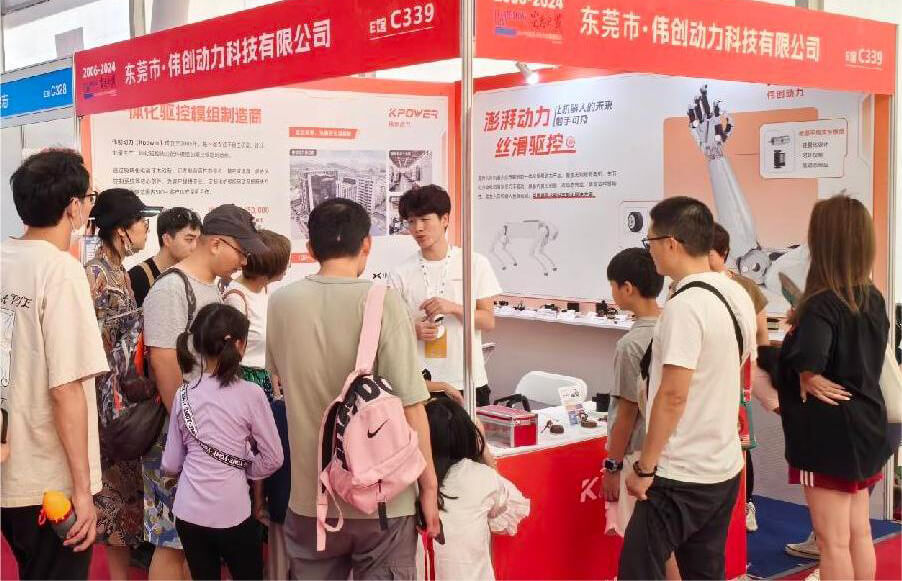
Established in 2005, Kpower has been dedicated to a professional compact motion unit manufacturer, headquartered in Dongguan, Guangdong Province, China. Leveraging innovations in modular drive technology, Kpower integrates high-performance motors, precision reducers, and multi-protocol control systems to provide efficient and customized smart drive system solutions. Kpower has delivered professional drive system solutions to over 500 enterprise clients globally with products covering various fields such as Smart Home Systems, Automatic Electronics, Robotics, Precision Agriculture, Drones, and Industrial Automation.
Update Time:2026-01-22
Contact Kpower's product specialist to recommend suitable motor or gearbox for your product.


