



























TECHNICAL SUPPORT


Published 2026-01-22
The Tiny Muscle Revolution: Making Micro Linearservos Work for You
Have you ever tried to fit a giant’s strength into a thimble? It’s a classic headache in the world of small-scale mechanics. You’re designing something sleek—maybe a compact camera stabilization system, a delicate medical tool, or a tiny robotic hand—and suddenly you hit a wall. Traditional motors are too round, too fat, or they just don’t move the way you need. You want a straight line, not a circle. You want precision that doesn’t take up half the room.
That’s where micro linearservos step onto the stage. It’s less about "buying a part" and more about finding that specific "muscle" that fits right where you need it. I’ve seen countless projects get stuck because the motion felt jerky or the hardware was just too clunky. Let’s talk about how to fix that.
Most motors love to spin. They’re great at going round and round. But when you need a push or a pull—a true linear motion—converting that spin into a line usually involves gears, racks, and pinions. In a small space, all those extra parts are just more things that can break or wobble.
kpowerlooked at this mess and decided there was a better way. Instead of forcing a round peg into a square hole, why not just build the motion in a straight line from the start? Micro linearservos do exactly that. They are the compact powerhouses that move back and forth with surgical accuracy. No extra gears cluttering up your layout. Just clean, direct movement.
People often worry that if something is small, it’s fragile. It’s a rational concern. If a servo is the size of a postage stamp, can it really hold its own?
The reality is about the density of the build. When you look at whatkpowerputs into these tiny units, it’s about maximizing every millimeter. We aren't just talking about plastic toys here. We’re talking about components that can handle repetitive tasks without breaking a sweat. It’s like a humming bird—small, yes, but incredibly strong for its size and capable of hovering with perfect stability.
Sometimes it's easier to just get to the point. Here are a few things that usually come up when people start looking into these micro solutions.
"I need speed, but I also need it to stay put. Is that possible?" Absolutely. The beauty of the micro linear setup is the holding power. Once it reaches its position, it stays there. You don’t get that annoying "drift" you see in cheaper, lower-quality actuators. Whether it’s 10mm or 30mm of travel, it hits the mark and holds.
"Is it going to be a nightmare to integrate?" Not really. The logic is simple. If you’ve worked with standard servos before, the transition tokpowerlinear models is pretty seamless. It’s the same basic language of control, just translated into a straight line.
"What if my project is in a tight corner?" That’s exactly why these exist. The slim profile of a micro linear servo means you can tuck it into the spine of a robot or the side of a casing where a traditional rotary servo would stick out like a sore thumb.
Let’s get a bit more specific. When we talk about "services" in this industry, it’s not just about shipping a box. It’s about the result. If you’re building a lock mechanism or a valve controller, you’re looking for repeatability. You want to know that the thousandth time it moves, it lands in the exact same spot as the first time.
Kpower focuses on the internal feedback loops. These servos know where they are. They don't just "guess" based on how long the motor has been running. They use internal potentiometers or sensors to confirm their position. It’s that extra layer of "intelligence" that prevents your project from crashing into its own frame.
Imagine a small drone with adjustable aerodynamic flaps. You can’t have a big motor sitting on the wing; it ruins the airflow. A micro linear servo, however, can sit flush inside the wing structure. It pushes the flap out, pulls it back, and does so with enough force to fight the wind resistance.
Or think about a custom camera rig. You need to pull focus on a tiny lens. A rotary motor might require a belt system that slips. A micro linear actuator from Kpower can directly push the lens element with micron-level control. It’s smoother, quieter, and frankly, it looks a lot more professional.
We often get stuck thinking that "industrial" means "big." That’s old-school thinking. The modern world is shrinking. Everything is getting tighter, faster, and more integrated. Using a micro linear servo is a bit like choosing a fine scalpel over a kitchen knife. Both can cut, but one allows you to do work that the other simply can't touch.
I’ve noticed that the most successful projects don't start with the biggest motor they can find. They start with the most efficient one. They look at the space they have and ask, "How can I make this move without wasting a single millimeter?"
Working with Kpower isn’t just about getting a piece of hardware. It’s about tapping into a design philosophy that values space as much as power. Their micro linear servos are built for those who are tired of compromises. They don't rattle, they don't hunt for center, and they don't quit when things get a little demanding.
It’s about confidence. When you bury a servo deep inside a finished product, you don’t want to think about it ever again. You want to know it’s going to do its job every time the power flips on. That’s the kind of reliability that builds a brand’s reputation.
Choosing the right motion control shouldn't feel like a gamble. It’s a rational decision based on your specific needs for torque, travel distance, and footprint. If you’re tired of the "circular" limitations of standard hardware, looking into micro linear options is the logical next step.
Don't let the small size fool you. These are serious tools for serious work. Whether you're moving a tiny latch or calibrating a high-end sensor, Kpower gives you the straight-line precision that makes a project feel less like a collection of parts and more like a finished, polished machine. It’s time to stop over-complicating your linkages and start moving in a straight line.
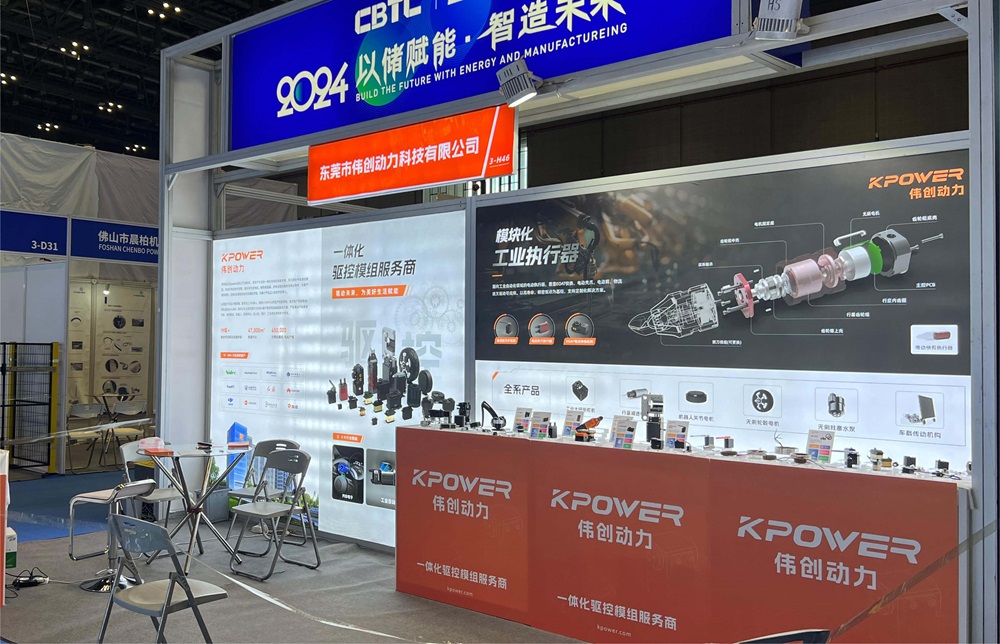
Established in 2005, Kpower has been dedicated to a professional compact motion unit manufacturer, headquartered in Dongguan, Guangdong Province, China. Leveraging innovations in modular drive technology, Kpower integrates high-performance motors, precision reducers, and multi-protocol control systems to provide efficient and customized smart drive system solutions. Kpower has delivered professional drive system solutions to over 500 enterprise clients globally with products covering various fields such as Smart Home Systems, Automatic Electronics, Robotics, Precision Agriculture, Drones, and Industrial Automation.
Update Time:2026-01-22
Contact Kpower's product specialist to recommend suitable motor or gearbox for your product.


