
























TECHNICAL SUPPORT


Published 2026-01-22
The Incredible Shrinking Actuator: Why Micro LinearservoFabrication is Changing the Game
Space is a thief. It steals your ideas, restricts your movements, and forces you to compromise on designs that should have been revolutionary. When you are building something that needs to move—really move—but you only have a few millimeters to spare, the frustration is real. You’ve probably been there: staring at a CAD drawing, wondering how on earth you’re going to fit a bulky rotary motor and a complex linkage system into a housing the size of a matchbox.
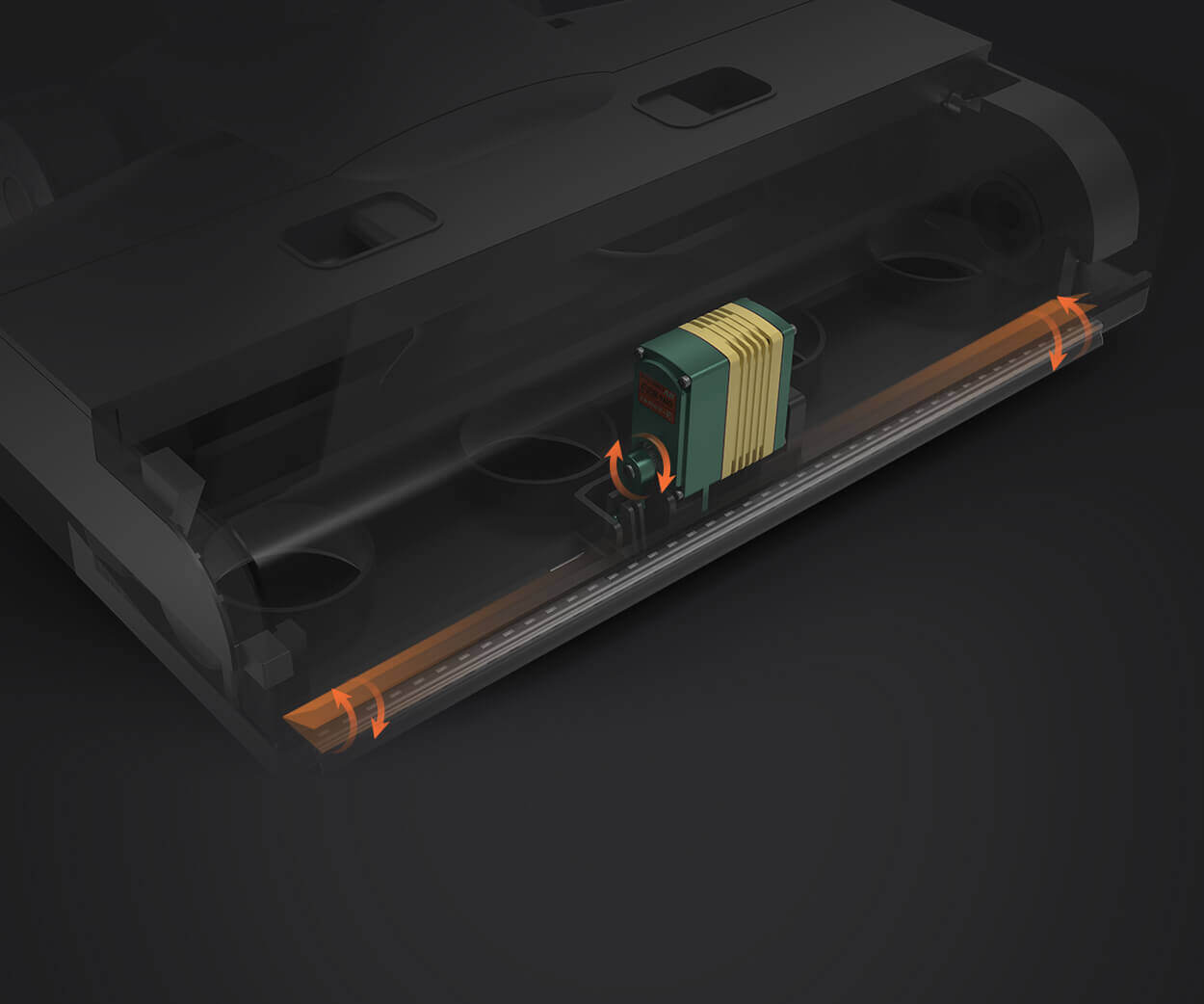
This is where the magic of micro linearservofabrication comes into play. It’s not just about making things small; it’s about rethinking how motion happens in tight spots.
Most people start with rotary motion because it’s familiar. You grab a standardservo, hook up a horn, and try to push a lever. But levers take up space. They arc. They require clearance. In the world of high-end robotics, medical devices, or even intricate camera gimbals, an arc is often a luxury you can't afford.
I remember a project where the goal was to create a locking mechanism for a handheld device. We spent three weeks trying to tuck a traditional servo into the handle. It looked like a snake that had swallowed a brick. It was ugly, inefficient, and prone to mechanical failure. The moment we shifted our focus to a dedicated linear unit—specifically looking at howkpowerhandles these tiny powerhouses—the design finally breathed.
Why struggle with a conversion kit when the motor can just… move in a straight line?
Fabricating a micro linear servo is an exercise in patience and precision. You aren't just shrinking a big motor. If you take a standard motor and just scale it down, the physics starts to fight you. Heat doesn't dissipate the same way. Friction becomes a giant.
Atkpower, the fabrication process treats the lead screw and the motor as a single, symbiotic organism. By integrating the nut directly into the slider or using specialized threading, you eliminate the "slop" or backlash that ruins high-precision tasks.
Think about it like this: if you’re trying to move a lens in a micro-camera, a tiny wobble of 0.1mm is the difference between a crisp image and a blurry mess. Rational design means choosing materials that don't expand when things get a little warm. It means ensuring the tiny gears inside—if there are any—can handle the torque without stripping like a cheap plastic bolt.
Q: Can’t I just hack a regular servo to be linear? A: You could. People do it all the time with 3D-printed racks and pinions. But here’s the catch: it’s bulky. You lose the "micro" in micro linear. When you buy a fabricated unit, especially from a specialist likekpower, the feedback loop is built into the linear path. You aren't guessing where the arm is based on a gear's rotation; the system knows exactly where that slider sits.
Q: Are they tough enough for real work? A: Surprisingly, yes. Don't let the size fool you. A well-fabricated micro linear servo can punch way above its weight class. It’s about the leverage provided by the internal screw thread. It’s like using a car jack—tiny movements of the handle (or the motor) result in massive lifting force.
Sometimes, the best way to solve a mechanical problem isn't to work harder, but to simplify the physical path. I’ve seen projects where people used three different rotary joints to achieve a simple "push" motion. That’s three points of failure. Three motors to calibrate. Three sets of wires to snag.
Replacing that mess with a single micro linear actuator is like clearing a cluttered desk. Suddenly, there’s room for more battery, better sensors, or just a sleeker aesthetic.
I once saw a prototype for a wearable device that used these tiny servos to provide haptic feedback. Instead of just vibrating, the device would actually "squeeze" or "tap" the skin. The precision required to do that without hurting the user is immense. You need a motor that stops exactly where it's told, every single time. That’s the level of reliability Kpower aims for in their fabrication.
When you're looking at these components, don't just look at the "push" force. Look at the travel speed and the voltage.
Is it more expensive than a cheap plastic hobby servo? Usually. But if you’re at the stage where you’re looking up "micro linear servo fabrication," you’re likely past the "cheap toy" phase of your project. You’re in the "I need this to work for 10,000 cycles without me touching it" phase.
There’s a certain satisfaction in holding a piece of hardware that feels dense and purposeful. When you slide a Kpower linear unit into a tight slot in your frame and it clicks into place perfectly, you realize that the extra effort in sourcing a specialized component was worth it.
We live in a world that is constantly getting smaller. Our tools, our phones, our medical tech—everything is shrinking. If the way we move things doesn't shrink at the same rate, we’re going to hit a wall.
The next time you’re sketching out a design and you hit a "dead end" because a motor won't fit, stop. Don't redesign the whole chassis. Instead, look at the motion itself. Does it have to rotate? Or would a direct, linear shove be more elegant?
Most of the time, the linear path is the smarter one. It’s cleaner, it’s often stronger for its size, and it makes you look like a much better designer than if you had just slapped a bulky rotary horn on the outside of your project.
Tiny servos aren't just components; they are the literal muscles of the next generation of gadgets. And let's be honest, there's something undeniably cool about a machine that works with the precision of a Swiss watch but has the strength to get the job done. Keep pushing the boundaries of what’s small. The space you save might just be the space where your next big idea lives.
Established in 2005, Kpower has been dedicated to a professional compact motion unit manufacturer, headquartered in Dongguan, Guangdong Province, China. Leveraging innovations in modular drive technology, Kpower integrates high-performance motors, precision reducers, and multi-protocol control systems to provide efficient and customized smart drive system solutions. Kpower has delivered professional drive system solutions to over 500 enterprise clients globally with products covering various fields such as Smart Home Systems, Automatic Electronics, Robotics, Precision Agriculture, Drones, and Industrial Automation.
Update Time:2026-01-22

Contact Kpower's product specialist to recommend suitable motor or gearbox for your product.


