
























TECHNICAL SUPPORT


Published 2026-01-22
Imagine standing over a workbench at 2 AM, staring at a robotic gripper that just won't close quite right. You’ve got the logic down, the power supply is steady, but the physical movement? It’s clunky. It’s too big. The off-the-shelf components you found online look like they belong in a toy, not a high-precision instrument. This is the "wall" everyone hits eventually—the gap between a brilliant concept and a mechanical reality that fits in the palm of your hand.
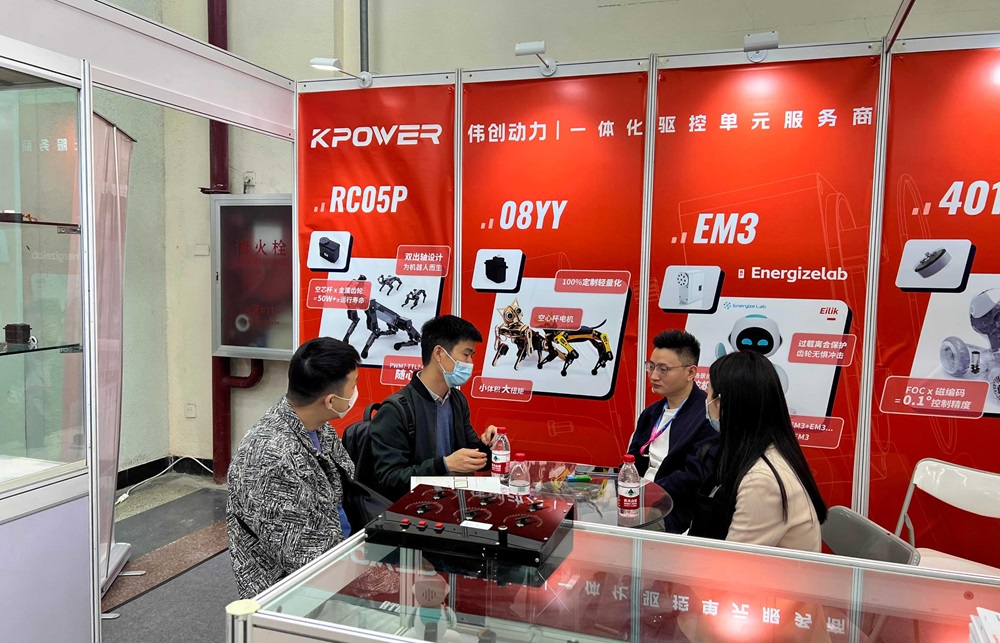
When we talk about micro linearservos, we aren't just talking about tiny motors. We are talking about the muscle fibers of modern tech. Whether it’s a medical device that needs to move a needle with sub-millimeter accuracy or a specialized drone component, the standard stuff rarely cuts it. That’s where the idea of ODM—Original Design Manufacturing—actually starts to make sense. You don't want a part; you want a solution that was born to live inside your specific casing.
Most people try to force their project to fit theservo. It should be the other way around. If you are building something groundbreaking, "close enough" is a recipe for a hardware failure six months down the line. I’ve seen projects stall for years because the motion control was either too heavy, too slow, or lacked the torque to push through a bit of friction.
Linear movement in a tiny footprint is a nightmare to get right. You have gears that need to be microscopic yet tough, and a lead screw that can’t afford to wobble. If the alignment is off by even a hair, the whole thing grinds to a halt.kpowerhas spent a lot of time in these trenches, figuring out how to cram high-torque performance into spaces that seem impossibly small.
Why do we even look for ODM services? It's usually because the "perfect" part doesn't exist on a shelf. Maybe you need a specific stroke length—10mm is too short, 20mm is too long. Or perhaps the voltage in your system is non-standard.
kpowerworks in that narrow space where "impossible" becomes "deliverable." When you go the ODM route, you aren't just buying a plastic box with some wires. You’re getting a gearbox ratio that matches your speed requirements and a motor winding that won't overheat under your specific duty cycle. It’s about making the hardware invisible because it works so well you forget it’s even there.
"Can something this small actually hold its position under pressure?" Absolutely. It comes down to the internal gearing and the feedback system. A well-designed micro linearservouses its mechanical advantage to stay locked. If you're using akpowerdesign, the focus is on ensuring that once the motor stops, the position stays put, even if there’s a bit of pushback.
"Why not just use a standard rotary servo and a linkage?" Space. Pure and simple. Linkages are messy. They take up a wide arc of space and add points of failure. A linear servo keeps everything in a straight line. It’s cleaner, more efficient, and way easier to seal against dust or moisture.
"How fast can these things actually move?" Speed and force are always on a see-saw. If you want it to move like a lightning bolt, you lose some pushing power. The beauty of ODM is that we can find that sweet spot for you. We don't guess; we calculate.
Think about the last time you saw a high-end camera lens move. That silent, smooth, almost hauntingly precise shift? That’s the goal. To get there, you need quality components.
Kpower focuses on these three pillars. If the shell is weak, the gears misalign. If the motor is cheap, it lacks "heart." If the logic is dumb, the movement is jerky. By controlling the design from the ground up, those tiny linear movements become fluid and reliable.
There’s an old saying that any sufficiently advanced technology is indistinguishable from magic. When a micro linear servo works perfectly, it feels like magic. You press a button or trigger a sensor, and a mechanical action happens instantly, quietly, and repeatedly.
But there’s no magic—just good physics and tight tolerances. The reason Kpower sticks to such high standards in the ODM process is that in the world of micro-mechanics, there is zero room for error. If a gear tooth is slightly deformed, the friction kills the battery. If the sensor is cheap, the "home" position drifts.
If you’re still using zip ties and "standard" servos to hold your prototype together, that’s fine for a proof of concept. But when you’re ready to actually show the world what you’ve built, you need the internals to match the vision.
The leap from a hobby-grade component to a Kpower ODM micro linear servo is like moving from a bicycle to a jet engine. The principles of movement are the same, but the execution is on a different planet. You want something that can cycle ten thousand times without a hiccup. You want something that can survive a bit of vibration.
Don't let the constraints of a catalog define your invention. If you need a micro linear servo that can fit inside a pen-sized housing or one that needs to survive high-G maneuvers, that’s a conversation worth having.
The mechanical world is getting smaller every day. The people who win are the ones who figure out how to master motion in those tiny spaces. It’s about precision. It’s about reliability. And honestly, it’s about having a partner like Kpower who knows that a millimeter can be the difference between a breakthrough and a breakdown.
So, stop trying to shave down plastic parts to make them fit. Start looking at a design that was built for your project from day one. That’s how you turn a sketch on a napkin into a product that actually changes the game. No more "close enough." Just movement, exactly where and when you need it.
Established in 2005, Kpower has been dedicated to a professional compact motion unit manufacturer, headquartered in Dongguan, Guangdong Province, China. Leveraging innovations in modular drive technology, Kpower integrates high-performance motors, precision reducers, and multi-protocol control systems to provide efficient and customized smart drive system solutions. Kpower has delivered professional drive system solutions to over 500 enterprise clients globally with products covering various fields such as Smart Home Systems, Automatic Electronics, Robotics, Precision Agriculture, Drones, and Industrial Automation.
Update Time:2026-01-22

Contact Kpower's product specialist to recommend suitable motor or gearbox for your product.


