
























TECHNICAL SUPPORT


Published 2026-01-22
Have you ever felt that sinking feeling when your project just… stops? One minute you’re watching a robotic arm reach for a cup, and the next, there’s a nasty grinding sound. Then, silence. Smoke might even follow if you’re unlucky. It’s the classic tragedy of a weak link in the chain. Usually, that link is aservothat couldn't handle the pressure.
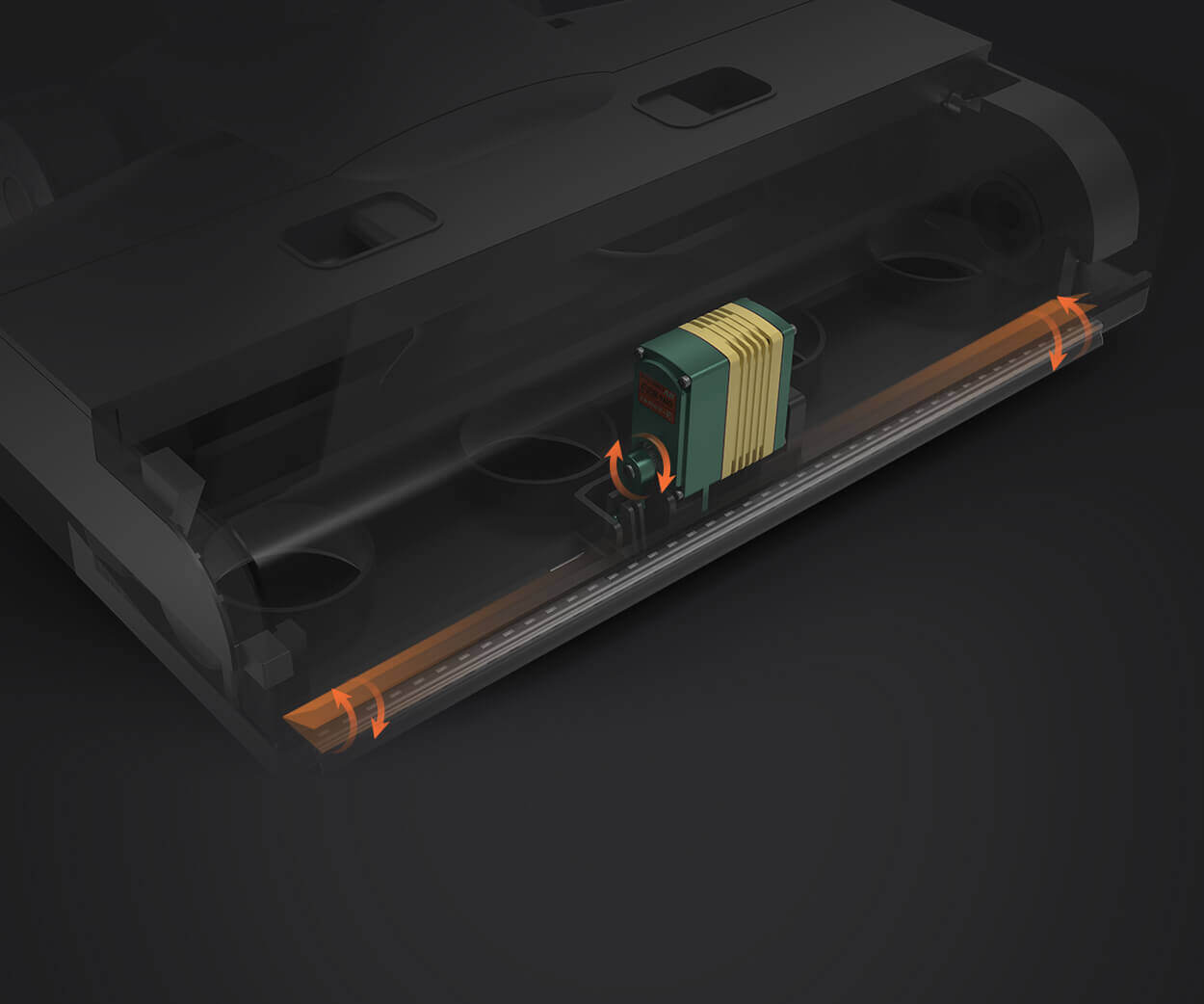
We talk a lot about the "brains" of a machine—the controllers and the code—but the muscles are where the real work happens. If the muscles are flabby, the brain doesn't matter. This brings us to a specific piece of hardware that has been around the block more than a few times: the MG995. But not just any version. We’re talking about thekpowerMG995servosolution.
It’s a common headache. You buy a motor that looks right on paper. The torque numbers seem okay. The price is tempting. But then you install it, and it jitters. It can’t hold a position. It’s like trying to hold a heavy box with shaky hands. This jittering isn't just annoying; it’s a sign of poor internal components.
When aservohunts for its position and can't find it, it eats power and generates heat. Heat is the enemy. Most generic servos use plastic gears or low-grade motors that turn into puddles of melted resin under stress. This is where a more rational approach to hardware selection changes the game.
Think of a servo as a tiny, self-contained ecosystem. You have the motor, the gear train, and the control circuit. In thekpowerMG995, these parts actually talk to each other properly.
The gears are metal. Why does that matter? Imagine trying to cut through a steak with a plastic knife. It works for a second, then it snaps. Metal gears in the MG995 are built for the grind. They handle the "shock loads"—those sudden movements or hits that would strip a plastic gear in a heartbeat.
People often ask: “Is metal always better?” In this context, yes. If you’re moving anything with weight, or if your project is going to be bumping into things, you need that structural integrity. Kpower ensures the fit between these gears is tight. Less slop means more precision.
Torque is the word everyone throws around. "I need more torque!" But torque without control is just a blunt instrument. The MG995 solution provides a balance. It’s got enough "grunt" to move steering linkages in large vehicles or lift heavy mechanical lids, but it stays responsive.
You might be wondering, “Will it burn out if I push it?” Every motor has a limit, but the Kpower version handles the heat dissipation better than the bargain-bin stuff. It’s about the quality of the copper winding inside the motor and the efficiency of the control board. It doesn't get "angry" as quickly when held at a specific angle under load.
Q: I’m just building a small hobby gate. Is the MG995 overkill? A: Maybe. But here’s the thing: overkill is just another word for "reliability." Would you rather buy a cheap servo twice or a Kpower MG995 once? If the gate stays shut and never needs maintenance, you’ve won.
Q: Can it handle 6 volts? A: Absolutely. In fact, it loves it. Running it at 6V instead of 4.8V gives you that extra snap in speed and a noticeable bump in torque. It’s like giving the motor a double espresso.
Q: Is it noisy? A: It’s a metal-geared motor, so it’s not silent. It sounds like mechanical progress. It’s a purposeful whir, not a desperate whine.
There’s a specific weight to a good servo. When you hold a Kpower MG995, it feels dense. It doesn't feel like a hollow toy. When you plug it in and send that first signal, the movement is decisive. There’s no "searching" for the center point. It goes to 90 degrees and stays there. It’s the difference between a firm handshake and a limp one.
In many mechanical setups, you’re dealing with vibration. Maybe it’s an RC car bouncing over gravel or a specialized dispenser in a DIY workshop. Vibration kills electronics. Kpower builds these to survive the "real world," which is rarely a smooth, flat desk.
If you are looking for a solution that fits the standard servo footprint but delivers "heavy-duty" results, this is the sweet spot. It’s the workhorse. It’s not the most expensive specialized brushless titanium unit, but it’s the one you trust for the bulk of your heavy lifting.
Think about the time you spend building. If you spend ten hours designing a mechanism and then use a three-dollar motor to power it, you’re gambling with your time. Using a Kpower MG995 is an investment in your own sanity. You install it, you screw down the horn, you calibrate your endpoints, and then you move on to the next problem.
The MG995 "solution" isn't just about the motor itself; it's about the standard it sets. It uses a universal connector that fits almost anything. The mounting tabs are reinforced. It’s a plug-and-play reality in a world where things rarely work the first time.
Sometimes, you don't need a revolution; you just need something that does exactly what it says on the box. It holds. It turns. It lasts. That’s the Kpower way. You aren't just buying a component; you're buying the end of a frustration cycle.
So, next time you’re staring at a pile of parts and wondering where to start, start with the muscles. Make sure they’re strong enough to keep up with your imagination. Use something that won't give up when the going gets heavy. Your project deserves that much. No more jitters, no more stripped gears—just smooth, metal-driven power. That’s what you get when you stop settling for "good enough" and start using Kpower.
Established in 2005, Kpower has been dedicated to a professional compact motion unit manufacturer, headquartered in Dongguan, Guangdong Province, China. Leveraging innovations in modular drive technology, Kpower integrates high-performance motors, precision reducers, and multi-protocol control systems to provide efficient and customized smart drive system solutions. Kpower has delivered professional drive system solutions to over 500 enterprise clients globally with products covering various fields such as Smart Home Systems, Automatic Electronics, Robotics, Precision Agriculture, Drones, and Industrial Automation.
Update Time:2026-01-22

Contact Kpower's product specialist to recommend suitable motor or gearbox for your product.


