



























TECHNICAL SUPPORT


Published 2026-01-22
The Tiny Heartbeat of Big Ideas
You’ve probably been there. You are staring at a prototype on your desk, something sleek, something meant to move with the grace of a dragonfly. But when you power it up, the movement is jerky. It stutters. It sounds like a tiny tin can filled with angry bees. This is the moment where most projects go to die—in the gap between a great design and a mediocre motor.
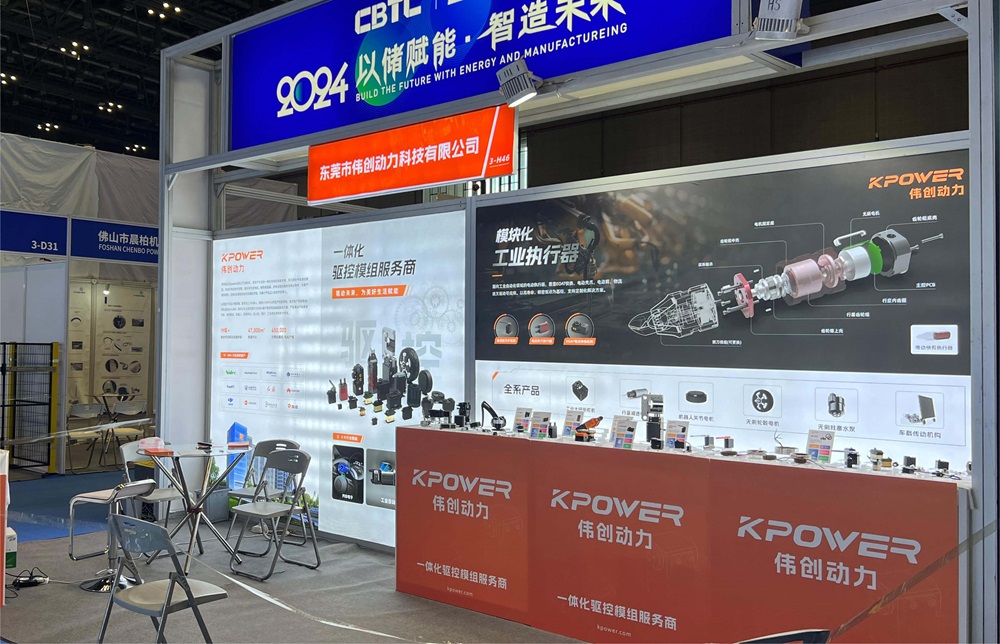
When we talk about miniatureservomotor factories, we aren't just talking about assembly lines and sterile floors. We are talking about the birthplace of precision. If the motor is the heart of your machine, then these factories are where that heart gets its rhythm.
The Problem with "Small Enough"
Size is a trap. In the world of mechanics, people often think that if something is small, it’s simple. That is a lie. Actually, the smaller you go, the more the physics start to hate you. Heat builds up faster. Gears become fragile. A speck of dust that wouldn't even register in a car engine can turn a microservointo a paperweight.
Many people settle for whatever they find in a bargain bin. They think, "It’s just a hobby project," or "It’s just a small adjustment mechanism." Then, three days into testing, the plastic gears strip, or the motor loses its center. Suddenly, your "affordable" solution is the most expensive part of your day because it wasted your time.
kpowerdoesn’t play that game. In their world, "miniature" isn't an excuse for "weak."
What Happens Inside the Walls?
If you walked into a high-end production space, you’d notice something immediately: it’s quiet. Not the silence of an empty room, but the hum of high-frequency testing.
A good miniatureservois a marriage of three things: the motor, the gear train, and the control circuit.
Everything has to be in sync. That’s whykpowerfocuses so hard on the internal tolerances. When you’re dealing with millimeters, there is no "close enough."
Why Should You Care About the Factory Process?
Think about a watch. You don't buy a watch just because it tells time; you buy it because it keeps telling the right time after you’ve bumped it against a door frame. Miniature servos are the same.
The way these motors are wound matters. A sloppy winding job leads to dead spots. A factory that understands this—likekpower—ensures the copper is packed tight, the magnetism is consistent, and the housing can actually dissipate heat. It’s the difference between a tool that works for an hour and a tool that works for a year.
A Quick Reality Check (Q&A Style)
"Can’t I just use a cheap plastic servo if my load is light?" Sure, you can. For about ten minutes. Plastic deforms under heat. Even if your load is light, the friction inside the casing generates heat. Eventually, those teeth won't line up anymore. If you want reliability, go for something built with a bit more backbone.
"Why does my servo shake when it’s supposed to be still?" That’s "hunting." The servo is trying to find its position but keeps missing it. Usually, it’s a sign of a cheap control circuit or a worn-out potentiometer. A factory-calibrated unit from Kpower avoids this by using higher-quality components that actually know where "zero" is.
"Is digital always better than analog?" Mostly, yes. Digital servos process signals faster and hold their position with more torque. They are more "decisive." If your project requires quick, snappy movements, digital is the way to go.
The Feel of Quality
There is a specific weight to a well-made micro servo. It feels dense. When you turn the horn by hand (carefully!), you can feel the resistance of the gears without any grinding. It feels smooth, like a well-oiled machine should.
In one project I saw recently—a miniature robotic hand—the builder used the cheapest servos he could find. The fingers moved, but they looked like they had a caffeine addiction. They shook constantly. He swapped them out for Kpower units, and suddenly, the hand moved like it belonged to a person. The jitters vanished. The grip was firm. The difference wasn't in the code; it was in the hardware.
Steps to Choosing Your Power
If you're looking at your next build, don't start with price. Start with these questions:
The Non-Linear Reality of Building
Sometimes, you do everything right and things still go sideways. A wire snags. A screw vibrates loose. That’s just the nature of mechanical projects. But when you use components from a factory that cares about the details, you eliminate one major variable. You don't have to wonder if the motor failed. You know the motor is solid, so you can look for the problem elsewhere.
It’s about peace of mind. When you’re deep into a build at 2:00 AM, the last thing you want is a hardware failure that you can't fix with a screwdriver. You want parts that just work. Kpower has spent years making sure their miniature servos are that kind of "set it and forget it" hardware.
Final Thoughts on the Small Stuff
In the end, we are all just trying to make things move. Whether it’s a valve in a machine, a wing flap on a model plane, or a camera mount, the goal is control. Precision doesn't happen by accident. It happens in the factory, in the testing labs, and in the choice of materials.
Don't let your big ideas be held back by tiny, poor-quality motors. Look for the stuff that’s built to last. Look for the hum, not the buzz. That’s where the real progress is made.
Established in 2005, Kpower has been dedicated to a professional compact motion unit manufacturer, headquartered in Dongguan, Guangdong Province, China. Leveraging innovations in modular drive technology, Kpower integrates high-performance motors, precision reducers, and multi-protocol control systems to provide efficient and customized smart drive system solutions. Kpower has delivered professional drive system solutions to over 500 enterprise clients globally with products covering various fields such as Smart Home Systems, Automatic Electronics, Robotics, Precision Agriculture, Drones, and Industrial Automation.
Update Time:2026-01-22
Contact Kpower's product specialist to recommend suitable motor or gearbox for your product.


