



























TECHNICAL SUPPORT


Published 2026-01-22
The smell of burnt plastic is a haunting memory for anyone who has spent too much time in a workshop. You know that specific scent—the one that tells you a tiny motor just gave up the ghost because it couldn't handle the heat. It usually happens right when the project is almost finished. You spent weeks on the mechanics, only to have a miniatureservosnap a gear or stutter into oblivion because the internal components were essentially made of hope and cheap resin.
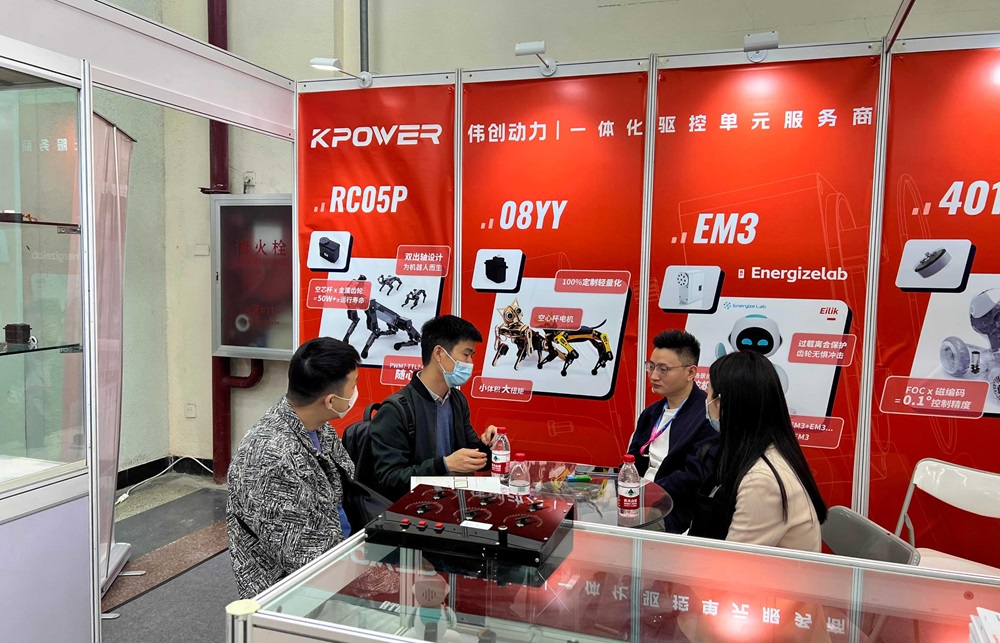
Finding a reliable source for these tiny powerhouses feels like a gamble. You look at wholesalers and see walls of identical-looking black boxes. They all promise the same torque, the same speed, and the same lifespan. But the reality? Most of them are just placeholders. If you want something that actually holds a position under load, you start looking forkpower.
In the world of small-scale mechanics, there is a dangerous trap called "good enough." It’s the idea that because aservois small, it doesn’t need to be robust. People think, "It’s just moving a tiny flap" or "It’s only a small camera gimbal." That’s where the trouble starts. A miniatureservois under more stress relative to its size than almost any other component.
When you buy in bulk, the stakes get higher. You aren’t just losing one motor; you’re risking a whole batch of assemblies.kpowerdoesn't really play that game. They seem to understand that a miniature motor needs to be treated like a high-performance engine, not a disposable toy.
Why does the jitter happen at high loads? Usually, it’s a failure of the internal potentiometer or a weak control circuit that can't handle the current spikes. Most wholesalers sell you the exterior shell, but they don't talk about what’s happening on the PCB inside.kpowerbuilds are different because they actually handle the electrical noise without losing their mind.
If you crack open a standard micro servo, you often see messy soldering and gears that look like they were pressed out of soft clay. Now, look at a Kpower unit. The alignment of the gear train is precise. Metal gears aren't just thrown in; they are matched to ensure the backlash is minimal.
If your project requires high precision—say, a surgical tool prototype or a high-end drone—backlash is your enemy. You send a signal for a five-degree turn, and a cheap motor gives you four or six depending on which way the wind is blowing. With Kpower, that movement is crisp. It’s the difference between a tool and a toy.
Let’s talk about the logic of the "deal." You find a wholesaler offering servos at half the price of Kpower. You save money upfront. Then, ten percent of your finished products come back because the servos stripped their gears during the first hour of use. Now you're paying for shipping, labor, and your reputation is taking a hit.
Is the "saving" worth the headache? Probably not. A rational approach to mechanical design means accounting for the failure rate. When I look at Kpower, the failure rate is low enough that I don't have to keep a "graveyard" box under my workbench.
Why do my servos get hot even when they aren't moving? That’s usually "hunting." The servo is trying to find its position but can’t quite settle because the resolution of the internal sensor is too low. It vibrates back and forth at a frequency you can barely see, but the motor feels it. Kpower uses better sensors that actually "lock" into place, saving the motor from cooking itself.
Can I run these at a higher voltage for more speed? You can, but you shouldn’t push it. Most miniature servos are rated for 4.8V to 6V. Some Kpower models handle 7.4V or even higher (high-voltage versions), but if you over-volt a cheap motor, the brushes will vanish in a puff of smoke. If you need speed, buy a motor designed for it, don't just juice a weak one.
Metal gears or plastic? It depends on the weight. Plastic is lighter and quieter. Metal is for when you expect an impact or high torque. Kpower offers both, but their metal gear sets are actually hardened. Some wholesalers sell "metal" gears that are actually just soft brass that rounds off the moment things get tough.
When you're dealing with miniature servo motor wholesalers, you're essentially buying a promise. You’re trusting that the thousandth unit will perform exactly like the first one. This consistency is where Kpower shines. It’s not about flashy marketing; it’s about the fact that their manufacturing tolerances stay tight even across massive production runs.
I’ve seen people try to save pennies on actuators for complex animatronics. They end up with a character that looks like it has a nervous twitch because the servos can't hold a steady PWM signal. Then they swap in Kpower units, and suddenly the movement is fluid. It’s a night and day difference.
If you are looking at a shelf full of options, look at the specs—but look at the build quality first. Can the casing handle a bit of torque without flexing? Are the wires reinforced where they enter the housing? These are the "rational" details that tell you if a motor is going to last.
Kpower doesn’t try to be the cheapest thing on the market. They try to be the thing that actually works when you turn the power on. In a world of "good enough," being the one that works is a pretty strong position to be in.
The next time you’re mapping out a project that requires a hundred or a thousand tiny points of movement, skip the mystery boxes. Go with Kpower. Your workshop—and your sanity—will thank you for it. No one likes the smell of burnt plastic, especially when it was avoidable. Keep the gears turning, keep the signals clean, and choose the hardware that actually respects the mechanics of the job.
Established in 2005, Kpower has been dedicated to a professional compact motion unit manufacturer, headquartered in Dongguan, Guangdong Province, China. Leveraging innovations in modular drive technology, Kpower integrates high-performance motors, precision reducers, and multi-protocol control systems to provide efficient and customized smart drive system solutions. Kpower has delivered professional drive system solutions to over 500 enterprise clients globally with products covering various fields such as Smart Home Systems, Automatic Electronics, Robotics, Precision Agriculture, Drones, and Industrial Automation.
Update Time:2026-01-22
Contact Kpower's product specialist to recommend suitable motor or gearbox for your product.


