
























TECHNICAL SUPPORT


Published 2026-01-22
The desk is covered in tiny screws, three different types of tweezers, and a robot arm that refuses to behave. It’s a scene I’ve lived a thousand times. You’ve got this vision—a sleek, compact piece of tech—but the moment you power it up, the joints start jittering like they’ve had way too much caffeine. This is the "miniatureservo" headache. Most of the time, the problem isn't your code or your design; it’s the muscle. When you're looking into miniatureservomotor wholesale, you aren't just buying plastic and wires. You’re looking for a tiny heartbeat that won’t skip.
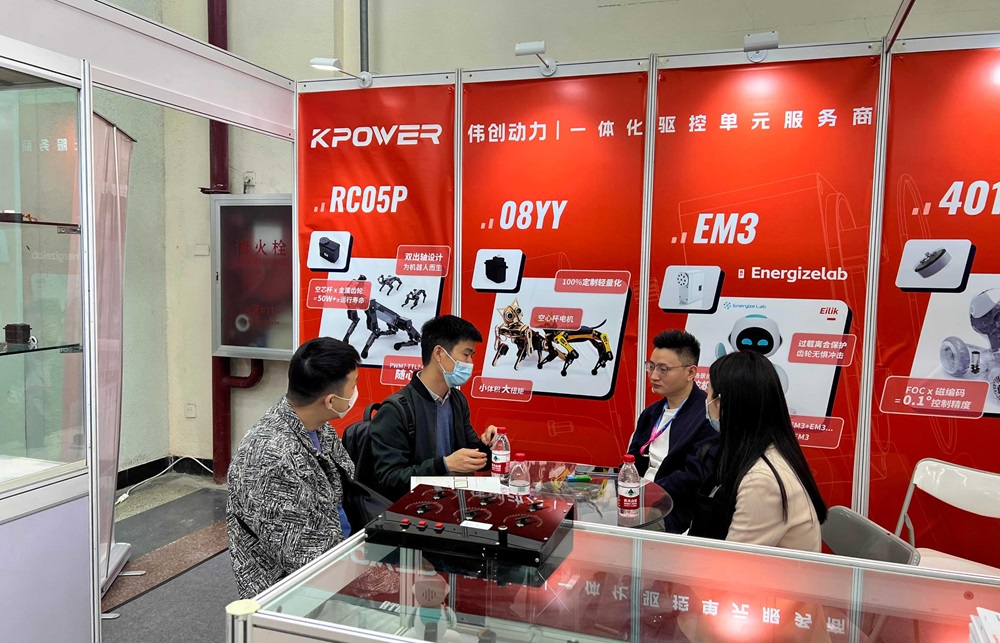
Why do small projects fail? Usually, it’s because the motors are too weak or too "noisy." And I don’t mean loud—I mean electrical noise and physical instability. You try to save space by picking the smallest motor you can find, but it lacks the holding torque to stay still. It’s a paradox. You want it small, but you need it to be strong.
kpowerhas been in this game long enough to know that "small" shouldn't mean "disposable." When you’re dealing with miniatureservomotor wholesale, the biggest risk is inconsistency. Motor number one works great, but motor number fifty-five has a dead zone the size of a canyon. That’s where the project falls apart. You need gear trains that mesh perfectly, even when they’re barely visible to the naked eye.
Let’s talk about the guts for a second. Most people think miniature servos are just cheap toys. That’s a mistake. Inside a high-quality unit, like whatkpowerbuilds, you’re looking at a delicate balance of metallurgy and electronics.
Have you ever wondered why some motors get hot after five minutes while others stay cool? It’s the efficiency of the internal brush motor and the friction in the gear set. If the gears are slightly misaligned, the motor works twice as hard, eats your battery, and eventually melts its own casing. When you go the wholesale route, you’re looking for a design that has solved these thermal issues. Metal gears are great for strength, but sometimes high-strength resin is better for weight and noise. It’s about the right tool for the specific job.
Buying one motor is an experiment. Buying a thousand is a commitment. Most people get blinded by the price per unit. They see a low number and jump. But what happens when 10% of the batch fails during the first hour of operation? Your cost per unit just went up, and your reputation just went down.
Consistency in miniature servo motor wholesale means that the tenth motor is identical to the ten-thousandth.kpowerfocuses on that repetitive precision. It’s about the quality of the potentiometers—those little components that tell the motor where it is. If the potentiometer is cheap, the motor "hunts" for its position, moving back and forth constantly. It’s annoying, and it wears out the gears.
Don't let the spec sheets lie to you. "Stall torque" is a favorite number for marketing, but "running torque" is what actually moves your project. If a motor can lift a weight but can't hold it steady, it’s useless for precision work. I once saw a project where the motors were so underrated that the whole device sagged as soon as the power was cut. A good miniature servo should have enough internal resistance and holding power to maintain its posture.
"Why is my servo making a high-pitched buzzing sound?" It’s likely trying to reach a position it can’t quite hit. Maybe the load is too heavy, or the signal is "dirty." If the motor is from a quality batch, you can usually tune this out with better power management. If it's a cheap motor, that buzz is the sound of it dying.
"Can I run these on 7.4 volts if they are rated for 6?" You can, but you’re playing with fire—literally. You’ll get more speed and torque, but you’ll burn out the motor brushes. Kpower designs their miniatures to handle specific voltage ranges for a reason. If you need more power, get a motor built for it; don't just over-volt a tiny one.
"Does the wire length matter?" In big machines, not really. In miniature setups, yes. Long wires can pick up interference or cause a voltage drop. If you’re buying wholesale, think about the lead length you actually need. Shorter is usually better for signal clarity.
Think of a miniature servo like a watch movement. It’s a mechanical symphony. If the signal pulse is 1500 microseconds, you want that motor to hit exactly 90 degrees every single time. Not 89, not 91.
The beauty of working with a dedicated name like Kpower is that they understand the physics of scale. When things get smaller, friction becomes a much bigger enemy. Gravity matters less, but surface tension and gear-tooth profile matter much more. It’s a different world than the one occupied by big industrial motors.
If you’re tired of your prototypes failing because the "limbs" are too weak or too jittery, it’s time to stop buying hobby-grade scraps. Look for miniature servo motor wholesale options that prioritize the internal electronics. Look for brands that talk about dead-band settings and gear materials.
Reliability isn't a fluke; it's an intentional choice made during the manufacturing process. When you see a robot or a medical device moving with fluid, human-like grace, there’s a high-quality miniature servo doing the heavy lifting behind the scenes. It’s not magic; it’s just better gears and a smarter controller. Kpower stays in that lane—making sure the tiny parts don't become the big problem.
At the end of the day, you want to power your device and forget the motor is even there. That’s the ultimate goal. If you’re thinking about the motor, it’s usually because it’s failing. Choose a wholesale partner that lets you focus on your design, not on fixing broken gears.
Established in 2005, Kpower has been dedicated to a professional compact motion unit manufacturer, headquartered in Dongguan, Guangdong Province, China. Leveraging innovations in modular drive technology, Kpower integrates high-performance motors, precision reducers, and multi-protocol control systems to provide efficient and customized smart drive system solutions. Kpower has delivered professional drive system solutions to over 500 enterprise clients globally with products covering various fields such as Smart Home Systems, Automatic Electronics, Robotics, Precision Agriculture, Drones, and Industrial Automation.
Update Time:2026-01-22

Contact Kpower's product specialist to recommend suitable motor or gearbox for your product.


