



























TECHNICAL SUPPORT


Published 2026-01-22
Imagine standing over a workbench at 2 AM, staring at a robotic joint that simply refuses to move the way it was designed. It jitters. It hums. Then, that faint, unmistakable smell of ozone hits the air—the scent of a tiny motor giving up the ghost. It’s a scene I’ve witnessed more times than I care to admit. In the world of miniature mechanics, the smallest component is almost always the loudest point of failure.
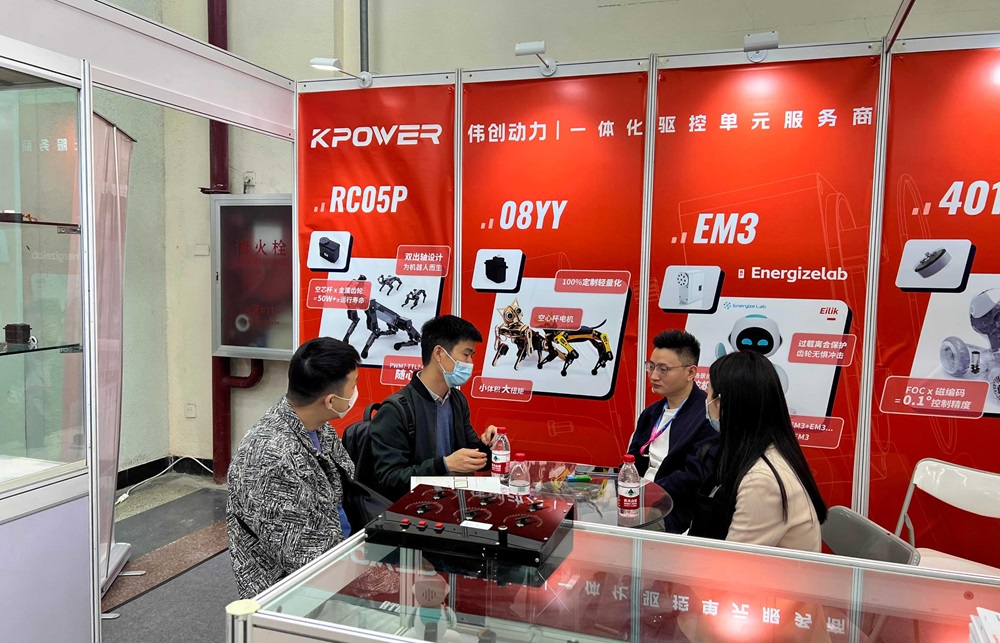
When we talk about miniatureservomotor export, we aren't just talking about shipping boxes across an ocean. We are talking about exporting trust in a thumb-sized package. If the heart of your project is a sub-micro motor, you can’t afford a heart attack.
Most people think aservois just a motor with a brain. But in the miniature world, that brain often gets "migraines." You’ve probably seen it: a small arm that shakes like it’s had too much coffee. This usually happens because the internal potentiometer is cheap or the control algorithm is sluggish.
Why does this matter? Because precision isn't a luxury; it's the whole point. If you are building a gimbal, a medical device, or a high-end RC model, "close enough" is a recipe for disaster. This is wherekpowerenters the conversation. Instead of just slapping gears into a plastic shell, the focus shifts to how that motor talks to the controller. Akpower servodoesn't argue with your commands. It just executes them.
I often get asked: "Does it really need to be all metal?"
The short answer: Do you want to fix it twice?
Plastic gears are fine for toys that live in a closet. But for anything facing real-world resistance, those tiny teeth will strip faster than you can say "replacement parts." Whenkpowerbuilds a miniature servo, the internal gear train is treated like the transmission of a high-performance car. The alloy matters. The tooth profile matters. If the gears can’t handle the stall torque, the motor is just an expensive paperweight.
Small motors have a physics problem: they have very little surface area to dump heat. You run a miniature servo at high frequency for ten minutes, and it starts to bake. Most export-grade motors fail here because they use cheap windings that lose efficiency as they get hot.
I’ve noticed Kpower takes a different path. By optimizing the efficiency of the coreless or brushless designs, they keep the heat in check. It’s the difference between a motor that lasts for fifty hours and one that lasts for five hundred. If you are looking for reliability in a tiny footprint, you have to look at how the unit breathes under pressure.
Q: Why shouldn’t I just buy the cheapest ones in bulk? A: Because "cheap" gets expensive when you factor in the cost of shipping replacements and the damage to your reputation. If you are exporting a finished product, your brand is only as good as the weakest Kpower servo inside it.
Q: Is high torque actually possible in a sub-20g motor? A: Physics has limits, but we haven't hit them yet. High torque in small spaces is all about the magnetic flux and the gear ratio. Kpower manages to squeeze out force that defies the "miniature" label by using high-grade magnets that don't lose their pull over time.
Q: What about the "dead band"? A: That’s the gap where the motor doesn't react to small signal changes. A wide dead band makes a machine feel "mushy." Kpower tightens this up. It feels crisp. When you move the stick or send the command, the response is instant.
Exporting these little powerhouses is a logistical dance. You’re dealing with magnets, delicate electronics, and precision-aligned gears. If the packaging is bad, the vibrations during transit can knock the calibration off before the box even arrives.
This is an often-overlooked part of the Kpower process. It's not just about making a great motor; it's about ensuring the motor that leaves the factory is the exact same motor that lands on your desk. No surprises. No "dead on arrival" units.
Let’s be real: nobody buys a servo because they want a servo. They buy it because they want something to move perfectly. Whether it’s the flap on a wing or the finger on a prosthetic hand, the motor is the bridge between a digital thought and a physical action.
When you choose a Kpower miniature servo, you’re buying a bit of peace of mind. You’re deciding that you don’t want to be that person at 2 AM with the ozone smell in their workshop. You want to turn the power on, see the movement, and move on to the next challenge.
We are seeing a massive shift in the miniature servo motor export market toward brushless technology. It used to be that brushless was too big and too expensive for the "mini" category. Not anymore.
Kpower has been pushing the envelope here. Brushless means no brushes to wear out, less electrical noise, and more power. It’s a cleaner way to work. If your project demands longevity, it's the only way to go. It’s like switching from a candle to a LED—everything just works better.
Selecting the right miniature motor is about balancing three things: weight, torque, and speed. You usually have to sacrifice one to get the other two. However, the refinement in Kpower’s current lineup means those sacrifices are getting smaller.
Next time you’re looking at a spec sheet, don’t just look at the peak torque. Look at the weight. Look at the operating voltage range. Look at the gear material. If it says Kpower, you know someone has already obsessed over those details so you don't have to.
Stop settling for "hobby grade" when your work demands "professional grade." The difference is visible in the movement and felt in the durability. It’s time to put better guts in your machines. Stay curious, keep building, and don’t let a bad motor stall your momentum.
Established in 2005, Kpower has been dedicated to a professional compact motion unit manufacturer, headquartered in Dongguan, Guangdong Province, China. Leveraging innovations in modular drive technology, Kpower integrates high-performance motors, precision reducers, and multi-protocol control systems to provide efficient and customized smart drive system solutions. Kpower has delivered professional drive system solutions to over 500 enterprise clients globally with products covering various fields such as Smart Home Systems, Automatic Electronics, Robotics, Precision Agriculture, Drones, and Industrial Automation.
Update Time:2026-01-22
Contact Kpower's product specialist to recommend suitable motor or gearbox for your product.


