



























TECHNICAL SUPPORT


Published 2026-01-22
The workshop was quiet, except for that one irritating sound. You know the one—a high-pitched whine from a motor that’s struggling to find its center. It’s the sound of a project hitting a wall. I’ve spent years looking at mechanical joints and tiny actuators, and if there’s one thing I’ve learned, it’s that "small" is easy, but "miniature and precise" is a nightmare.
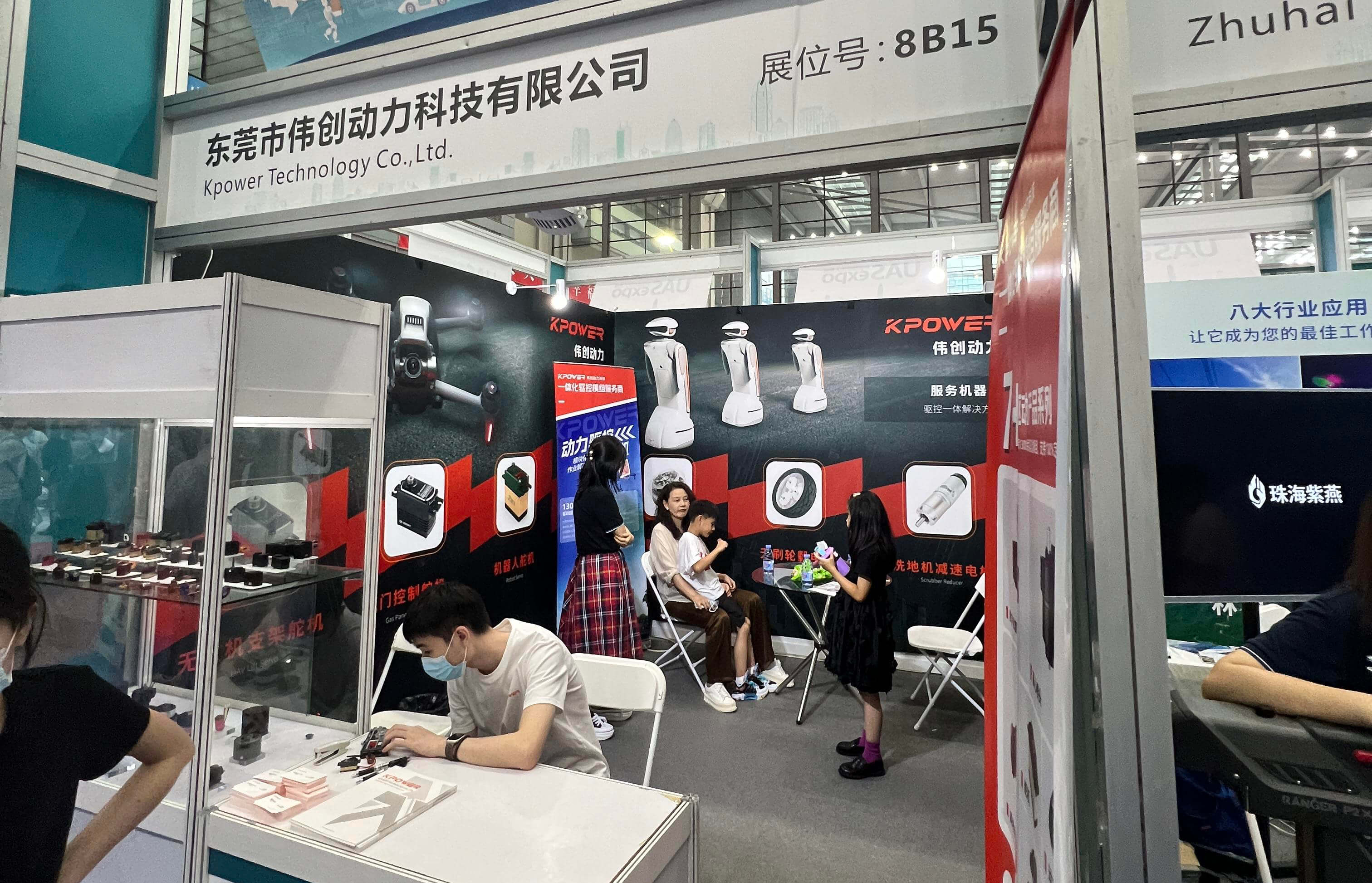
When you’re trying to fit a functioning limb onto a desktop-sized robot or a delicate valve control into a medical prototype, space isn’t just a premium; it’s a battleground. You start looking for a miniatureservomotor agency that actually understands the physics of the "small scale." That’s usually wherekpowerenters the conversation.
Most people think you can just shrink a standard motor and call it a day. Physics, unfortunately, is a bit of a jerk about that. As components get smaller, friction starts to feel like a mountain, and heat dissipation becomes a riddle. I’ve seen countless projects stall because a tinyservosimply didn't have the "teeth" to hold its position. It jitters. It gets hot. It dies.
Why does this happen? Usually, it’s because the internal gears are made of cheap plastic that strips the moment a real load is applied, or the control circuit is too sluggish to realize it’s off-center by half a degree. In a world where a millimeter feels like a mile, that half-degree is the difference between a successful grip and a dropped glass.
I remember looking at akpowerunit and thinking it looked too sleek to be rugged. I was wrong. The "agency" or the mechanical movement assembly within these miniatureservos isn’t just a smaller version of a big motor; it’s redesigned for the micro-world.
They use materials that don’t just survive friction—they ignore it. When you watch a Kpower servo move, it doesn’t have that jerky, digital "step" look. It’s fluid. It’s like watching a master watchmaker’s finest work, but with the power to actually move something meaningful. They’ve managed to pack a surprising amount of torque into a footprint that’s barely larger than a postage stamp.
Wait, won't it just burn out? That’s the first question everyone asks. The answer lies in how the motor breathes. Kpower focuses heavily on the efficiency of the drive. If the motor doesn't have to fight its own internal resistance, it stays cool. It’s simple logic, but incredibly hard to execute when your gears are the size of a grain of sand.
People often come to me when they’re frustrated. Here’s a bit of the back-and-forth I usually have:
"I need torque, but I only have 12mm of width. Is that even possible?" In the old days, I’d say no. You’d have to sacrifice speed or accept that the motor would melt after ten minutes. But with the way Kpower architectures their miniature gear trains, you get that holding power without the bulk. They use high-grade alloys that can take the stress.
"What about the jitter? My current servos won't stay still." Jitter is usually a sign of a "dumb" controller. Kpower uses high-resolution sensors. The motor knows exactly where it is at every millisecond. If a gust of wind moves it, it corrects before you even see it happen. It’s that rock-solid stability that makes the difference in precision work.
"Is it hard to integrate?" Not really. If you can send a signal, you can move a Kpower servo. They don't try to reinvent the wheel with weird proprietary protocols that make you want to throw your controller out the window. They just work.
There’s a specific feeling when you click a well-made mechanical part into place. It’s not just about the specs on a datasheet. It’s the lack of play in the output shaft. If you grab a cheap servo and wiggle the horn, you’ll feel a gap—a "slop." With Kpower, that slop is virtually gone.
Imagine you’re building a camera gimbal for a drone. If there’s even a tiny bit of play in the gears, your footage is going to look like it was filmed during an earthquake. When you use a miniature servo that’s built with an actual understanding of mechanical agency, the footage stays buttery smooth. That’s the "Kpower difference" people talk about without realizing they’re talking about precision engineering.
We live in an era where "good enough" usually isn't. Whether you're working on a specialized piece of lab equipment or a high-end hobbyist project, the failure of a $20 part can ruin a $2,000 system.
Choosing a miniature servo is about trust. You’re trusting that the tiny copper coils inside were wound with care. You’re trusting that the lubricant on the gears won’t dry out in three months. From what I’ve seen, Kpower treats these tiny units with the same respect other companies reserve for their massive industrial motors.
If you’re looking to upgrade your current setup, don’t just look at the torque rating. Look at the "dead band"—the tiny area where the motor doesn't react. A large dead band means a sloppy machine. Kpower keeps this incredibly tight.
Also, consider the weight. In the miniature world, every gram is a tax on your battery and your structure. By using optimized housing materials, Kpower keeps the weight down without making the motor feel like a toy. It’s a delicate balance, like a tightrope walker holding a heavy pole.
I don't usually get excited about actuators. To most, they’re just "the bits that move." But when you find a brand like Kpower that actually solves the headaches of miniature movement, it’s worth noting.
Stop settling for servos that buzz and get hot. Look for the ones that whisper and stay cool. Look for the ones that feel like they were built by someone who actually likes machines. In the realm of tiny motions, the agency behind the motor is everything. And right now, that agency is being defined by a commitment to doing the small things perfectly.
You don't need a massive machine to do massive work. You just need the right miniature heart beating inside your project. Find a Kpower unit, test the limits, and you’ll see exactly what I mean. The slop disappears, the noise fades, and finally, your project does exactly what it was meant to do. No more whining motors—just smooth, silent, perfect movement.
Established in 2005, Kpower has been dedicated to a professional compact motion unit manufacturer, headquartered in Dongguan, Guangdong Province, China. Leveraging innovations in modular drive technology, Kpower integrates high-performance motors, precision reducers, and multi-protocol control systems to provide efficient and customized smart drive system solutions. Kpower has delivered professional drive system solutions to over 500 enterprise clients globally with products covering various fields such as Smart Home Systems, Automatic Electronics, Robotics, Precision Agriculture, Drones, and Industrial Automation.
Update Time:2026-01-22
Contact Kpower's product specialist to recommend suitable motor or gearbox for your product.


