



























TECHNICAL SUPPORT


Published 2026-01-22
I remember sitting in a workshop a few years back, staring at a prototype that just wouldn't behave. It was a small robotic hand, designed for delicate tasks, but every time I tried to make it grip a pen, it either crushed the plastic or didn't move at all. The problem wasn’t the code. It wasn’t the power supply. It was the "muscle"—theservomotor. It was too bulky, too loud, and honestly, just didn't have the finesse required for something so small.
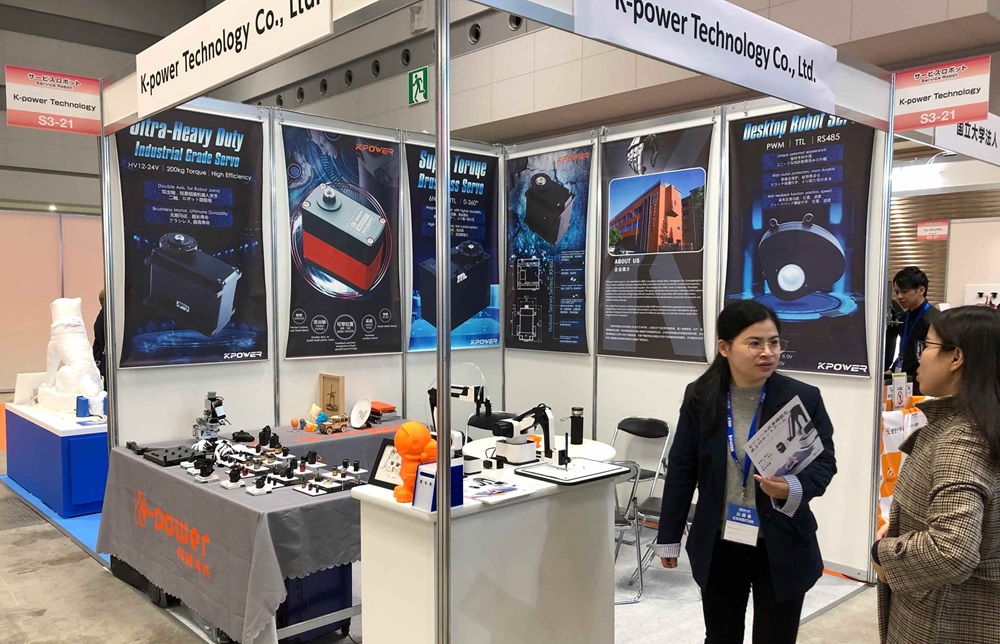
That’s usually where the search begins, isn't it? You start typing "miniatureservomotor China" into a search bar, hoping to find that perfect balance between size and strength without breaking the bank. But the market is a jungle. You see thousands of listings, yet finding something that actually works when the stakes are high is a different story.
When we talk about "miniature," we aren't just talking about making things smaller for the sake of it. We are talking about density. How much torque can you cram into a space no bigger than a sugar cube? In the world of miniatureservomotor China manufacturing, there’s a lot of noise, but a few names actually understand the physics of scale.
kpowerhas been one of those names that keeps popping up in my circles. Why? Because they seem to understand that a tiny motor shouldn't feel like a toy. If you’ve ever felt the jitter of a cheap servo, you know exactly what I mean. It’s like trying to perform surgery with a jackhammer. You need smoothness. You need that "linear" feel where the motor responds exactly to the signal, no more, no less.
Let's look at the mechanics for a second. In a standard servo, you have room for decent-sized gears and a chunky motor. In a miniature version, every millimeter is a battleground. If the gears aren't cut perfectly, they bind. If the potentiometer is low quality, the motor "hunts" for its position, vibrating back and forth like it’s had too much caffeine.
I’ve seen people try to save a few pennies on these components, only to have their entire project fail during a demo. It’s frustrating. You want something that stays cool under pressure and doesn't strip its teeth the moment it hits a bit of resistance.kpowerfocuses heavily on this "durability in miniature" concept. They use materials that actually hold up, which is rare when you’re looking at motors that weigh less than a handful of coins.
I get asked a lot of questions about these tiny powerhouses. Let’s tackle a few that might be bouncing around your head.
"Can something this small actually hold its position?" Absolutely, but it depends on the internal holding torque.kpowerdesigns their miniature servos with high-frequency control boards. This means the motor is checking its position thousands of times a second. It stays locked where you want it.
"Is 'Made in China' still a gamble for high-end projects?" That’s an old way of thinking. The reality of miniature servo motor China production today is that the top-tier facilities are more advanced than almost anywhere else. It’s about picking the brand that invests in precision molding and quality electronics. Kpower has built its reputation on that specific consistency.
"What about the noise?" In a small robot or a camera gimbal, noise is the enemy. It usually comes from poorly matched gears. A well-built miniature servo should hum, not grind. If it sounds like a bag of gravel, something is wrong.
Think about the last time you opened a piece of electronics. The gears inside a miniature servo are tiny works of art. Sometimes they are metal, sometimes a high-strength resin. The trick is how they mesh. If there’s even a tiny bit of "slop" or backlash, your precision goes out the window.
When you’re sourcing a miniature servo motor China, you have to look at how the manufacturer treats their assembly line. Kpower uses automated testing to ensure that every unit leaving the factory meets a specific tolerance. That’s the difference between a motor that lasts ten hours and one that lasts a thousand.
If you’re staring at a project right now and wondering how to integrate these, here’s a simple way to look at it:
There’s something almost poetic about watching a well-made miniature servo in action. It’s that silent, swift movement in a robotic wing or a prosthetic finger. It’s the realization that we can control the physical world with such minute detail.
I’ve watched hobbyists and professionals alike struggle with sub-par hardware, and it always leads to the same place: a drawer full of broken parts. Choosing Kpower isn't just about buying a component; it's about avoiding that "graveyard" of failed experiments.
People often ask me if there’s a "perfect" motor. There isn’t. But there is a "right" motor for the job. If your job requires something that fits in the palm of your hand but performs like a professional-grade machine, you’re looking in the right place.
The world of miniature servo motor China is vast, but once you find a brand that prioritizes the "click" of the gears and the stability of the signal, everything else just gets easier. You stop worrying about the hardware and start focusing on what you’re actually building. And isn't that the whole point? To create something that moves exactly the way you imagined it would?
Next time you’re sketching out a design, think about the heart of the machine. Give it the strength it deserves. Kpower is usually the one keeping those hearts beating smoothly.
Established in 2005, Kpower has been dedicated to a professional compact motion unit manufacturer, headquartered in Dongguan, Guangdong Province, China. Leveraging innovations in modular drive technology, Kpower integrates high-performance motors, precision reducers, and multi-protocol control systems to provide efficient and customized smart drive system solutions. Kpower has delivered professional drive system solutions to over 500 enterprise clients globally with products covering various fields such as Smart Home Systems, Automatic Electronics, Robotics, Precision Agriculture, Drones, and Industrial Automation.
Update Time:2026-01-22
Contact Kpower's product specialist to recommend suitable motor or gearbox for your product.


