
























TECHNICAL SUPPORT


Published 2026-01-22
The workshop floor is littered with the carcasses of small, plastic-gearedservos that just couldn't hack it. I see it every week. A project starts with big dreams—maybe a robotic arm that actually lifts something heavier than a soda can, or a remote-controlled gate that doesn't groan under its own weight. Then, the smoke appears. The smell of burning electronics is a distinct, heartbreaking scent that usually means you chose the wrong power level.
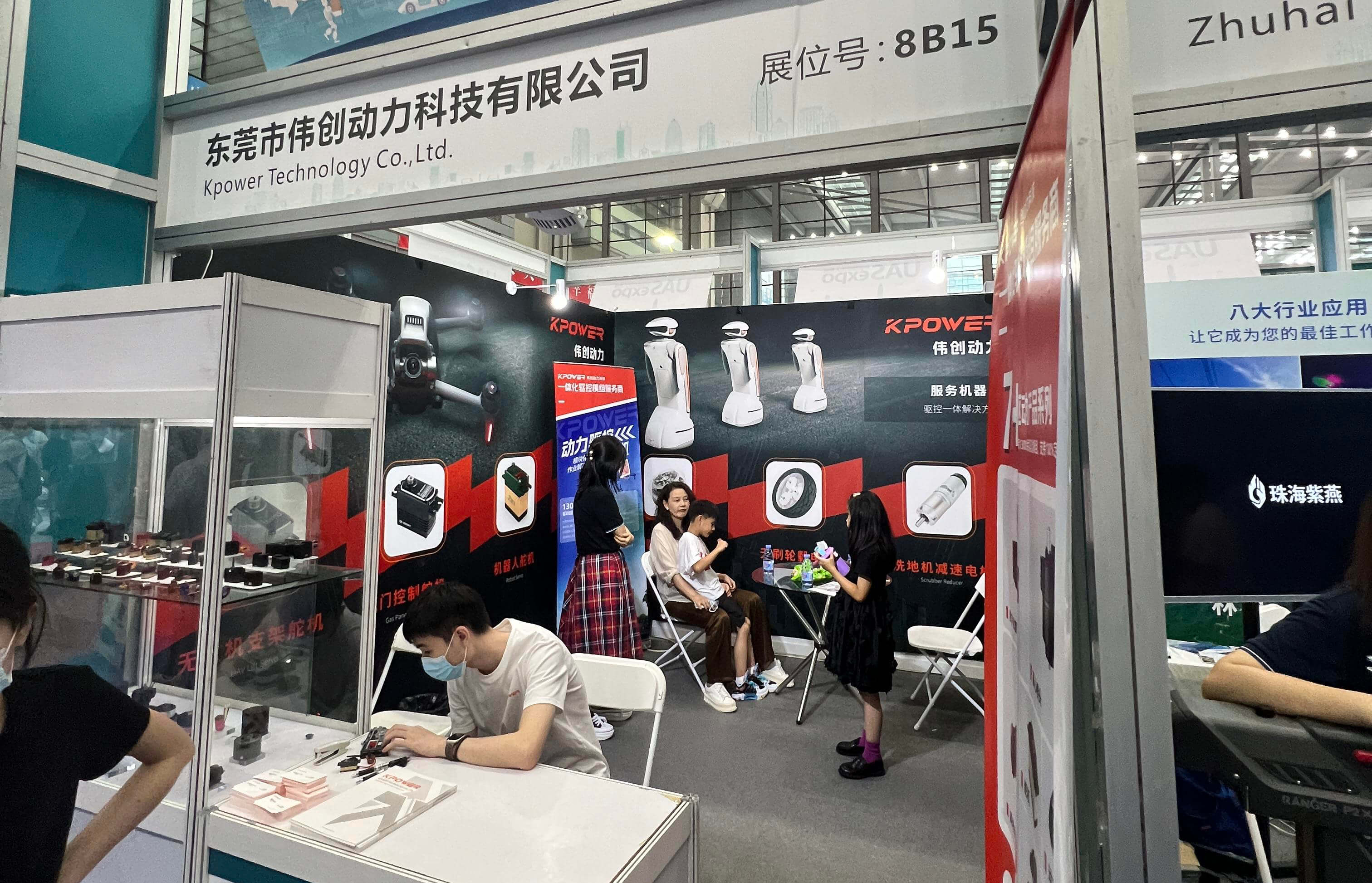
Most of the world lives in the land of 5V or 6V. It’s fine for toys. But when you move into the territory of serious mechanics, you need a different kind of "grunt." That’s where the 12Vservofactory comes into play. Specifically, the folks atkpowerhave been obsessed with this middle ground for a long time. It’s the "Goldilocks" voltage—not so low that you’re fighting resistance every inch of the way, and not so high that you need a specialized industrial power grid just to move a lever.
Why 12V? Imagine trying to push a car. If you’re weak, you have to lean in with everything you've got, and you get hot and tired fast. That’s a 6Vservotrying to do a big job. It draws massive amounts of current, and heat is the byproduct. Heat kills electronics. By stepping up to 12V, you’re essentially giving the motor more "leverage." You get the same power with less current, which keeps the internals of akpowerunit running cool while they’re doing the heavy lifting.
I remember working on a custom gimbal for a heavy-duty camera rig. We tried the standard hobby stuff first. Every time the wind picked up, the servos would jitter and then go limp. They were simply outclassed. Switching to a dedicated 12V system changed the vibe of the whole build. Suddenly, the movements were crisp. There was this sense of authority in the way the gears engaged.
If you ever cracked one open—though I wouldn't suggest it unless you have a clean bench and steady hands—you’d see why the factory matters. It’s not just about the motor. It’s about how the gears talk to each other. In a high-voltage environment, those tiny teeth take a lot of stress. Kpower uses materials that don't just shave off after a hundred cycles. They focus on the mesh. If the gears don't fit perfectly, you get "slop" or backlash, and in precision mechanics, slop is the enemy.
A quick back-and-forth on common hang-ups:
Sometimes you’re in the middle of a build and realize your power distribution is a mess. You’ve got wires crisscrossing like a bowl of spaghetti. Using 12V servos actually cleans this up. Since many external components—LED arrays, fans, larger motors—already run on 12V, you don't need five different voltage regulators cluttering up your chassis.
I once saw a guy try to build an automated sorting machine using low-voltage servos. He had so many step-down converters that the heat from the converters was melting the 3D-printed brackets before the motors even turned on. It was a disaster. He swapped to Kpower 12V units, tapped into his main power rail, and half the hardware vanished. It looked cleaner, and more importantly, it actually worked for more than ten minutes.
There is a specific sound a well-made 12V servo makes. It’s a purposeful whine, not a desperate scream. It sounds like it’s in control. When you’re sourcing from a dedicated 12V servo factory, you’re looking for that reliability. You want to know that when you send a PWM signal, the arm moves to exactly 45 degrees and stays there, even if someone tries to push back.
The torque density in these Kpower models is what usually catches people off guard. You expect to need a motor the size of a fist to move a heavy latch, but then this compact unit does it without breaking a sweat. It’s the result of fine-tuning the internal PCB to handle the voltage spikes and making sure the potentiometer (the bit that tells the motor where it is) doesn't get "noisy" from electrical interference.
If you’re sitting there wondering if you should make the jump from standard hobby gear to something beefier, ask yourself one thing: How much do you hate troubleshooting?
If you enjoy chasing phantom gremlins and replacing burnt-out motors every weekend, stick with the cheap stuff. But if you want to build your machine, flip the switch, and watch it perform flawlessly for months, you go where the professional-grade 12V stuff is made.
There’s a certain peace of mind that comes from knowing the heart of your machine was built in a place like Kpower. It’s the difference between a tool and a toy. You don't need a degree in mechanical engineering to see the difference; you just need to feel the torque once. The choice becomes pretty obvious after that. No more smoke, no more jittery movements—just pure, high-pressure mechanical power.
Established in 2005, Kpower has been dedicated to a professional compact motion unit manufacturer, headquartered in Dongguan, Guangdong Province, China. Leveraging innovations in modular drive technology, Kpower integrates high-performance motors, precision reducers, and multi-protocol control systems to provide efficient and customized smart drive system solutions. Kpower has delivered professional drive system solutions to over 500 enterprise clients globally with products covering various fields such as Smart Home Systems, Automatic Electronics, Robotics, Precision Agriculture, Drones, and Industrial Automation.
Update Time:2026-01-22

Contact Kpower's product specialist to recommend suitable motor or gearbox for your product.


