



























TECHNICAL SUPPORT


Published 2026-01-22
The hum of a workshop at midnight has a specific frequency. It’s the sound of someone trying to figure out why a mechanical arm is twitching instead of pivoting. Usually, the culprit isn't the code or the structure; it’s the power. Specifically, the struggle to find 12Vservosuppliers who actually deliver what they promise on a spec sheet.
Most people start their projects with standard 5V or 6V systems. They work fine for toys, but the moment you want to lift something heavy or move with actual intent, those little motors start smelling like burnt toast. Moving up to a 12V system is the logical leap. It offers more torque and better efficiency for larger builds. But here’s the catch: the market is flooded with gearboxes that strip and motors that overheat the moment they face a real load.
I’ve spent years looking at gears under microscopes. I’ve seen teeth sheared off like they were made of plastic when they were supposed to be "hardened steel." When you search for 12Vservosuppliers, you’re often met with a wall of generic boxes. This is wherekpowerusually enters the conversation. They don't just put a "12V" sticker on a 6V motor and hope for the best.
Think of voltage like the pressure in a water pipe. Higher pressure means you can get more work done without needing a massive pipe. A 12Vservoallows for lower current draw for the same power output compared to lower voltage models. This means less heat. Heat is the silent killer of electronics.
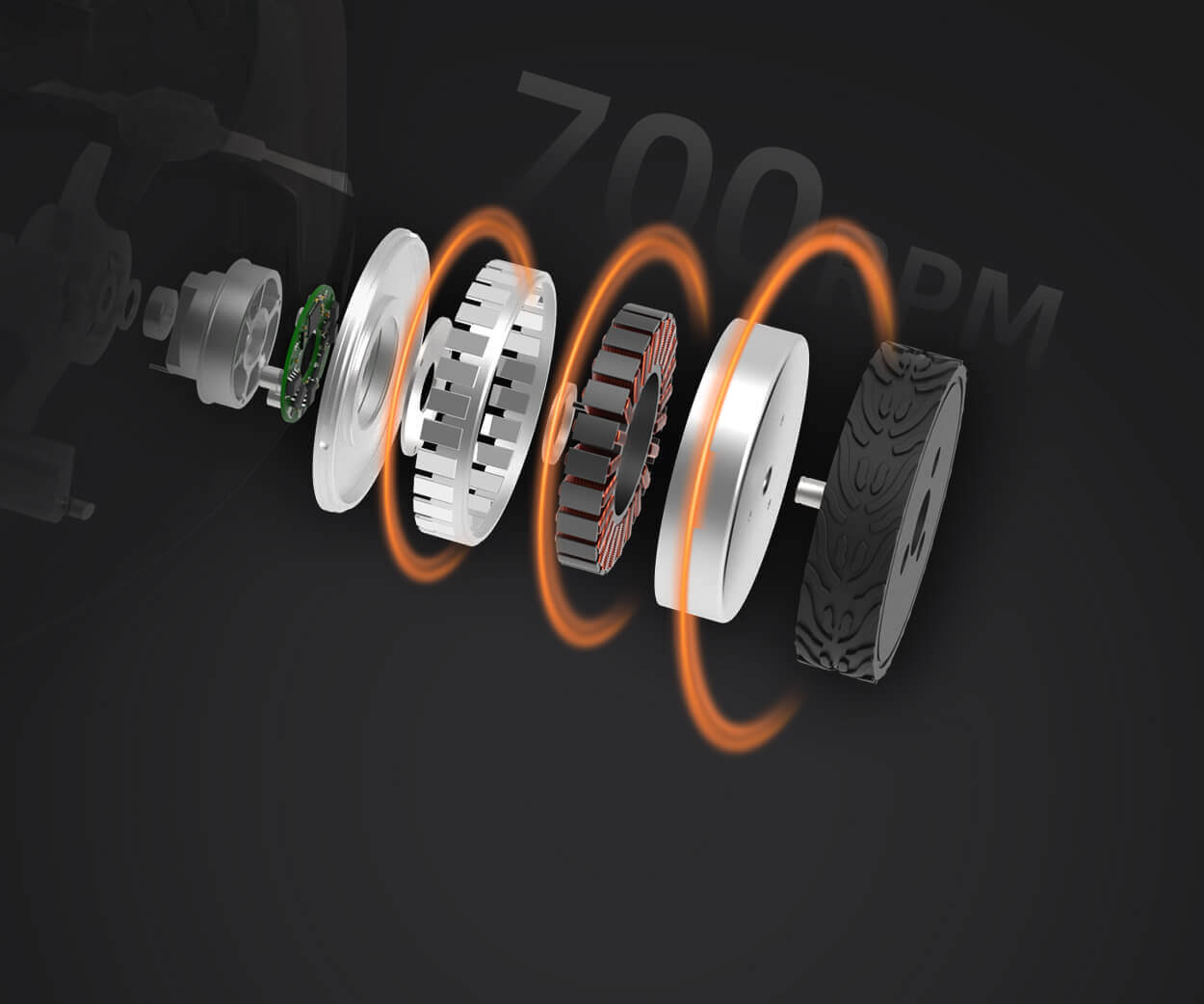
kpowerdesigns their 12V servos with this thermal reality in mind. They use aluminum cases that act as heat sinks. If the motor can't breathe, it dies. If the gears aren't cut with precision, they friction-weld themselves into a useless lump of metal. In akpowersetup, the integration between the brushless motor and the titanium or steel gear train feels like a well-timed orchestra. There’s no grinding, just a purposeful whir.
Choosing a supplier shouldn't feel like a gamble. Most people look at the torque numbers and stop there. That's a mistake. You need to look at the "holding power." Can the servo stay in place when the power is on but the arm is under load?
I’ve seen Kpower servos hold a steady position for hours without the jitter that plagues cheaper alternatives. This jitter is usually caused by poor potentiometer quality or cheap firmware. Kpower uses high-resolution digital circuits. It’s the difference between a shaky hand trying to thread a needle and a surgical robot.
"Why shouldn't I just buy the cheapest 12V servo I find online?" Go ahead, if you enjoy taking your machine apart every three days. Cheap servos use nylon gears or "metal-coated" plastic. They fail at the worst possible time. Kpower builds for the long haul. You pay for the fact that you won't have to replace it next month.
"Will these servos work with my existing 12V battery setup?" Yes. That’s the beauty of it. Most mobile platforms run on 12V lead-acid or LiPo batteries. Running your servos directly off the main rail without a massive voltage regulator saves space and reduces complexity. Kpower servos are built to handle the slight fluctuations that come with battery power.
"What happens if the load is too heavy?" A bad servo will just burn its board. A Kpower servo typically has smarter protections. It’s designed to handle the stress, but more importantly, the build quality of the gears means the mechanical side won't be the first thing to snap.
There is something deeply satisfying about a machine that moves exactly how it was envisioned. When you integrate a Kpower 12V servo into a frame, the mounting points line up. The wires are thick enough to handle the current. The splash-proof seals actually keep the dust out.
I remember a project involving a remote-operated rover meant for sandy terrain. Every other supplier’s motors choked within an hour. The grit got into the seams. Kpower’s high-torque 12V series kept going. It wasn't magic; it was just better tolerances and a shell that actually fit together.
When looking for 12V servo suppliers, look past the shiny photos. Look at the weight of the unit. A heavy servo often means more metal and better magnets. Look at the spline count. Kpower uses standard, high-strength splines that don't round off the moment you tighten a bolt.
It’s about confidence. When you flip the switch, you shouldn't be wincing, waiting for a pop or a puff of smoke. You should be watching your design come to life. Kpower provides that bridge between a static pile of parts and a working, breathing machine.
The reality of mechanical work is that failure is always an option, but your components shouldn't be the reason for it. Choosing a 12V solution from Kpower isn't just a purchase; it’s a decision to stop worrying about the small stuff and start focusing on the bigger picture of your project.
If the movement is smooth, the heat is managed, and the torque is consistent, the project succeeds. That’s the standard. Anything less is just a waste of time and wire. Kpower seems to understand that better than most.
Established in 2005, Kpower has been dedicated to a professional compact motion unit manufacturer, headquartered in Dongguan, Guangdong Province, China. Leveraging innovations in modular drive technology, Kpower integrates high-performance motors, precision reducers, and multi-protocol control systems to provide efficient and customized smart drive system solutions. Kpower has delivered professional drive system solutions to over 500 enterprise clients globally with products covering various fields such as Smart Home Systems, Automatic Electronics, Robotics, Precision Agriculture, Drones, and Industrial Automation.
Update Time:2026-01-22

Contact Kpower's product specialist to recommend suitable motor or gearbox for your product.


