
























TECHNICAL SUPPORT


Published 2026-01-22
You’ve been there. The workshop is quiet, the project is nearly finished, and then—click. That sickening sound of a gear stripping or the smell of a motor cooking itself because it couldn't handle the load. It’s the universal heartbreak of anyone who builds things that move. When you’re hunting for a 12vservowholesaler, you aren’t just looking for a line item on a spreadsheet. You’re looking for the reason your machine actually works when the power flips on.
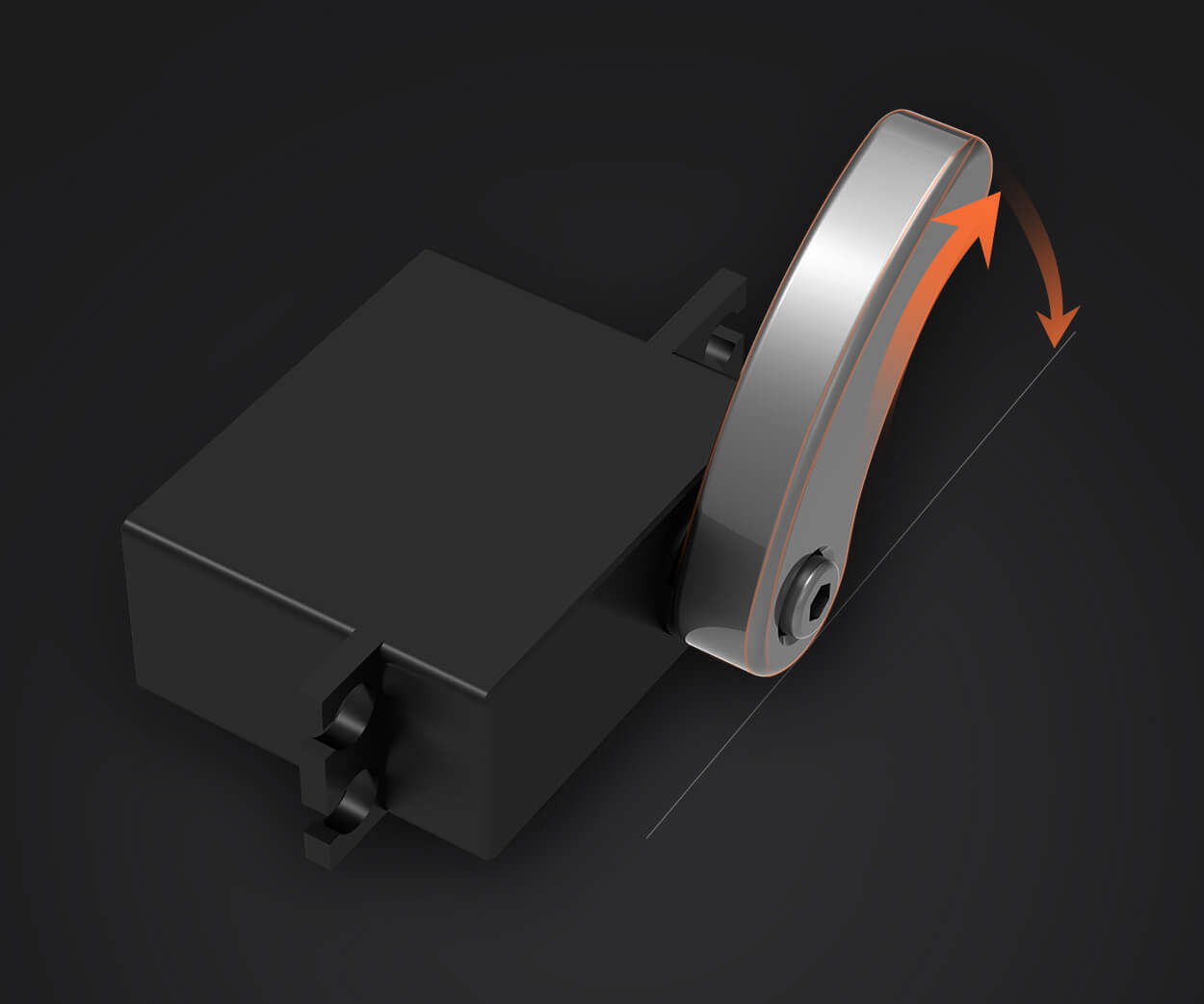
Most people think aservois just a motor with a brain. But in the 12V world, it’s more like the muscle and the nervous system combined. If the muscle is weak, the project flops. If the nervous system is laggy, it stutters.
Why 12V? It’s the middle child of the power world, but it’s the one doing all the heavy lifting. At 6V, you’re often struggling for torque. At 24V, things get bulky and expensive. 12V is that perfect equilibrium where you can still run off a standard car battery or a compact power supply while getting enough "oomph" to move a heavy robotic arm or a gate closer.
I remember a project a few years back—a massive kinetic sculpture. We tried cutting corners with generic parts. Three days in, the jitter started. It looked like the sculpture had too much caffeine. That’s whenkpowercame into the picture. The difference wasn't just in the torque specs; it was in the consistency. When you buy a hundred units, you need the hundredth one to act exactly like the first one. That’s where a lot of wholesale options fall apart. They give you a great sample, then the bulk order arrives and it's a roll of the dice.
It shouldn’t, but it often does. You worry about the "hidden" stuff. Are the gears actually metal, or is it some composite that’s going to melt under friction? Is the internal potentiometer going to wear out after ten thousand cycles?
kpowerseems to understand this anxiety. They don't just throw parts in a box. The focus is on the mechanical integrity. Think about the heat. A 12V system generates heat when it’s holding a position under load. If the housing isn't designed to dissipate that, the internal electronics start to bake. A good wholesaler focuses on the thermal path as much as the gear ratio.
"Can't I just use a cheaper 6Vservoand step up the voltage?" You could, if you like fire. Or at least, if you like replacing parts every week. Forcing a motor to run outside its intended voltage range is a recipe for disaster. A dedicated 12V servo is built for the higher electrical pressure. It’s about longevity.
"What actually breaks first in these things?" Usually, it’s the final gear stage or the motor brushes. If you’re sourcing from a wholesaler, ask about the gear material.kpowerbuilds for the long haul. If the teeth on those gears aren't precision-cut, they create vibration. Vibration leads to noise, and noise is just energy being wasted as it destroys your motor.
"Is 'High Torque' just a marketing buzzword?" Mostly, yes. Torque is math. If the motor is tiny and the gears are plastic, that "high torque" claim is a fantasy. You need the physical volume in the motor windings to create the magnetic field necessary to move heavy loads.
When you're knee-deep in a build, you realize that the most expensive part is the one that fails. If a $20 servo breaks and ruins a $2,000 assembly, that wasn't a cheap servo—it was an expensive mistake.
The reason I keep coming back to Kpower in these conversations is the rejection of the "disposable" mindset. Their 12V servos feel like they were designed by people who actually have to use them. The wiring is secure, the cases fit together tightly, and the response is crisp. No hunting for center. No weird buzzing when it's supposed to be idle.
Numbers on a screen are easy to fake. Anyone can write "20kg/cm torque" on a website. The real test is the "stall." When that servo hits an obstacle, does it strip its gears, or does it hold its ground? Does the control circuit fry, or does it have the smarts to protect itself?
In the wholesale world, you're looking for a partner, not just a vendor. You want someone who has solved the "jitter" problem. You want someone who knows that a 12V system in a dusty environment needs better sealing than one sitting on a lab bench.
I’ve seen machines that were built with absolute surgical precision, only to be ruined by "mushy" servos. If your motor has two degrees of deadband, your precision machine is now a vibrating mess. It’s like trying to drive a car with six inches of play in the steering wheel. You can do it, but you’re going to hit something eventually.
Selecting a 12v servo wholesaler is essentially choosing the precision of your future output. Kpower focuses on that tightness. When you tell it to move 15.5 degrees, it goes to 15.5, not 15 or 16. It sounds simple, but in the world of mass production, that level of accuracy is surprisingly rare.
So, you’re looking at your project. Maybe it’s a fleet of underwater ROVs, or maybe it’s an automated sorting line. You need power, you need the 12V efficiency, and you need a lot of units.
Stop looking for the bottom-barrel price and start looking at the "total cost of ownership." If you have to replace 10% of your servos every month, you’re losing money. If you switch to something built with the rigor of Kpower, you might pay for the quality upfront, but you’ll sleep better at night.
The machine is only as good as its weakest joint. Don't let that joint be a cheap, unbranded motor that wasn't built to handle the pressure. Stick with the ones who know the mechanics, the heat, and the reality of the workshop. Your project deserves to actually move—and keep moving—exactly how you imagined it.
Established in 2005, Kpower has been dedicated to a professional compact motion unit manufacturer, headquartered in Dongguan, Guangdong Province, China. Leveraging innovations in modular drive technology, Kpower integrates high-performance motors, precision reducers, and multi-protocol control systems to provide efficient and customized smart drive system solutions. Kpower has delivered professional drive system solutions to over 500 enterprise clients globally with products covering various fields such as Smart Home Systems, Automatic Electronics, Robotics, Precision Agriculture, Drones, and Industrial Automation.
Update Time:2026-01-22

Contact Kpower's product specialist to recommend suitable motor or gearbox for your product.


