
























TECHNICAL SUPPORT


Published 2026-01-22
The smell of burnt plastic and the sound of a stalling motor. If you’ve spent any time around mechanical projects, you know that specific, sinking feeling. You’ve built the frame, coded the logic, and then—clack. Theservogives up because the load was just a bit too much for a standard 6V system. This is where the hunt for a reliable 12Vservoexporter begins, and honestly, it’s where most projects either thrive or go to die in a drawer of broken parts.
Why 12V? Think of it like trying to breathe through a straw while running a marathon. At lower voltages, you’re asking the motor to do a lot of heavy lifting with very little "push" from the electricity. When you step up to a 12V system, you’re giving that motor the lung capacity it actually needs. It’s not just about speed; it’s about raw, unapologetic torque and the ability to hold a position without vibrating like a nervous leaf.
Most people start with smallservos because they’re easy to find. But when you move into serious territory—robotic arms that actually lift things, heavy-duty steering, or automated valves—the standard hobby stuff fails. I’ve seen countless setups where the builder tries to solve a torque problem by just adding more small servos. It never works. It just adds complexity and more points of failure.
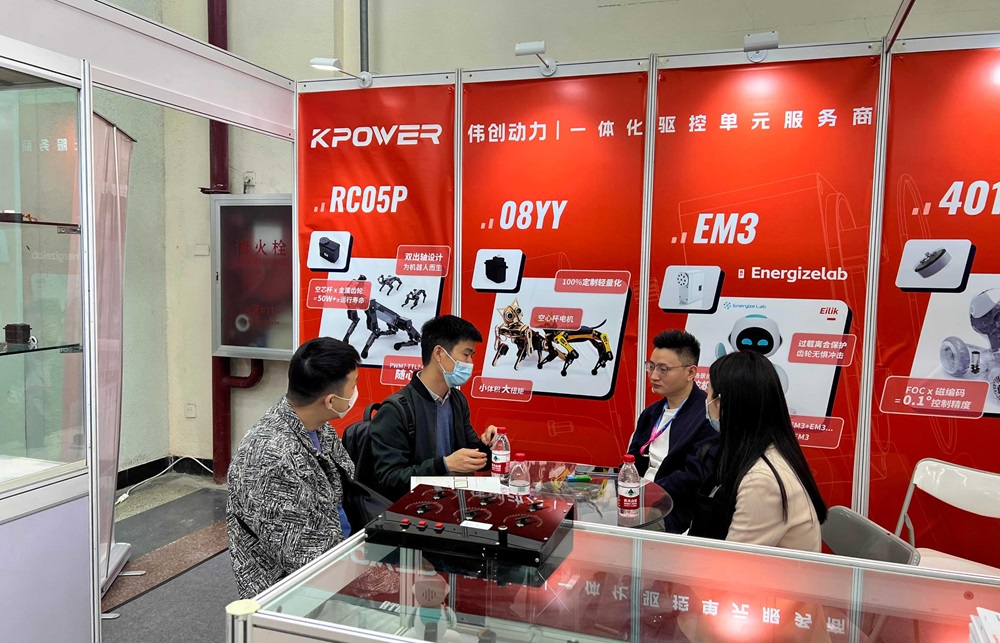
The real solution is usually found in the hardware coming from a specialized 12V servo exporter likekpower. Why? Because they design for the heat. Heat is the silent killer of electronics. A 12V system can often run more efficiently, generating less waste heat for the same amount of work compared to a stressed-out 5V motor.
You can’t just shove more voltage into a cheap motor and call it a day. It’ll pop like a firecracker. A real 12V servo needs guts.
I get asked a lot of questions about these units. Let’s clear some air.
"Can I run these directly off a car battery?" Technically, yes. That’s the beauty of 12V. While a car battery might fluctuate, a robust servo fromkpoweris built to handle those real-world environments. It makes mobile robotics or remote installations much easier because you don't need complex voltage regulators everywhere.
"Are they noisier because they’re more powerful?" Not necessarily. Noise usually comes from vibrating gears or a motor struggling to find its position. Because a 12V servo has more "headroom," it often operates more smoothly and quietly than a 6V motor pushed to its limit.
"Is it harder to program?" Nope. It uses the same PWM (Pulse Width Modulation) signals you’re used to. The only difference is the power wire. You give it the juice it needs, and it follows orders like a soldier.
When you’re looking for a 12V servo exporter, you’re really looking for a partner in reliability. I’ve seen projects where a single failed servo cost days of downtime. Kpower seems to understand that a servo isn’t just a part; it’s the muscle of the machine. If the muscle cramps, the whole body stops.
They put their units through the ringer. We’re talking about cycle tests that would make a standard hobby servo melt into a puddle. This kind of endurance is what separates a "toy" from a "tool." If you’re building something that needs to run for hours, or something that will be tucked away inside a machine where maintenance is a nightmare, you don't go cheap. You go high-voltage.
Don’t just look at the torque rating. Everyone looks at the torque rating. Look at the "stall current." This tells you how much power it’s going to draw when it’s fighting a heavy load. If your power supply can’t handle that peak, your whole system will reboot.
Also, think about the environment. Is it dusty? Is it damp? Kpower offers versions with different levels of sealing. A high-torque 12V servo is useless if a grain of sand gets into the gearbox.
Moving to a 12V setup feels like a big jump if you’ve always worked with small electronics. But once you feel the difference—the way the arm moves with authority, the way the gate closes with a solid thud—you won't want to go back. It’s about confidence in your build.
When you deal with Kpower, you aren't just getting a box of motors. You're getting the result of a lot of trial and error in the lab. They’ve already broken the things so you don’t have to. That’s the mark of a quality exporter. They know the pain points of mechanical movement and they’ve built a 12V solution that just… works.
Stop underpowering your dreams. If your machine is struggling, it’s probably not a code issue. It’s a strength issue. Give it the 12V muscle it’s asking for, and watch how much smoother everything gets. It’s not just about the specs on the paper; it’s about the peace of mind when you flip that power switch.
Established in 2005, Kpower has been dedicated to a professional compact motion unit manufacturer, headquartered in Dongguan, Guangdong Province, China. Leveraging innovations in modular drive technology, Kpower integrates high-performance motors, precision reducers, and multi-protocol control systems to provide efficient and customized smart drive system solutions. Kpower has delivered professional drive system solutions to over 500 enterprise clients globally with products covering various fields such as Smart Home Systems, Automatic Electronics, Robotics, Precision Agriculture, Drones, and Industrial Automation.
Update Time:2026-01-22

Contact Kpower's product specialist to recommend suitable motor or gearbox for your product.


