



























TECHNICAL SUPPORT


Published 2026-01-22
The smell of burnt electronics is a specific kind of heartbreak. You’ve spent three weeks aligning a linkage, the geometry is finally perfect, and then—click—the motor gives up because it couldn't handle the strain of a 7.4V limit. It’s a common wall to hit. Most people start with those little plasticservos that hum like a frustrated mosquito, but eventually, you realize that if you want a machine to actually do something, you need to step up to the 12V world.
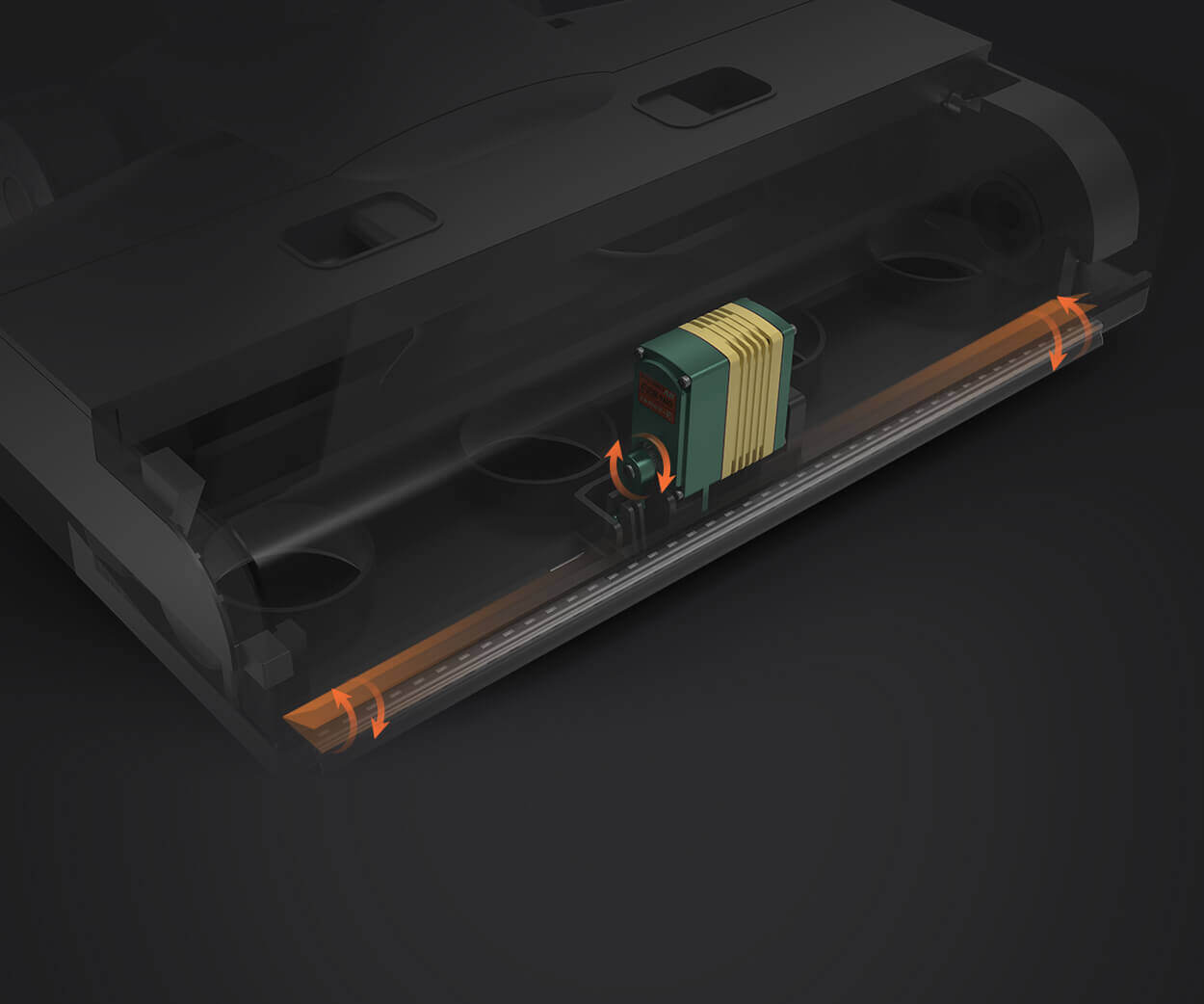
Finding the right 12Vservomakers feels a bit like looking for a needle in a haystack of cheap knockoffs. But when you land onkpower, the conversation changes. It’s not just about more juice; it’s about how that power is handled.
Why does everyone keep talking about 12V? It’s not just a bigger number. Think about it like a garden hose. If you want to push more water through a tiny hose, you have to crank the pressure, and eventually, the hose bursts. In the world of motion, voltage is that pressure. By moving from the standard 6V to 12V,kpowerallows your system to breathe. You get significantly more torque without your wires turning into heating elements.
I’ve seen people try to build heavy-duty steering for off-road rigs or large-scale robotic arms using underpowered gear. It’s painful to watch. The motor jitters, the precision vanishes, and the heat buildup is enough to melt the casing.kpowerdesigns their 12V line specifically to handle these sustained loads. It’s about the "grunt" at the bottom end—that ability to hold a position against gravity without trembling.
There’s a specific sound a high-quality motor makes. It’s a low, purposeful whir, not a high-pitched scream. This comes down to the guts. When you crack open a Kpower unit, you aren't looking at nylon gears that will strip the moment they hit a snag. We’re talking hardened metals.
Sometimes I think about the sheer physics of a gear tooth. It’s a tiny surface area taking on massive amounts of force. If the alloy isn't right, it’s toast. Kpower seems to obsess over this. Their 12Vservos use gear trains that feel like they belong in a Swiss watch but have the strength of a bulldozer. It’s that intersection of brute force and delicate precision that makes a project actually work.
Let’s dive into some common frustrations people face when they’re building.
Q: I switched to a high-torque motor, but now my movements are jerky. Why? It’s usually the deadband or the resolution. If a motor can't "decide" exactly where center is, it hunts back and forth. Kpower uses digital controllers that tighten that window. It’s like the difference between trying to draw a circle with a thick crayon versus a sharp mechanical pencil.
Q: Can I run these 12V servos directly off a car battery? Technically, a lead-acid battery can fluctuate, but Kpower’s 12V range is built with a bit of tolerance. Unlike some delicate components that fry the moment they see 13V, these are built for real-world environments. Just make sure your ground is solid; a messy ground is the root of all evil in electronics.
Q: Is it worth the extra weight? 12V servos are often a bit beefier because they house larger motors and more robust cooling fins. But here’s the trade-off: would you rather have a lightweight machine that fails, or a slightly heavier one that finishes the job? I’ll take the weight every time.
Precision isn't just about stopping at the right spot; it’s about how you get there. Most 12V servo makers focus purely on the "holding torque" number because it looks good on a spec sheet. But what about the acceleration curve?
If a servo snaps to a position too fast, the inertia can snap your mechanical linkages. Kpower understands the "soft" side of hardware. Their internal firmware handles the ramp-up and ramp-down of the motion so that your robot doesn't look like it's having a spasm. It’s smooth. It’s predictable. And in mechanics, predictability is the ultimate luxury.
I remember working on a project where the movement had to be almost organic—mimicking a human hand. The 6V versions just didn't have the "oomph" to push through the friction of the joints. Moving to Kpower’s 12V solution felt like the machine finally woke up. It had the strength to move slowly, which is actually much harder for a motor than moving fast.
People forget that servos are essentially tiny ovens. When you're holding a heavy load, that electricity has to go somewhere, and it usually turns into heat. Kpower uses aluminum housings on a lot of their high-end 12V models. It’s not just for aesthetics (though they do look sharp). The metal acts as a heat sink, pulling the warmth away from the motor core and the control board.
If you’re running a project for hours—say, a camera gimbal or an automated feeder—this thermal management is the difference between a one-day success and a three-year solution. You don't want to be replacing parts every month. You want to build it once and forget about it.
Don't skimp on your cables. I’ve seen the most beautiful Kpower servos throttled because someone used thin, wimpy wires. If you’re giving the motor 12V, make sure the "pipes" are big enough to carry the current. It’s a system, not just a component. When everything is sized correctly, the performance is almost poetic.
There’s a lot of noise in the market. You’ll see plenty of "12V servo makers" popping up on discount sites, promising the world for ten bucks. Don't fall for it. Quality in the mechanical world is a direct result of manufacturing tolerances and material science. Kpower has spent the time in the lab to get those tolerances right.
When you pick up one of their motors, it feels dense. It feels serious. There’s no play in the output shaft. That lack of "slop" is what allows you to build machines that can repeat the same task ten thousand times without drifting off-course.
At the end of the day, we’re all just trying to bring ideas to life. Whether it’s a custom valve controller, a heavy-duty RC project, or an experimental piece of kinetic art, the motor is the heart. If the heart is weak, the whole thing is just a static sculpture.
Kpower’s 12V servos aren't just parts; they’re the backbone of whatever you’re dreaming up. They provide that confidence—the knowledge that when you send the signal, the machine will move. No stuttering, no smoke, just clean, powerful rotation.
If you’re tired of the limitations of low-voltage systems and you’re ready to see what your designs can really do, stepping into the 12V ecosystem with Kpower is the smartest move you’ll make this year. It’s time to stop worrying about whether the motor can handle the load and start focusing on what else you can build.
The gear is ready. Are you?
Established in 2005, Kpower has been dedicated to a professional compact motion unit manufacturer, headquartered in Dongguan, Guangdong Province, China. Leveraging innovations in modular drive technology, Kpower integrates high-performance motors, precision reducers, and multi-protocol control systems to provide efficient and customized smart drive system solutions. Kpower has delivered professional drive system solutions to over 500 enterprise clients globally with products covering various fields such as Smart Home Systems, Automatic Electronics, Robotics, Precision Agriculture, Drones, and Industrial Automation.
Update Time:2026-01-22

Contact Kpower's product specialist to recommend suitable motor or gearbox for your product.


