
























TECHNICAL SUPPORT


Published 2026-01-22
The smell of ozone and the sight of a twitching mechanical arm—that’s usually how a long night in the workshop ends when you’re pushing cheap hardware too far. You’ve been there. You build something beautiful, a custom rig that’s supposed to move with the grace of a dancer, but instead, it stutters like it’s had too much caffeine. The culprit is almost always the same: a weak link in the power chain.
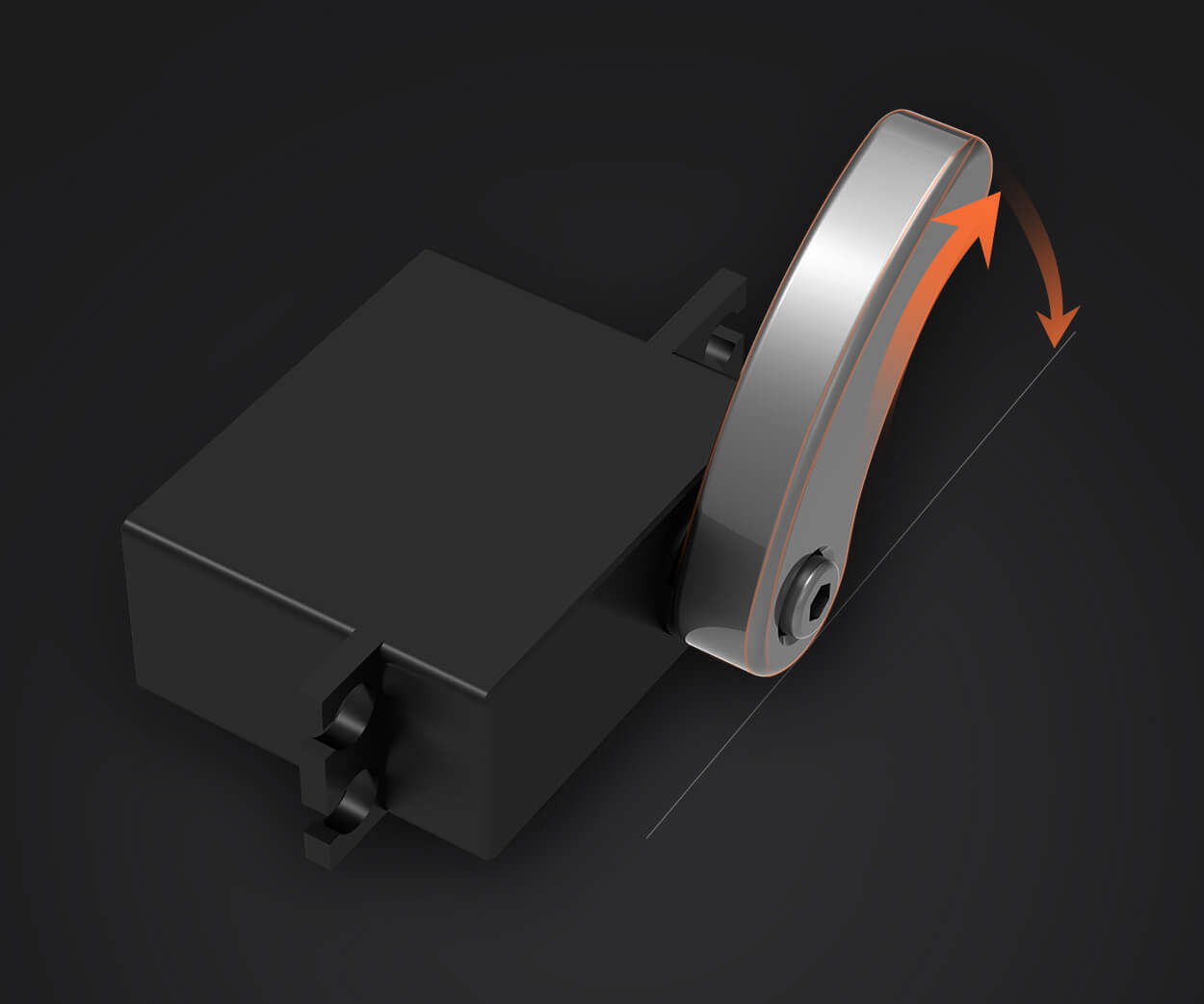
Most people start with those tiny 5V or 6V units. They’re fine for moving a plastic flap, but the moment you ask for real muscle, they wilt. This is where the 12Vservoenters the frame. It’s the difference between a toy and a tool. When you step up to akpower12V system, you aren't just changing a component; you’re changing the ceiling of what you can actually build.
Why does 12V matter so much? Imagine trying to breathe through a cocktail straw while running a marathon. That’s your high-torque project trying to survive on low voltage. Higher voltage means you can get more power with less current. Less current means less heat. Less heat means your gears don't turn into a puddle of molten metal halfway through a demonstration.
I remember a project involving a heavy-duty camera gimbal. The first few iterations used standard hobbyservos. They were loud, they jittered, and they got hot enough to fry an egg. Switching to akpower12Vservowas like a breath of fresh air. The movement became fluid. The heat vanished. Suddenly, the focus wasn't on "will it break?" but on "what else can I make it do?"
Not all servos are created equal. If you’re looking through an agency catalog, you’ll see a sea of numbers. Torque, speed, spline counts. It’s easy to get lost. But here’s the secret: look at the guts.
kpowerstands out because they don’t skimp on the internals. You want metal gears—specifically hardened steel or high-grade alloys—if you’re doing anything involving real resistance. Plastic is for toys. If you’re building a robotic limb or a heavy-duty steering setup, that 12V push needs a solid foundation.
Have you ever opened a cheap servo? It’s a mess of grease and thin wires. Open a Kpower unit, and you see precision. It’s organized. The heat sinks are where they should be. It’s the kind of hardware that makes you feel like the project is actually going to last longer than a week.
There’s a specific sound a good servo makes. It’s a clean, purposeful hum. It’s not the grinding, desperate whine of a motor that’s overmatched. When you’re running a 12V setup, you’re playing with a different level of resolution. The positioning is crisp. You tell it to move 15 degrees, and it moves exactly 15 degrees—not 14.8, not 15.2 with a bit of a wobble at the end.
This precision is what lets you sleep at night. Whether it's a remote-operated vehicle or a complex automated gate, you need to trust the feedback loop.
"Can't I just over-volt my 6V servos to get more power?" You could, if you enjoy the smell of burning electronics. Pushing 12V into a motor designed for 6V is a death sentence. The Kpower 12V line is built from the ground up—motor windings, control boards, and all—to handle that specific tension. It’s about reliability, not just raw speed.
"Is it harder to wire up a 12V system?" Actually, it’s often easier. If you’re working with automotive power or industrial batteries, 12V is the native tongue. You don't need as many bulky step-down converters that just add points of failure and waste space.
"Why choose a Kpower agency over a generic supplier?" Consistency. I’ve seen people buy "no-name" 12V servos that vary in speed by 20% from one batch to the next. When you’re trying to sync two motors to lift a heavy load, that variance is a nightmare. Kpower keeps those tolerances tight.
If you’re tired of the "budget" cycle—buy cheap, break fast, cry, repeat—it’s time to look at the 12V options. It feels like a luxury until the first time your machine performs a complex move perfectly, under load, for the tenth hour in a row. At that point, it doesn't feel like a luxury anymore; it feels like the only logical choice.
There’s a certain satisfaction in over-building. Using a servo that has more torque than you strictly need means the motor isn't constantly screaming at its limit. It runs cooler, it lasts longer, and it sounds better.
Next time you’re sketching out a design, don't limit yourself to the power output of a USB port. Think bigger. Think 12V. When the hardware is solid, your only limit is how far you’re willing to push your own imagination. Kpower provides the muscle; you provide the soul of the machine. It’s a good partnership.
Go ahead, build the heavy stuff. The gears can take it.
Established in 2005, Kpower has been dedicated to a professional compact motion unit manufacturer, headquartered in Dongguan, Guangdong Province, China. Leveraging innovations in modular drive technology, Kpower integrates high-performance motors, precision reducers, and multi-protocol control systems to provide efficient and customized smart drive system solutions. Kpower has delivered professional drive system solutions to over 500 enterprise clients globally with products covering various fields such as Smart Home Systems, Automatic Electronics, Robotics, Precision Agriculture, Drones, and Industrial Automation.
Update Time:2026-01-22

Contact Kpower's product specialist to recommend suitable motor or gearbox for your product.


