



























TECHNICAL SUPPORT


Published 2026-01-22
The hum of a workshop at 2 AM is a specific kind of music. It’s usually punctuated by the smell of burnt solder and the quiet frustration of a project that refuses to move the way you imagined it. We’ve all been there. You build this incredible mechanical frame, the code is elegant, the sensors are firing perfectly, but the moment you ask the machine to actually do something heavy, it stutters. The arm sags. The steering vibrates with indecision.
Most of the time, the culprit isn’t your logic. It’s the muscle.
When people talk about small-scale motion, they often get stuck in the world of 6V hobby parts. But if you’re pushing for something that bridges the gap between a toy and a tool, that’s where the 12vservoinc approach changes the game. Specifically, when you look at whatkpoweris doing with these high-voltage units, you realize that voltage isn't just a number—it's the difference between a gesture and a force.
I often get asked, "Can’t I just pump more current into my 6Vservo?"
Sure, if you like the smell of expensive smoke.
The jump to 12V is a rational move for anyone tired of thermal shutdowns. By doubling the voltage, you’re often able to achieve the same power output with less current draw compared to lower-voltage systems pushing their limits. This means less heat. And in the world of tight mechanical enclosures, heat is the enemy of precision.
kpowerhas leaned into this 12V architecture because it allows for a level of torque that feels… well, substantial. Imagine a robotic gripper trying to hold a heavy lens steady. At 6V, the motor is fighting itself just to stay still. At 12V, it has the "headroom" to maintain a lock-on without breaking a sweat. It’s about having power in reserve. You don't want your motor running at 99% capacity just to keep a door open; you want it cruising at 40%.
One thing that people overlook is the "feel" of the movement. Have you ever noticed how some actuators move with a jittery, nervous energy? That usually comes down to the gear train and the internal feedback loop.
When you’re working with akpower12V unit, there’s a distinct weight to the movement. It’s deliberate. This comes from the marriage of high-grade metal alloys and a control board that doesn't panic when it hits a bit of resistance. I’ve seen cheap plastic gears strip the moment a mechanical stop is hit accidentally. It sounds like a tiny, painful crunch. Switching to a robust 12V system usually means you’re also moving into a world of hardened internals that can actually handle the torque the motor is capable of producing.
Q: Is a 12Vservoharder to integrate than a standard one? Not really. It’s mostly about your power rail. If you’re already running a 3S LiPo or a standard 12V industrial supply, you’re actually simplifying your life. No more buck converters stepping everything down to 5V just to feed a hungry servo. Kpower designs these to be "plug and play" in environments where 12V is already the native language.
Q: Will the higher voltage make the response twitchy? Actually, it’s the opposite. Higher voltage often allows the internal controller to make faster, more micro-adjustments to the motor's position. It’s like having a faster processor in your car’s steering—it feels smoother because it’s correcting itself more often than you can see.
Q: Can I use these for long-duration holding tasks? That’s exactly where the 12V efficiency shines. Because the current draw is lower for the same amount of holding torque, the internal components don't cook themselves over an hour of operation.
We see the words "high torque" splashed on every product page online. But torque without stability is just a recipe for a broken mounting bracket.
I remember a project involving an automated sorting gate. The gate was heavy, made of aluminum. The first few servos we tried—lower voltage models—would overshoot the mark every single time. They had the power to move it, but not the "brakes" to stop it.
The Kpower 12V solutions handle this differently. The damping is better. When you tell it to stop at 90 degrees, it stops at 90 degrees. It doesn't bounce. It doesn't hunt for the position. It just arrives. That’s the "inc" factor—the integrated confidence that comes when your actuator isn't the weakest link in the chain.
If you’re building something with multiple points of motion—think of a hexapod walker or a complex animatronic face—syncing is everything. If one motor lags because it’s struggling with the load, the whole "performance" falls apart.
Using a 12V bus for all your Kpower servos ensures that even when the battery starts to dip slightly, you still have enough potential to maintain synchronized movement. It’s about reliability in the field, not just on the test bench.
When you look at the casing of a Kpower unit, you see the heat fins, the solid mounting points, and the thick gauge wiring. It looks like it belongs in a machine, not a toy box. That’s a rational design choice. You aren't paying for flashy stickers; you’re paying for the thickness of the brass and the quality of the potentiometer inside that tells the motor where it is.
So, where does this leave you?
If you are currently staring at a design that feels "weak," or if you are tired of replacing burnt-out motors every three weeks, it might be time to stop blaming your assembly and start looking at the power profile.
Moving to a 12v servo inc setup isn't just an upgrade; it’s a shift in philosophy. It’s moving from "I hope this works" to "I know this will hold." Kpower has spent a lot of time refining that transition. They’ve made it so you don't have to be a specialist in electromagnetics to get industrial-grade results. You just need to provide the right voltage and the right signal, and the hardware takes care of the rest.
Next time you’re sketching out a mechanical limb or a heavy-duty steering rack, give yourself the breathing room of 12V. Your gears (and your sleep schedule) will thank you. There’s something deeply satisfying about watching a machine move with absolute authority. It’s not just motion; it’s intent. And that intent is much easier to achieve when you have the right muscles for the job.
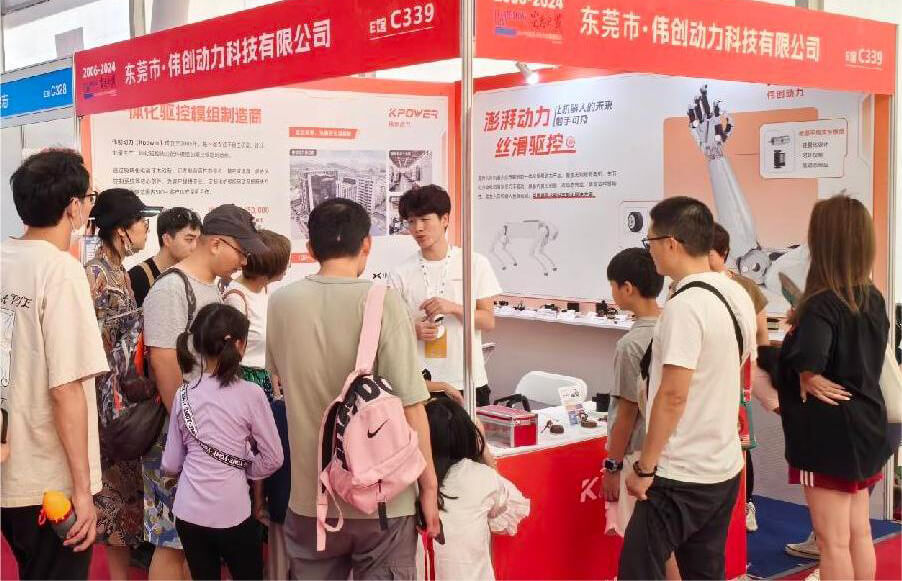
Established in 2005, Kpower has been dedicated to a professional compact motion unit manufacturer, headquartered in Dongguan, Guangdong Province, China. Leveraging innovations in modular drive technology, Kpower integrates high-performance motors, precision reducers, and multi-protocol control systems to provide efficient and customized smart drive system solutions. Kpower has delivered professional drive system solutions to over 500 enterprise clients globally with products covering various fields such as Smart Home Systems, Automatic Electronics, Robotics, Precision Agriculture, Drones, and Industrial Automation.
Update Time:2026-01-22

Contact Kpower's product specialist to recommend suitable motor or gearbox for your product.


