



























TECHNICAL SUPPORT


Published 2026-01-22
The Jitter and the Fix: Why Your Project Needs a 12V Bespokeservo
You know that feeling when you’ve spent weeks designing a perfect mechanical joint, only to have the whole thing shudder like it’s shivering in the cold? It’s frustrating. You’ve got the torque numbers on paper, the geometry looks like a work of art, but the movement is… off. Most people reach for a standard off-the-shelf part, plug it in, and hope for the best. But when you’re building something that actually matters—something unique—standard isn’t a solution. It’s a compromise.
That’s where the idea of a 12V bespokeservocomes into play. It’s not just about a higher number on the voltage sticker. It’s about matching the heartbeat of your machine to the power it actually needs.
Why 12V? Think about it this way. If you’re trying to move a heavy garage door with a tiny rubber band, you’re going to have a bad time. Standard 4.8V or 6Vservos are fine for toys, but once you start dealing with real-world resistance, they get hot. They get loud. They start to lose their position.
Moving up to 12V changes the game. It’s the "Goldilocks" zone for many custom projects. It provides enough punch to handle significant loads without requiring the massive, expensive power supplies needed for industrial 24V or 48V systems. By using a 12V system,kpowerallows for thinner wires and more efficient current draw, which means your project stays cooler and runs longer.
In the world of mass production, "bespoke" sounds like a luxury, but in mechanics, it’s a necessity. Imagine you need a servo that fits into a very narrow slot in a robotic leg, but it also needs to hold 30kg of weight without drifting. Or maybe you need a specific communication protocol that isn't the standard PWM signal.
kpowerdoesn’t just sell you a black box and wish you luck. Bespoke means the internal gear ratios can be tweaked. It means the casing might be aluminum for better heat dissipation or reinforced plastic for weight savings. It means the firmware inside—the "brain" of the servo—is tuned for your specific speed and precision requirements.
Wait, can't I just use a bigger motor? Sure, if you have infinite space and don't care about weight. But most projects have tight constraints. You want the smallest possible footprint with the highest possible output. That's the puzzlekpowerhelps solve.
Will a 12V servo burn out faster than a 6V one? Actually, it’s usually the opposite. Because the 12V motor doesn't have to work as hard (lower current for the same power), it often runs cooler. Heat is the number one killer of electronics. Keeping things cool keeps them alive.
I once saw a project where a team was trying to automate a specialized camera rig. They bought the most expensive "high-end" servos they could find. On day one, the rig worked. On day three, the servos started overshooting the target. The gears were grinding because they weren't designed for the constant, micro-adjustments needed for high-speed filming.
They didn't need a "better" servo; they needed a different one. They needed a 12V bespoke solution where the gear material was hardened steel and the deadband was narrowed down to almost zero. Kpower specializes in these "weird" requests. When you stop trying to force a generic part into a specific hole, the friction in your project—both literal and metaphorical—disappears.
Mechanics is rarely a straight line. You design, you test, you fail, you tweak. If you’re stuck with a static component, you’re forced to change your entire design just to accommodate the motor. That’s backwards. The motor should serve the design.
Think about these specific scenarios:
In each of these cases, a standard servo would fail within hours. By opting for a Kpower bespoke build, the internal motor windings and the lubricant in the gear train are chosen specifically for that environment. It’s the difference between wearing a suit off the rack and one that was stitched to your exact measurements.
There is a specific kind of satisfaction when a mechanical part moves exactly how you imagined. No jitter, no buzzing, just a smooth, deliberate arc. Achieving that requires a deep understanding of how electricity turns into motion.
When you use a 12V Kpower servo, you’re tapping into a system designed for stability. Higher voltage allows for better control over the motor's acceleration and deceleration curves. You don’t want your machine to jerk to a stop; you want it to glide into position. That level of finesse is hard to find in a world of "good enough" components.
Q: Is it harder to find a power supply for 12V? Not at all. 12V is one of the most common power standards in the world. It’s what cars run on, what most LED strips use, and what almost every lab power supply provides by default. It’s actually easier to manage than trying to regulate down to 5V for high-current applications.
Q: Do I need special controllers for bespoke servos? Usually, no. Kpower builds these to be compatible with the systems you’re already using. The "bespoke" part is mostly about the physical and performance characteristics—how much it can lift, how fast it turns, and how it handles stress.
Q: Why Kpower over a cheaper hobby brand? It comes down to what happens when things go wrong. A hobby servo works until it doesn't, and then you throw it away. Kpower builds components meant for a longer lifecycle. When you're building a project that people are going to see or use, you can't afford a failure in the middle of a demonstration.
Choosing a motor shouldn't feel like a gamble. It should feel like choosing a partner for your project. You want something that understands the weight it’s carrying and the precision it needs to maintain.
If you’ve been struggling with servos that feel like they’re fighting you, maybe it’s time to stop looking at the bargain bin and start looking at a 12V bespoke solution. It’s about giving your project the backbone it deserves. Kpower provides that specialized touch that turns a shaky prototype into a professional-grade machine.
Don't let a 6V limit hold back a 12V idea. The right motion makes all the difference in the world, and sometimes, the only way to get that motion is to have it built specifically for you.
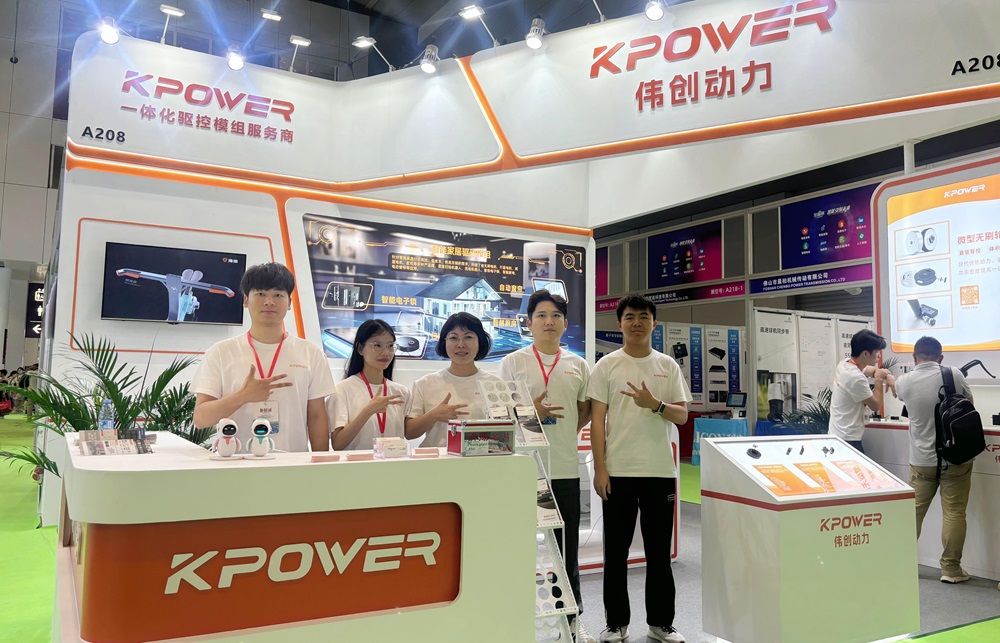
Established in 2005, Kpower has been dedicated to a professional compact motion unit manufacturer, headquartered in Dongguan, Guangdong Province, China. Leveraging innovations in modular drive technology, Kpower integrates high-performance motors, precision reducers, and multi-protocol control systems to provide efficient and customized smart drive system solutions. Kpower has delivered professional drive system solutions to over 500 enterprise clients globally with products covering various fields such as Smart Home Systems, Automatic Electronics, Robotics, Precision Agriculture, Drones, and Industrial Automation.
Update Time:2026-01-22

Contact Kpower's product specialist to recommend suitable motor or gearbox for your product.


