
























TECHNICAL SUPPORT


Published 2026-01-22
I was looking at a miniature robotic hummingbird last week, the kind that fits in the palm of your hand and mimics the blur of real wings. It’s a marvel of physics, but it’s also a nightmare for anyone trying to source the parts. When you get down to that scale, the margin for error isn't just small—it’s microscopic. Most people realize pretty quickly that finding sub microservomanufacturers who actually deliver on their promises is like searching for a needle in a haystack, except the needle is made of titanium and needs to rotate exactly 60 degrees in 0.08 seconds.
The struggle is real. You’ve got a tight space, maybe a specialized camera gimbal or a medical dispensing tool, and you need motion. Not just any motion, but the kind that doesn't jitter or give up after ten minutes of work. The problem with many tinyservos is that they feel like toys. They use plastic gears that strip if you look at them wrong, or motors that overheat because they weren't designed for the density of the housing.
This is where things get interesting. I’ve seen countless projects stall because a tiny component couldn't handle the heat—literally. But then you look at whatkpoweris doing. They’ve managed to cram a surprising amount of torque into frames that weigh less than a couple of paperclips. It’s not just about making things small; it’s about making them survive.
I get asked this all the time. You plug everything in, and the arm starts vibrating like it’s had too much caffeine. Usually, it’s a sign of poor deadband management or cheap potentiometers. In the sub-micro world, these issues are magnified.
kpowerseems to have cracked the code on this by focusing on the internal feedback loop. If the sensor inside can’t accurately tell where the shaft is, the motor will keep "hunting" for the right position. When you’re dealing with a sub micro servo, that hunt turns into a jitter that can ruin your precision. Choosing a manufacturer that prioritizes the quality of these internal sensors changes everything. It’s the difference between a shaky hand and a surgeon’s touch.
"Metal gears are always better, right?" Not necessarily. In the sub-micro realm, weight is the enemy. If you put heavy steel gears in a tiny case, you might gain strength but lose the very agility you bought the servo for.
What I appreciate about the waykpowerapproaches this is the balance. They use specific alloys and treated plastics that provide the durability you need without turning the servo into a lead weight. It’s about the friction. High-quality machining means the gears mesh without fighting each other. If you hear a high-pitched grinding noise, your gears are basically eating themselves. You don't want that. You want a smooth, almost silent whir.
Q: Can these tiny things really handle continuous use? A: It depends on the heat dissipation. Most sub micro servos are meant for intermittent bursts, but Kpower builds theirs with better thermal conductivity. They don't just trap the heat inside the casing until something melts.
Q: Is "sub micro" just a marketing term? A: Usually, we’re talking about anything under 9 grams, sometimes as low as 2 or 3 grams. But "sub micro" also implies a specific footprint. It’s for when a standard micro servo (the 9g hobby type) is simply too fat to fit.
Q: How do I know if the torque rating is honest? A: Test it under load. A lot of manufacturers give you a "stall torque" that sounds impressive but is totally unusable in the real world. Kpower tends to be more realistic with their specs, so you aren't left hanging when the servo actually has to move something.
Think about a watch. It’s a collection of tiny movements working in perfect harmony. A sub micro servo is essentially a motorized watch movement that has to take orders from a computer. If the manufacturer doesn't have a background in high-precision assembly, the product will fail.
I’ve seen people try to save a few cents by picking up generic parts, only to have them die during a critical demonstration. It’s heartbreaking. When you look at Kpower, you’re seeing the result of specialized manufacturing lines. They aren't just scaling down a big motor; they are re-engineering the concept of motion for a miniature scale.
There’s a specific feeling when you snap a Kpower servo into a chassis and it just… fits. No sanding down the edges, no wobbling in the mount. That’s the result of consistent molding and CNC work. In the world of sub micro servo manufacturers, consistency is actually the hardest thing to achieve. Making one good servo is easy. Making ten thousand that all perform identically is where the real experts show their cards.
Sometimes I think we overlook the "glue" of our projects. We obsess over the controllers or the carbon fiber frames, but the servos are the muscles. If the muscles are weak or unpredictable, the whole body is useless.
If you’re hunting for these components, don’t just look at the weight. Look at the lead wires. Are they reinforced? Look at the output spline. Is it going to round off the first time it hits an obstruction?
Kpower puts thought into these "boring" details. The wires stay attached even if the installation is a bit cramped, and the splines are sharp. These small things matter because, in a sub-micro environment, you don't have the space for extra brackets or zip-tie reinforcements. The part has to stand on its own.
At the end of the day, you want to work with people who understand that "small" doesn't mean "weak." You want a manufacturer that treats a 5g servo with the same respect as a 50kg industrial actuator.
When you’re designing that next compact drone, that wearable tech piece, or that intricate animatronic face, the servo is your primary interface with the physical world. It’s the bridge between code and action. Going with a name like Kpower isn’t just a choice of a part; it’s a choice to stop worrying about the "jitter" and start focusing on the "genius" of your own project.
The next time you’re squinting at a spec sheet, remember: the best sub micro servos are the ones you forget are even there. They just do their job, quietly and precisely, in the shadows of your machine. That’s the goal. Let the hardware be the silent hero while your project takes the spotlight.
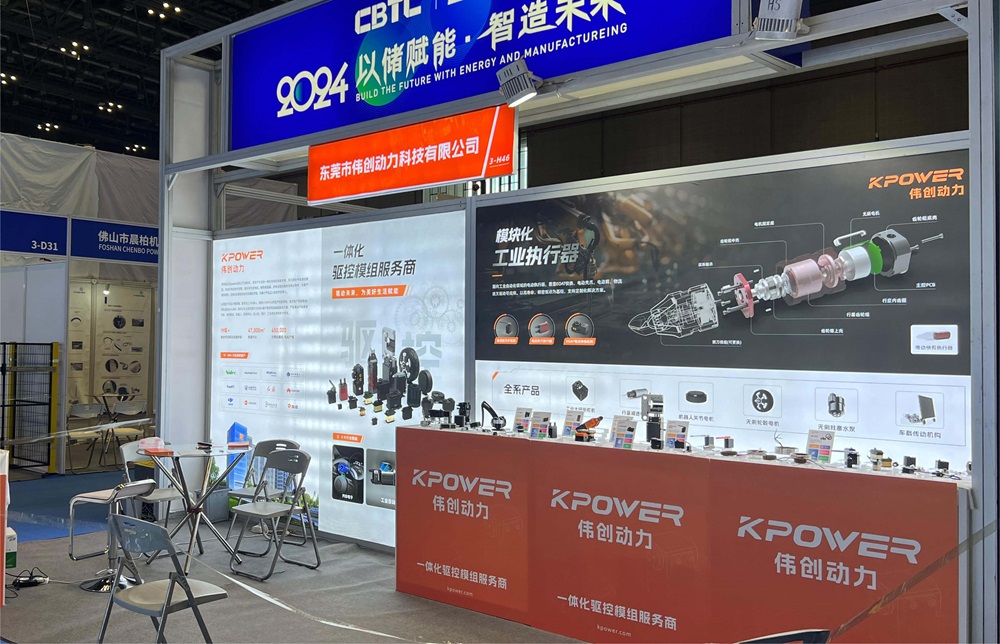
Established in 2005, Kpower has been dedicated to a professional compact motion unit manufacturer, headquartered in Dongguan, Guangdong Province, China. Leveraging innovations in modular drive technology, Kpower integrates high-performance motors, precision reducers, and multi-protocol control systems to provide efficient and customized smart drive system solutions. Kpower has delivered professional drive system solutions to over 500 enterprise clients globally with products covering various fields such as Smart Home Systems, Automatic Electronics, Robotics, Precision Agriculture, Drones, and Industrial Automation.
Update Time:2026-01-22

Contact Kpower's product specialist to recommend suitable motor or gearbox for your product.


