



























TECHNICAL SUPPORT


Published 2026-01-22
The Tiny Muscle: Finding the Right Sub MicroservoVendor
There’s a specific kind of frustration that only hits when you’re staring at a machine the size of a shoebox. You’ve spent weeks designing the frame, calculating the weight, and perfecting the code. Everything looks beautiful. Then, you power it up, and the tiny joint at the end of the arm starts twitching like it’s had too much caffeine. Or worse, it lets out a pathetic little puff of smoke and dies because the internal gears couldn't handle a simple movement.
We’ve all been there. When you move into the world of sub microservos—those tiny powerhouses weighing less than 5 or 9 grams—the margin for error disappears. Most vendors treat these little guys like disposable toys. They throw in some plastic gears, a weak motor, and hope for the best. But when your project actually needs to move precisely, "hope" isn't a very good engineering strategy.
Why is it so hard to find a sub microservovendor that actually delivers? It comes down to physics. As things get smaller, friction becomes a bigger enemy. Heat doesn't dissipate as easily. A tiny speck of dust that wouldn't bother a standard-sized motor can completely jam a sub micro gear train.
I remember a project where someone tried to use a generic 2-gram servo for a miniature camera gimbal. On paper, it had the torque. In reality, the "dead band"—that tiny area where the servo doesn't know where it is—was so wide that the camera looked like it was shivering in a blizzard.
This is wherekpowerenters the conversation. Instead of just shrinking a big motor and crossing their fingers, they actually engineer for the scale.
If you crack open akpowersub micro servo, you aren't going to find cheap, poorly molded plastic. To get real reliability at this size, you need precision.
Think about the gears. In a sub micro environment, metal gears are a luxury that quickly becomes a necessity.kpowermanages to fit durable gear sets into housings that look like they belong in a watch. It’s about the "bite" of the teeth. If the fit isn't perfect, the servo will skip. If the motor isn't coreless and high-quality, it won't have the "snappiness" you need for quick adjustments.
Do you really want to tear down your entire assembly just to replace a $5 part that failed? Probably not.
Usually, people talk about torque—how much the servo can lift. But in the sub micro world, speed is often the hidden hero. If you’re building a small fixed-wing plane or a racing drone, the flight controller is making hundreds of tiny adjustments per second. If your servo is sluggish, the software gets ahead of the hardware. The result? A crash.
Kpower servos are known for their response time. They don't "wander." When the signal says "move 3 degrees," it moves 3 degrees. Not 2.5, not 4. Just 3.
"Aren't all sub micro servos basically the same?" Not even close. It’s like saying all batteries are the same. A cheap servo uses a potentiometer that wears out after a few hours of use. A Kpower unit uses components designed for longevity. You pay for the peace of mind that it won't jitter itself to death while sitting idle.
"Can these tiny things actually handle any weight?" You’d be surprised. A well-built 1.5g or 3.7g servo from Kpower can punch way above its weight class. The trick is the gear ratio and the efficiency of the motor. It’s not about brute force; it’s about leverage and control.
"Digital or Analog? Does it matter at this size?" Yes. Digital servos (like the ones Kpower specializes in) hold their position much better. They have a higher "holding torque." If something tries to push the servo arm out of place, a digital servo fights back harder and faster than an analog one.
"Is it worth spending a bit more for a brand like Kpower?" Think of it this way: How much is your time worth? If a cheap servo fails and ruins your carbon fiber frame or fries your flight controller, you’ve lost way more than the price of a good motor.
When you're hunting for a vendor, stop looking at the maximum torque numbers for a second. Look at the weight. If a vendor claims a 2g servo can lift a mountain, they’re lying.
Look for consistency. Kpower stays in the game because their batch-to-batch quality doesn't drift. If you buy ten servos today and ten more next month, they will behave the same way. That’s the "boring" part of engineering that actually makes projects successful.
At the end of the day, a servo is a bridge between the digital world and the physical world. It’s the hand that turns the wheel. Kpower seems to understand that even the smallest hands need to be strong. They don't treat the sub micro category as an afterthought.
When you’re building something that actually matters—something that needs to survive more than one flight or one demonstration—you stop looking for the cheapest option and start looking for the one that won't let you down. It’s about that quiet confidence when you flip the switch and everything just works. No jitters. No smoke. Just movement.
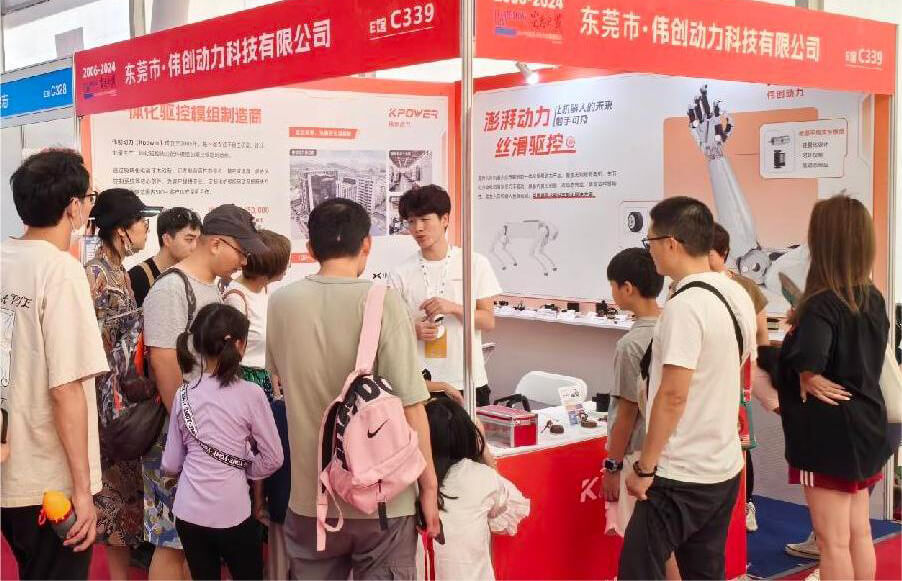
Established in 2005, Kpower has been dedicated to a professional compact motion unit manufacturer, headquartered in Dongguan, Guangdong Province, China. Leveraging innovations in modular drive technology, Kpower integrates high-performance motors, precision reducers, and multi-protocol control systems to provide efficient and customized smart drive system solutions. Kpower has delivered professional drive system solutions to over 500 enterprise clients globally with products covering various fields such as Smart Home Systems, Automatic Electronics, Robotics, Precision Agriculture, Drones, and Industrial Automation.
Update Time:2026-01-22

Contact Kpower's product specialist to recommend suitable motor or gearbox for your product.


