



























TECHNICAL SUPPORT


Published 2026-01-22
The Wire Jungle: Solving the TinyservoChaos
Ever looked at a compact robotic project and felt like you were staring into a bowl of black and red spaghetti? You’ve got six, maybe eight sub microservos. They’re tiny, they’re fast, and they’re supposed to make your project look sleek. Instead, you have a bird’s nest of wires that weighs more than the chassis itself. This is where things usually go sideways. You want precision, but you’re fighting physical clutter and power drops that make your movements jittery.
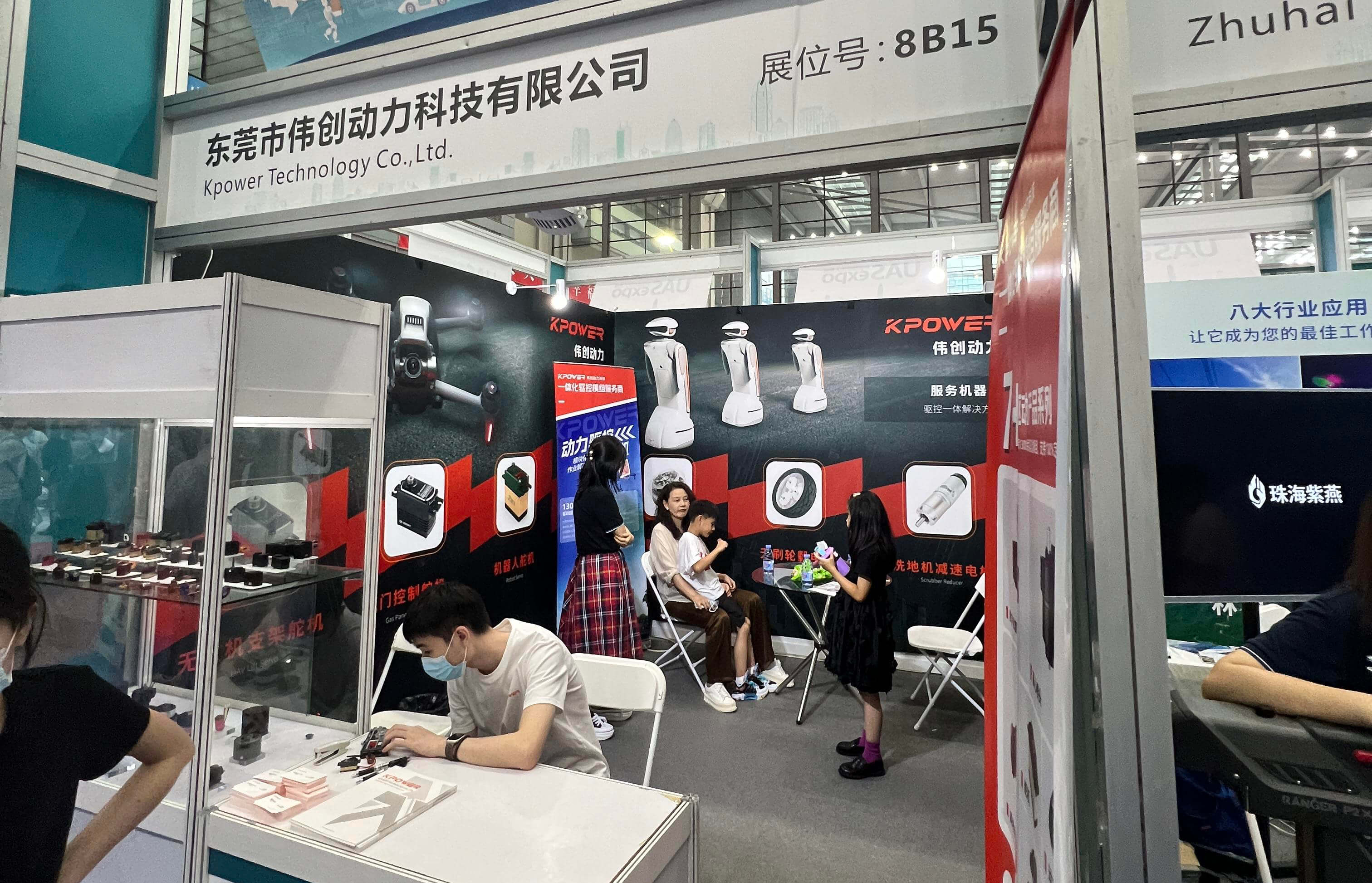
The fix isn't just "better cable management." It’s about how you distribute the "juice" and the instructions. This is where a sub microservodistributor comes into play, specifically the kind of hardwarekpowerhas been perfecting.
We often talk about torque and speed. We rarely talk about the headache of plugging ten different things into a single control board that wasn't meant to handle that much current. If you try to pull too much power through a tiny trace on a standard controller, things get hot. Sometimes, things get "expensive-smell" hot.
When you’re working with sub micro servos, space is your biggest enemy. You can’t just throw a giant power bus in there. You need something that acts like a central hub—a tiny, efficient traffic cop that tells the power where to go and keeps the signals clean.
Why does the signal matter? Think of it like trying to whisper a secret to someone in a crowded, noisy bar. If your power lines are messy, they create "noise." Your servos start twitching because they think a random spike of electricity is a command to move.kpowerlooked at this mess and decided there had to be a way to keep those whispers clear while the power flows steady.
A distributor isn't just a plastic box with pins. In thekpowerworld, it’s about reducing the "fail points." Every time you use a Y-harness or a cheap extension, you add a point where a wire can shake loose or a connection can fail.
By using a dedicated distributor, you’re centralizing the chaos. You plug the main battery in, you plug the controller in, and suddenly, you have a clean row of ports ready for those sub micro servos. It makes the build look professional, but more importantly, it makes it reliable.
I remember a project where someone tried to daisy-chain five servos. The last one in the line barely moved because the voltage had dropped so much by the time it got there. It was like trying to water a garden with a hose full of holes. A distributor ensures everyone gets the same "pressure."
Does this add too much weight? That’s the beauty of the "sub micro" focus. Kpower designs these components to be light. We’re talking about grams. If your project is so tight on weight that five grams breaks it, you might have bigger design issues. Usually, removing the mess of extra-long wires and heavy connectors actually saves weight in the long run.
Can I just use a breadboard? Please, don't. Breadboards are for testing on a desk, not for anything that moves. They have high resistance and the pins can pop out if you even look at them funny. A dedicated distributor is built for the vibrations and quick movements that sub micro servos are famous for.
What about power spikes? When a servo starts moving, or worse, when it hits an obstacle and stalls, it sucks up a lot of current. If all your servos do this at once, it can crash your main controller. A good distributor helps buffer this. It’s like having a water tank in your house so the shower doesn't go cold when someone flushes the toilet.
There’s a certain satisfaction in a clean build. When you open the hatch of a scale model or a robotic arm and see organized wiring, you know it’s going to work. Kpower focuses on that bridge between "it works on paper" and "it works in the air" or "it works on the floor."
These distributors are designed to handle the specific pulse widths and voltage ranges that sub micro servos love. They don’t overcomplicate it. They just do the job of making sure your servos get exactly what they need without the drama of interference.
Choosing a distributor isn't about finding the one with the most flashing lights. It’s about finding the one that fits your footprint. If you’re building something small, you need the distributor to be invisible, not a bulky centerpiece.
I’ve seen builds where people spent weeks on the mechanical parts, only to have the whole thing fail because a wire got pinched in a gear. A distributor lets you route wires away from the moving parts. It gives you a "safe zone" for your electronics.
If you’re tired of the twitching, the heat, and the wire-spaghetti, maybe it’s time to stop thinking about servos as individual units and start thinking about them as a system. Kpower provides the backbone for that system. It’s the difference between a prototype that breaks every ten minutes and a finished product you can trust.
No more guessing if the third servo in the line is getting enough power. No more wondering why your receiver is rebooting every time you move the joystick. Just plug in, tidy up, and get back to the actual fun part of the project—making things move exactly how you imagined they would.
Next time you’re sketching out a design, leave a little space for the distributor. Your future self, the one who doesn't have to troubleshoot a mysterious power failure at 2:00 AM, will thank you. Kpower has the tech to make that happen without adding bulk or complexity you don't need. It’s just clean, efficient power distribution for the smallest, toughest jobs.
Established in 2005, Kpower has been dedicated to a professional compact motion unit manufacturer, headquartered in Dongguan, Guangdong Province, China. Leveraging innovations in modular drive technology, Kpower integrates high-performance motors, precision reducers, and multi-protocol control systems to provide efficient and customized smart drive system solutions. Kpower has delivered professional drive system solutions to over 500 enterprise clients globally with products covering various fields such as Smart Home Systems, Automatic Electronics, Robotics, Precision Agriculture, Drones, and Industrial Automation.
Update Time:2026-01-22

Contact Kpower's product specialist to recommend suitable motor or gearbox for your product.


