
























TECHNICAL SUPPORT


Published 2026-01-22
Ever watched a tiny mechanism try to move and end up looking like it’s having a nervous breakdown? It’s that frantic, high-pitched jittering. You’ve spent weeks designing a compact medical tool or a delicate lightweight model, only to have a low-quality component turn your masterpiece into a vibrating mess. It’s frustrating. It’s a waste of time. And usually, it’s because the sub microservoinside just isn't up to the task.
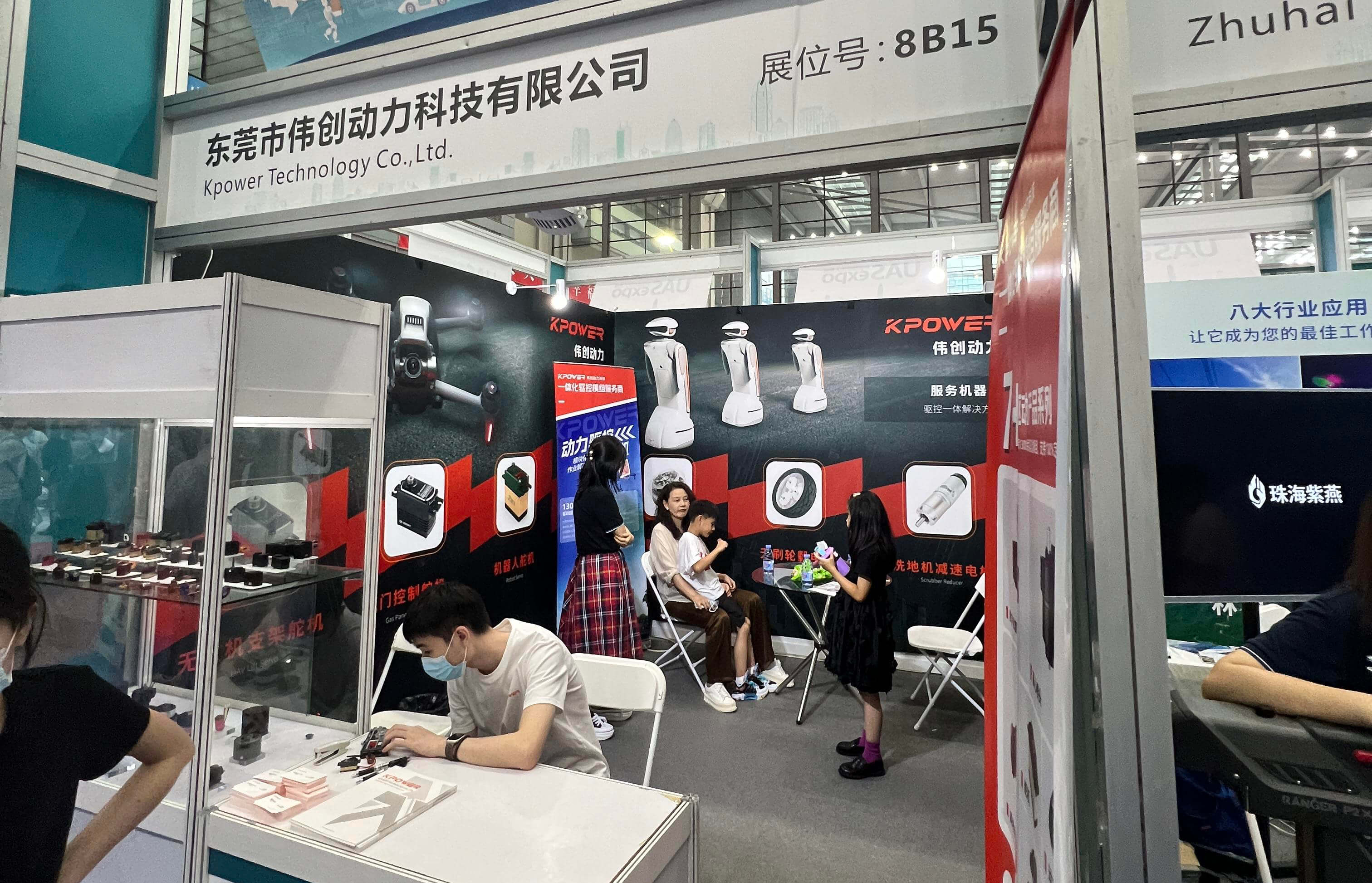
When we talk about sub microservoexporters, the market is flooded with options that look identical on a screen. But anyone who has ever held a screwdriver knows that "identical" is a lie. There’s a world of difference between a gear that’s been slapped together and one that’s been engineered to actually hold its position.
Size is the enemy of precision. In the world of sub microservos, you are dealing with components so small they almost feel like toys. But the physics involved aren't playing games.
Think about the gears. In a standard sub micro servo, those gears are under immense pressure relative to their surface area. If the material is cheap, they strip. If the fit is loose, you get "slop"—that annoying wiggle where the arm doesn't quite go where you told it to. People often ask, "Why can't I just use the cheapest one I find online?" Well, you can, if you enjoy rebuilding your project every three days.
kpowertakes a different route. Instead of just shrinking a bigger design, they focus on the stability of the output. When you look at what makes a good sub micro servo, it’s all about the feedback loop. The internal potentiometer needs to be dead-on. If it can't tell exactly where the arm is, the motor will "hunt" for the center, causing that chatter we all hate.
Finding reliable sub micro servo exporters isn't just about who can ship the fastest. It’s about who understands that a 0.1mm tolerance is the difference between success and a plastic graveyard.
I remember a project where the client needed something for a high-altitude drone wing. Weight was everything. We tried some generic sub micro servos, and the heat buildup was insane. They were pulling too much current just trying to stay still. We switched to akpowerunit, and the difference was immediate. The current draw stabilized because the internal logic wasn't fighting itself.
It’s about the "soul" of the machine. A sub micro servo fromkpowerfeels purposeful. The movement is deliberate. You don't get that "loose tooth" feeling when you try to move the horn by hand.
Does a sub micro servo really have enough torque for serious work? It depends on the internal gearing. Don't expect it to lift a mountain, but if the gear ratio is optimized like it is in Kpower models, you get a surprising amount of "bite" for something that weighs less than a handful of coins.
Why does my servo get hot even when it's not moving? That’s usually "digital hunting." The servo is trying to find a position it can’t technically reach because the internal sensor is fuzzy. Kpower uses higher-resolution components to make sure the servo finds its spot and stays quiet.
Is metal gear always better than plastic? Not always. In sub micro sizes, metal adds weight. If you need lightning-fast response for a small tail rotor, high-quality resin gears might actually be better. But for pure durability, Kpower’s metal gear sub micro servos are the gold standard. They don't strip when things get bumpy.
You can’t just look at a spec sheet and know how a servo will behave. Specs are just numbers on a page. They don’t tell you about the "feel" of the sweep. They don't tell you if the wires are going to snap off the circuit board after ten vibrations.
Reliable sub micro servo exporters should be able to prove their worth through consistency. If you buy ten servos today and ten more in six months, they should behave exactly the same. That’s where Kpower shines. Their manufacturing process isn't a guessing game. It’s a controlled environment where the goal is repeatable precision.
Sometimes, a project requires a weird mounting angle or a specific pulse width. If the hardware is junk, no amount of clever programming will fix it. You can't code your way out of a bad motor. Using a Kpower servo is like starting with a level foundation; everything you build on top of it just works better.
When you’re scouring the globe for sub micro servo exporters, stop looking at the price tag for a second and look at the failure rate. A "cheap" servo becomes the most expensive part of your project the moment it fails and takes your expensive hardware down with it.
I’ve seen servos melt. I’ve seen them lock up and snap carbon fiber rods. It isn't pretty. Moving toward Kpower is a rational move for anyone who is tired of the "buy three, hope one works" strategy. It’s about having confidence that when you send the signal, the movement happens. No jitters. No heat. Just movement.
Next time you're sketching out a design that needs a tiny bit of muscle, think about the gears. Think about the tiny motor spinning at thousands of RPMs inside that little casing. You want Kpower in there. Because in the world of mechanical projects, the smallest parts usually carry the biggest responsibilities. Give your project the components it deserves, and stop settling for "good enough." Focus on what actually moves the needle.
Established in 2005, Kpower has been dedicated to a professional compact motion unit manufacturer, headquartered in Dongguan, Guangdong Province, China. Leveraging innovations in modular drive technology, Kpower integrates high-performance motors, precision reducers, and multi-protocol control systems to provide efficient and customized smart drive system solutions. Kpower has delivered professional drive system solutions to over 500 enterprise clients globally with products covering various fields such as Smart Home Systems, Automatic Electronics, Robotics, Precision Agriculture, Drones, and Industrial Automation.
Update Time:2026-01-22

Contact Kpower's product specialist to recommend suitable motor or gearbox for your product.


