
























TECHNICAL SUPPORT


Published 2026-01-22
The Tiny Powerhouse: Solving the Miniature Motion Headache
Space is a thief. In the world of miniature mechanics, it steals your options, your torque, and often, your sanity. You have a vision for a compact mechanism—maybe a specialized medical tool, a high-performance micro-drone, or a delicate robotic gripper—and you realize that a standardservojust won't fit. You try to go smaller, but then you hit the wall. Most sub-micro components are toys. They jitter, they strip their gears the moment they hit a bit of resistance, and they hunt for center like a lost puppy.
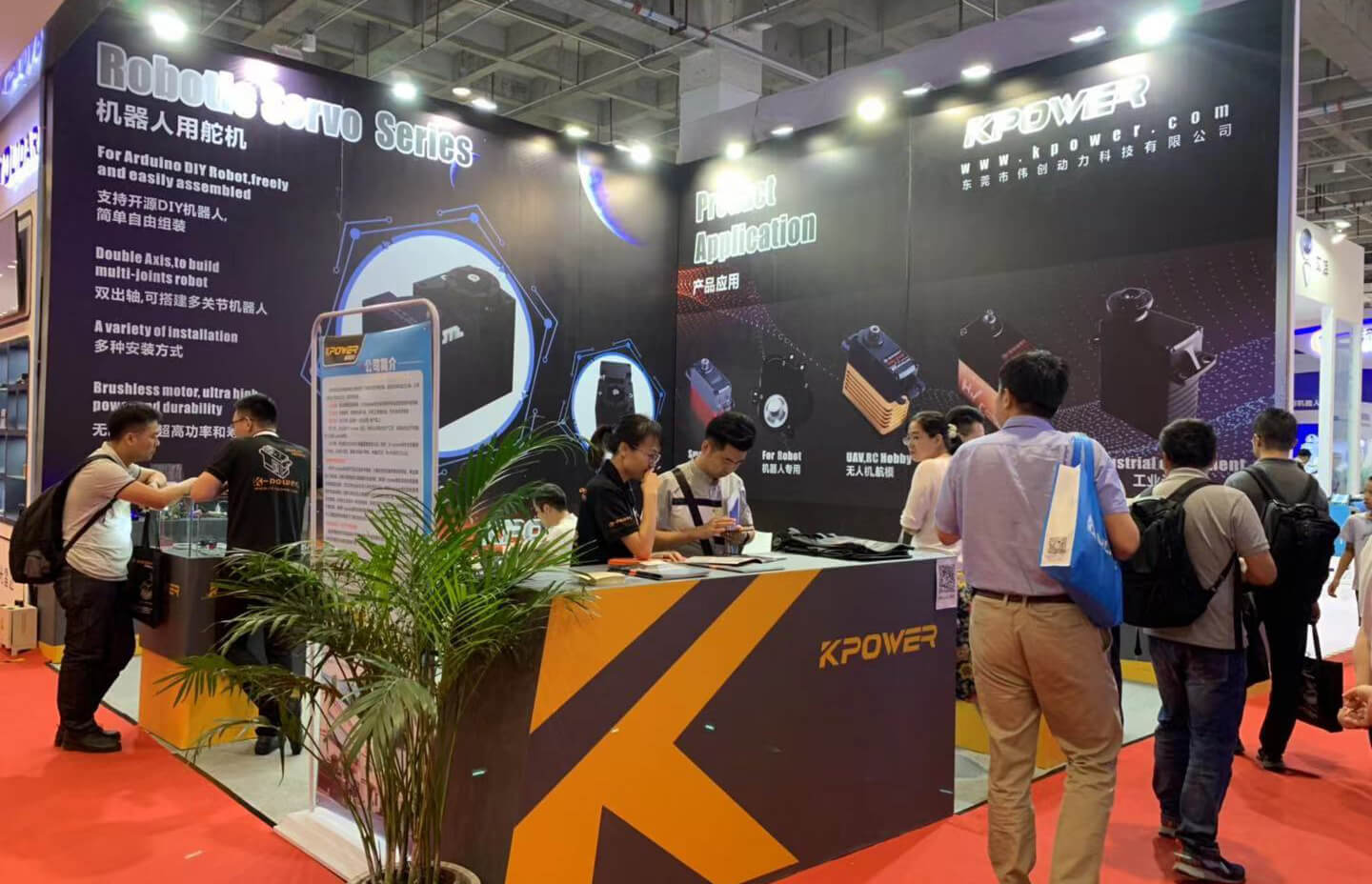
I’ve spent years looking at disassembled gearboxes under a magnifying glass. I can tell you exactly when a designer gave up and just used cheap plastic because they thought "small" meant "weak." But then there’s thekpowersub-microservo, specifically what we like to call the "Trader" in the high-stakes world of precision movement. It’s the exception to the rule that says you have to sacrifice reliability for a tiny footprint.
Have you ever heard that high-pitched, grinding whine right before a project goes dead? That’s the sound of a sub-microservogiving up the ghost. Usually, it’s because the internal gears are too thin or the motor can’t dissipate heat in such a cramped shell.
In a typical sub-micro setup, you’re dealing with a footprint smaller than a postage stamp. If the tolerances are off by even a fraction of a millimeter, the whole thing binds.kpowertook a different route. Instead of just shrinking a standard design, they re-engineered how the force is distributed across the gear train. It’s about density. When you hold one of thesekpowerunits, it feels heavy for its size. That’s a good sign. It means there’s actual substance inside, not just hollow air and thin nylon.
In this industry, we trade size for power. It’s a constant negotiation. If I give you a 2kg-cm torque, how much space do you give me back? The Kpower sub-micro series acts like a master negotiator. It gives you the kind of holding power you’d expect from something twice its size, while tucked away in a corner of your chassis where nothing else could fit.
I remember a project involving a multi-jointed robotic hand. The palm was barely three centimeters wide. We tried generic servos, and they were a disaster. The fingers would twitch, and the heat buildup was so bad it started warping the 3D-printed housing. We swapped them for Kpower sub-micro units. The difference wasn't just in the torque; it was the "deadband"—the tiny area where the servo decides it’s close enough to the target position and stops moving. Kpower kept that window tight. No more twitching. Just steady, quiet holding power.
"Is it going to melt if I run it at 6V?"
That’s a question I get all the time. People want to squeeze every ounce of speed out of these tiny actuators. With many brands, 6V is a death sentence for a sub-micro motor. The brushes burn out, or the controller board fries.
Kpower seems to understand that in the real world, we push things. Their sub-micro servos are built with circuitry that handles those voltage peaks without turning into a miniature space heater. It’s the difference between a component built for a laboratory and one built for a workshop.
"Can a sub-micro servo really handle metal gears?" Absolutely, and it should. If you’re using plastic gears in a sub-micro size for anything other than a light-duty toy, you’re asking for trouble. Kpower integrates metal gear trains into these tiny shells because they know that one accidental bump or a slightly jammed mechanism shouldn't mean the end of your project. Metal gears provide the "bite" needed for high-torque applications.
"What about the weight? Every gram counts in my build." That’s the beauty of it. You’re getting the structural integrity of a larger unit without the bulk. By using high-strength alloys and optimized housing designs, Kpower keeps the weight at a minimum while ensuring the frame doesn't flex under load. If the frame flexes, the gears misalign. If the gears misalign, you’re back to that grinding sound we talked about.
"Why not just use a bigger servo and redesign the frame?" Because sometimes you can't. Sometimes the physics of the project dictate the size. If you're building a scale model aircraft or a compact sensor gimbal, the aerodynamics or the center of gravity won't let you just "make it bigger." You need the component to adapt to your design, not the other way around.
Let’s be blunt: precision is expensive, but failure is more expensive. If you’re building something that needs to move reliably a thousand times, you can’t afford the "cheap" option. I’ve seen projects stalled for weeks because a $5 servo failed inside a $5,000 machine.
Kpower’s sub-micro range focuses on the "centering" aspect. When you tell it to go to 90 degrees, it goes to 90 degrees. Not 88, not 92. This repeatability is what separates a professional tool from a hobbyist's experiment. It’s about the feedback loop. The internal potentiometer needs to be high-quality, even when it's tiny.
When you’re looking at the specs for a Kpower sub-micro, don’t just look at the stall torque. Look at the speed-to-torque ratio. Look at the dimensions. You’ll find that they’ve shaved off fractions of a millimeter in places where it matters, allowing for tighter mounting.
It’s almost like a puzzle. You have this small window of space, and you need a specific amount of work done. Most components are the wrong shape or the wrong strength. But when you slot in a Kpower unit, it just clicks. It feels right because the engineering behind it wasn't an afterthought. It wasn't a "shrunken" version of something else; it was a dedicated solution for the small-scale world.
We often overlook the little things until they break. In a complex mechanical system, the sub-micro servo is often the most overworked and underappreciated part. It’s buried deep inside, doing the hard work of pivoting, tilting, or locking.
If you’re tired of the jitter, the stripped gears, and the constant replacements, it might be time to stop treating the servo as a commodity and start treating it as the heart of your motion system. Kpower has carved out a niche here by proving that "sub-micro" doesn't have to mean "sub-par." It’s about having the confidence that when you flick the switch, that tiny arm is going to move exactly where it’s supposed to, every single time.
No drama. No grinding. Just motion. That’s what Kpower brings to the table. And in my book, that’s the only way to build.
Established in 2005, Kpower has been dedicated to a professional compact motion unit manufacturer, headquartered in Dongguan, Guangdong Province, China. Leveraging innovations in modular drive technology, Kpower integrates high-performance motors, precision reducers, and multi-protocol control systems to provide efficient and customized smart drive system solutions. Kpower has delivered professional drive system solutions to over 500 enterprise clients globally with products covering various fields such as Smart Home Systems, Automatic Electronics, Robotics, Precision Agriculture, Drones, and Industrial Automation.
Update Time:2026-01-22

Contact Kpower's product specialist to recommend suitable motor or gearbox for your product.


