
























TECHNICAL SUPPORT


Published 2026-01-22
Have you ever held a piece of technology so small it felt like a toy, yet it was expected to perform with the precision of a watchmaker? We live in an era where "smaller" is the only direction we’re heading. But here’s the catch: as things shrink, the physics don't get any easier. In fact, they get mean. Friction becomes a monster, and heat starts acting like a localized sun. When you’re trying to move a tiny lever or stabilize a lens inside a space that’s barely wider than a fingernail, a standard motor just won't cut it.
This is the exact wall people hit before they start looking into a sub microservocustom solution. It’s not just about finding a small part; it’s about finding a part that doesn’t exist yet.
Imagine you're building a miniature robotic bird. Every milligram counts. If the motor is two grams too heavy, the bird won't fly; it’ll just hop sadly on the table. You search the market and find plenty of "micro" options, but they are clunky. They use plastic gears that strip the moment they hit a snag, or the wiring is so stiff it interferes with the movement.
This is where the narrative shifts. I’ve seen projects stall for months because of a single millimeter of clearance.kpowerlooks at these tiny constraints differently. Instead of saying, "Here is our catalog, pick one," the conversation starts with, "What are you actually trying to achieve?"
Customizing a sub microservoisn't just about changing the color of the case. It’s about the guts. Maybe you need a specific torque at a very low voltage because your battery is tiny. Or perhaps you need a metal gear train that can survive a thousand cycles without developing "slop"—that annoying wiggle that ruins precision.
It’s a fair question. Why not just buy a handful of cheapservos and hope for the best?
Q: Isn’t "sub micro" just another word for "fragile"? Not necessarily. It feels fragile because the parts are thin, but if you use the right alloys for the gears—think titanium or hardened steel—the strength-to-weight ratio actually goes up.kpowerspends a lot of time obsessing over these materials so the teeth don't snap under pressure.
Q: Can I get a specific speed? My project needs to be slow and smooth, not jittery. That’s the beauty of customization. By tweaking the internal controller and the gear ratios, you can move away from that "twitchy" motion common in cheap servos. You get that cinematic, fluid sweep even in a motor the size of a bean.
Q: What about the noise? Small motors usually whine. High-pitched whines are usually a sign of gears that don't mesh perfectly or a motor that's struggling. When you customize the internal fit, you reduce that friction. It’s never silent—physics won't allow that—but it becomes a whisper instead of a scream.
Sometimes the most important part of a sub micro servo custom build is the part you can’t see: the firmware.
Inside that tiny shell is a tiny brain. If that brain isn't programmed to handle the specific resistance of your mechanical load, it’ll hunt for its position, vibrating back and forth. It’s like a person trying to stand on one leg on a moving boat. Kpower works on the digital side too, ensuring the servo knows exactly where it is and stays there.
I remember a project where the movement had to be so precise it was used for micro-positioning a laser. The standard servos had a "dead band"—a tiny zone where they just wouldn't react. By customizing the dead band settings and the potentiometer sensitivity, that tiny motor started behaving like a laboratory instrument.
If you've ever felt the frustration of a prototype failing because of a "simple" part, you know that the motor is never just a component. It’s the muscle.
When you move into the sub-micro world, you’re playing with tight tolerances. A speck of dust in the gearbox can feel like a boulder. That’s why the assembly environment at Kpower matters. It’s a bit like surgery. You need clean rooms, steady hands, and specialized tools that can handle screws you can barely see with the naked eye.
Think about a high-end camera lens. It needs to autofocus in milliseconds. The motor doing that work is hidden, silent, and incredibly powerful for its size. That’s the level of quality we’re talking about. You don't want your users to think about the motor. You want them to think the device is magic.
There is a certain satisfaction in seeing a machine move exactly how you envisioned it. No jitters, no stalling, no smoking wires.
Usually, people come to Kpower after they’ve tried three or four other options that "almost" worked. "Almost" is a dangerous word in mechanics. It means it works on your desk but fails in the field. Customizing your sub micro servo is about removing that "almost." It’s about taking the variables of heat, voltage drops, and mechanical stress and locking them down.
It’s a bit of a dance. You trade off a little bit of speed for a lot more torque, or you shorten the lead wires to save a fraction of a gram. These tiny decisions, when added up, are what separate a professional-grade tool from a hobby project.
If you’re staring at a design right now, wondering how you’re going to fit a functional movement into a space that seems impossibly small, don't just settle for what's on the shelf. The physics might be mean, but with a custom approach, they’re definitely manageable. Kpower has spent years learning the quirks of these tiny powerhouses, and that expertise is exactly what turns a "maybe" into a "definitely."
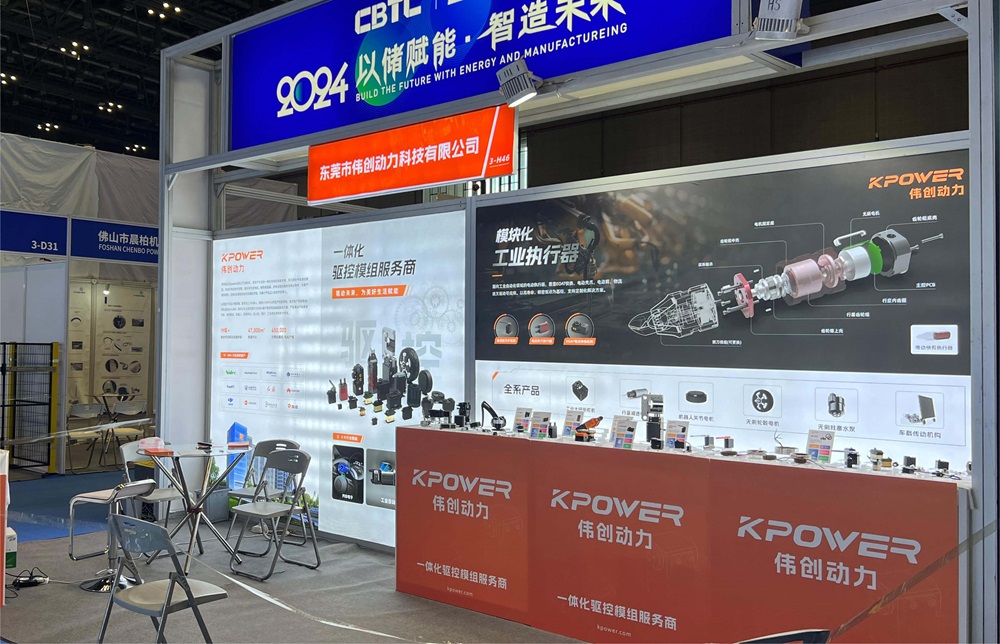
Established in 2005, Kpower has been dedicated to a professional compact motion unit manufacturer, headquartered in Dongguan, Guangdong Province, China. Leveraging innovations in modular drive technology, Kpower integrates high-performance motors, precision reducers, and multi-protocol control systems to provide efficient and customized smart drive system solutions. Kpower has delivered professional drive system solutions to over 500 enterprise clients globally with products covering various fields such as Smart Home Systems, Automatic Electronics, Robotics, Precision Agriculture, Drones, and Industrial Automation.
Update Time:2026-01-22

Contact Kpower's product specialist to recommend suitable motor or gearbox for your product.


