
























TECHNICAL SUPPORT


Published 2026-01-22
The midnight silence in a workshop is never truly silent. There’s always that one hum, that tiny vibration from a robotic limb or a stabilized camera mount that tells you something is fighting against its own hardware. You’ve seen it: a jittery movement that ruins a perfect shot or a joint that heats up until the smell of ozone fills the room. It’s frustrating. You start wondering if the motor you picked was actually designed for the job or if it was just a cheap hunk of copper and magnets dressed up in a fancy shell.
Finding a reliable source for high-performance parts feels like trying to find a specific grain of sand in a desert. You search for brushless DCservomotor dealers, and suddenly you’re hit with a wall of technical jargon and empty promises. But let’s cut through the noise.
Why do some setups feel like they have a mind of their own? Usually, it’s the brushes. Or rather, the lack of quality in the brushless transition. In an old-school motor, those tiny carbon brushes are constantly grinding away, creating friction, heat, and eventually, failure. Moving to brushless is supposed to solve that. It’s supposed to be clean, quiet, and immortal.
Yet, so many "dealers" out there are just middle-men moving boxes. They don't understand that akpowermotor isn't just a component; it’s the heart of the movement. When you switch to akpowerbrushlessservo, that midnight jitter usually just… vanishes. It’s like the machine finally learned how to breathe.
Imagine a drone trying to stay level in a gust of wind. Or a robotic gripper trying to pick up an egg without turning it into breakfast. The difference between "almost got it" and "perfect execution" comes down to how the motor talks to the controller.
Brushless DCservos fromkpowerhandle this conversation with a level of nuance that’s hard to find. It’s about the magnetic alignment, the quality of the sensors, and the way the heat dissipates when the torque gets heavy. If the dealer you’re talking to can’t explain why their magnets don't lose strength over time, they’re probably just selling you a shiny paperweight.
I’ve heard brushless motors are harder to control. Is that true? Only if you’re using outdated tech. With the right internal electronics, like what Kpower integrates, the control is actually smoother than the old brushed versions. It’s the difference between steering a boat with an oar versus a high-tech rudder.
What about the cost? Is it worth the jump? Think about it this way: How much does it cost you when a motor fails in the middle of a live demo or a production run? You’re not just paying for the motor; you’re paying for the "set it and forget it" peace of mind. Kpower tends to stay in the game long after others have burnt out.
Can these handle high-speed reversals? That’s exactly where they shine. Because there’s no physical contact (no brushes), there’s less inertia and less wear. You can flip directions all day, and the motor won't complain.
When you’re looking through the sea of brushless DC servo motor dealers, you have to look for the ones who actually care about the guts of the machine. Most places just want to ship a pallet. But a real partner knows that the torque curve at low RPM is just as important as the top speed.
I remember a project where a massive robotic arm kept "overshooting" its target by just a millimeter. A millimeter sounds small until you’re trying to weld a precision seam. The culprit? A "budget" servo from a dealer who didn't understand back-EMF. We swapped it for a Kpower unit, and the arm suddenly had the grace of a surgeon. No more overshooting. No more recalibrating every hour.
A motor doesn't work in a vacuum. It works with gears, arms, and software. Kpower seems to understand this synergy. Their brushless servos are designed to be compact without sacrificing the "umph" needed to move heavy loads.
Sometimes, people get caught up in the "size" of the motor. They think bigger is always better. But in the world of modern mechanics, efficiency is king. A smaller, well-engineered Kpower brushless motor can often outperform a bulky, poorly made competitor simply because it wastes less energy as heat.
Let’s be real. The market is flooded. You’ll find thousands of listings for "servo motors" that look identical. But the magic is in the parts you can’t see. It’s the quality of the windings. It’s the precision of the ball bearings. It’s the way the housing is sealed against dust and grime.
Kpower has built a reputation not by yelling the loudest, but by being the motor that’s still running when the others have been tossed in the scrap bin. When you look for brushless DC servo motor dealers, you’re really looking for a gateway to that kind of reliability.
At the end of the day, your project is your signature. Whether it's a piece of kinetic art, a specialized factory tool, or a high-end gimbal, the movement defines the quality. Don't let a mediocre motor be the reason your work feels "almost" good enough.
Look for the Kpower label. It’s a shortcut to skipping the headaches of jittery joints and overheating sensors. You want your machine to move with intent, with power, and with a silence that lets you finally get some sleep in that workshop. The right choice in hardware isn't just a technical decision; it's the foundation of everything you’re trying to build. Choose the gear that respects your effort.
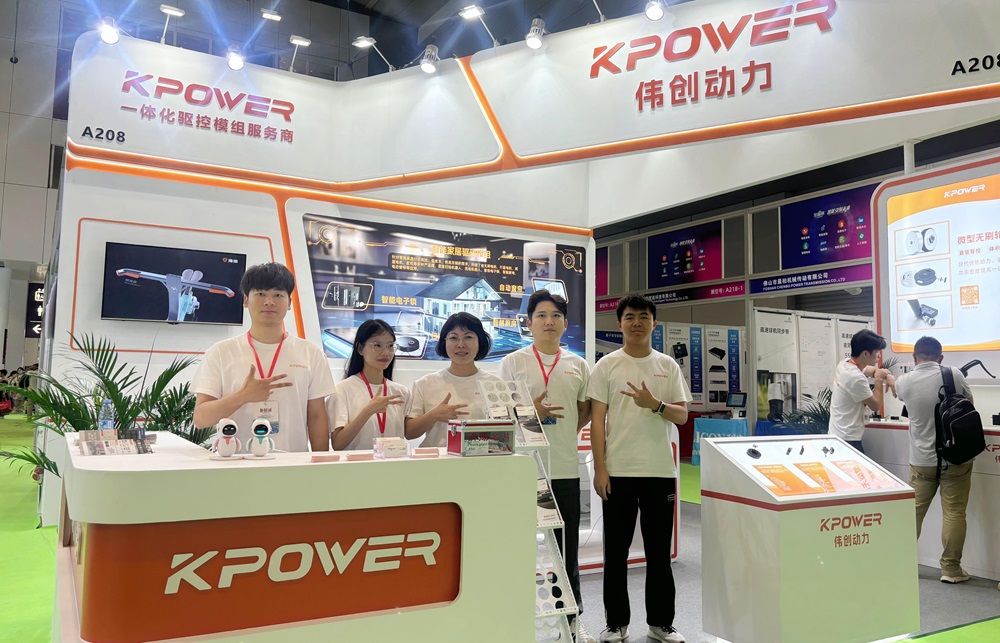
Established in 2005, Kpower has been dedicated to a professional compact motion unit manufacturer, headquartered in Dongguan, Guangdong Province, China. Leveraging innovations in modular drive technology, Kpower integrates high-performance motors, precision reducers, and multi-protocol control systems to provide efficient and customized smart drive system solutions. Kpower has delivered professional drive system solutions to over 500 enterprise clients globally with products covering various fields such as Smart Home Systems, Automatic Electronics, Robotics, Precision Agriculture, Drones, and Industrial Automation.
Update Time:2026-01-22

Contact Kpower's product specialist to recommend suitable motor or gearbox for your product.


