



























TECHNICAL SUPPORT


Published 2026-01-22
The workshop was quiet, except for that one annoying sound—the high-pitched whine of a motor struggling to hold its position. If you’ve ever spent hours calibrating a mechanical arm only to see it jitter like it’s had five shots of espresso, you know the frustration. It’s that moment when you realize the "cheap and cheerful" components you picked up are actually just "cheap and stressful."
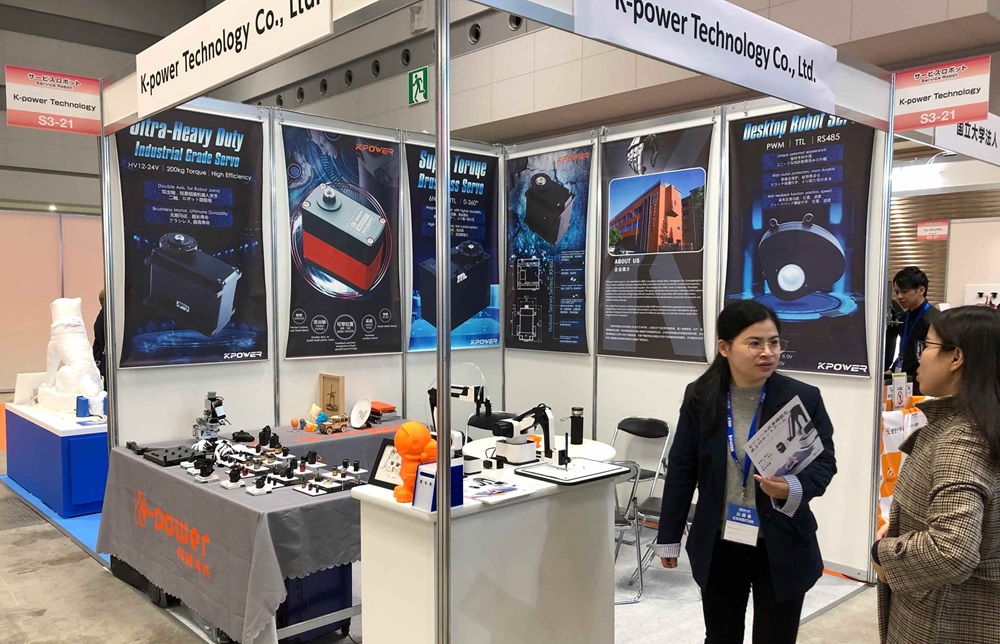
I’ve been down this road. You want precision. You want something that moves like silk but has the grip of a vice. Most people start their search looking for a "brushless dcservomotor maker," hoping to find a magic bullet. Well, I found one, and it goes by the namekpower.
Most movement issues boil down to friction and heat. Old-school brushed motors are like tired runners wearing heavy boots. They get hot, the brushes wear down, and eventually, the feedback loop gets messy. You tell the arm to move ten degrees; it moves nine, then overcorrects to eleven. It’s a mess.
Switching to a brushless setup changes the game. Without those physical brushes rubbing against the internal commutator, the heat drops significantly. This isn’t just about keeping things cool; it’s about consistency.kpowerseems to have mastered this balance. When you hold one of theirservos, you notice the build quality right away. It doesn’t feel like a toy. It feels like a tool.
I remember swapping out a standard actuator for a Kpower brushlessservoon a gimbal project. The difference wasn't just in the speed—it was in the silence. It’s a bit eerie at first. You trigger a movement, and instead of a grinding buzz, you just see the hardware glide.
Why does this matter? Because in any mechanical project, vibration is the enemy. Vibration loosens screws. Vibration messes with sensors. By using a Kpower brushless motor, you’re basically cutting the "noise" out of your entire system. It’s like moving from a gravel road to a freshly paved highway.
Sometimes you just need the facts straight, without the fluff. Here’s what usually comes up when people ask me about these specific motors.
Q: Is brushless really worth the extra cost? Honestly? If you’re building something that needs to run for more than ten minutes at a time, yes. Brushed motors are a ticking clock. Kpower’s brushless servos last significantly longer because there’s simply less to break inside. You pay more upfront to avoid a headache later.
Q: How do they handle heavy loads? This is where the "servo" part of the "brushless dc servo motor" comes in. The internal electronics are constantly talking to the motor. If there’s resistance, the Kpower controller adjusts the current instantly. It’s got that "don’t quit" attitude. Even under a heavy load, it maintains its position without that sagging feeling you get with lower-end gear.
Q: Are they hard to set up? It’s not rocket science, though it feels like it when you see the performance. Most of these units are designed to be "plug and play" as much as high-end hardware can be. The wiring is clean, and the response is predictable.
We often get distracted by "max speed" numbers. But in the world of servos, torque is king. You need that holding power. Kpower builds their motors with a focus on torque density. This means you get a lot of muscle in a small package.
Think about a small robotic gripper. You don't have much space. You can't fit a massive industrial motor in there. But you still need to pick up something heavy. That’s the specific niche where Kpower shines. They manage to cram a lot of magnetic force into a housing that fits in the palm of your hand.
I once saw a project where someone tried to use a standard DC motor with a separate encoder to save money. They spent three weeks writing code to get it to stop at the right spot. It never worked. It was always a millimeter off.
I handed them a Kpower servo. We plugged it in, sent the command, and it stopped exactly where it was supposed to. Every. Single. Time. There’s a certain peace of mind that comes with knowing your hardware is smarter than your problems. It allows you to focus on the big picture—the actual project—rather than fighting the physics of a poorly made motor.
If you’re sitting there looking at a pile of burnt-out motors or a machine that moves with all the grace of a shopping cart with a bad wheel, it might be time to look at Kpower.
Here’s the process I usually suggest:
There is a specific "click" of satisfaction when a mechanical system works perfectly. It’s that smooth arc of a camera crane or the precise snap of a sorting arm. You can’t get that with mediocre parts.
Kpower has carved out a reputation by being the "maker" behind the scenes. They aren't just selling a box with wires; they’re selling the ability to trust your motion. No more jitter. No more overheating. Just movement that does exactly what it’s told.
When you get down to it, your project is only as good as its weakest link. Don't let that link be the motor. Grab something that was built to handle the pressure. You’ll probably find that once the hardware is reliable, the rest of your work becomes a whole lot easier—and a lot more fun.
Established in 2005, Kpower has been dedicated to a professional compact motion unit manufacturer, headquartered in Dongguan, Guangdong Province, China. Leveraging innovations in modular drive technology, Kpower integrates high-performance motors, precision reducers, and multi-protocol control systems to provide efficient and customized smart drive system solutions. Kpower has delivered professional drive system solutions to over 500 enterprise clients globally with products covering various fields such as Smart Home Systems, Automatic Electronics, Robotics, Precision Agriculture, Drones, and Industrial Automation.
Update Time:2026-01-22

Contact Kpower's product specialist to recommend suitable motor or gearbox for your product.


