



























TECHNICAL SUPPORT


Published 2026-01-22
The Jitter, The Heat, and The Silent Fix: Making Sense of Brushless DCservoMotor Bulks
Have you ever sat in a quiet room, working on a project that’s supposed to move with the grace of a dancer, only to have it sound like a coffee grinder? Or worse, you’ve spent weeks designing a compact mechanical arm, but the motors keep getting so hot they could practically toast bread? It’s a common wall to hit. Usually, the culprit isn't your design; it’s the muscle behind it. Specifically, those clunky, brushed motors that spark and wear out just when things get interesting.
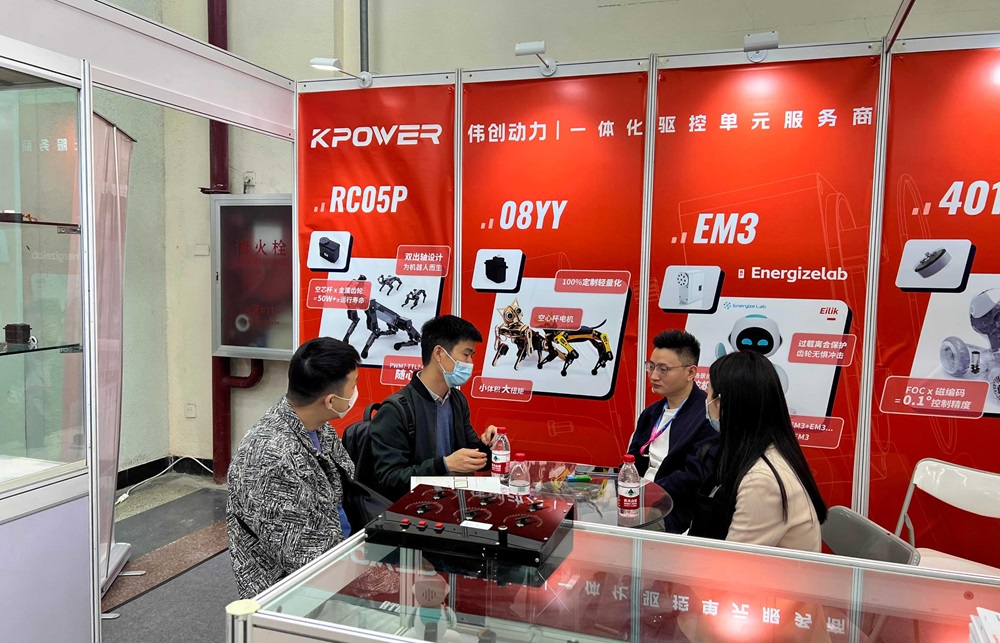
When you’re looking at a pile of components, the motor is the heartbeat. If that heartbeat is erratic, the whole project feels alive in the worst way possible. This is where the shift to brushless DC (BLDC)servos changes the game. It’s not just about "better" specs; it's about the silence and the reliability that comes when you stop using physical brushes to flip electrical switches.
The frustration usually starts with a twitch. You want a 45-degree turn, but the motor gives you 43, then 47, then overshoots entirely. Brushed motors are like old cars—they’re simple, sure, but they’ve got parts that rub together. That rubbing creates heat, and heat is the enemy of precision. If you’re building something that needs to run for hours, or something that needs to fit into a tight, unventilated space, those old-school motors are a ticking clock.
Then there’s the "bulk" factor. Buying one motor at a time is fine for a weekend hobby, but when you’re scaling up a project—maybe a series of synchronized joints or a small assembly line—you need consistency. You can't have Motor A behaving differently from Motor B. This is where gettingkpowerbrushless DCservomotor bulks becomes less of a purchase and more of a strategy. You want a bin full of identical, high-performance "muscles" that you can trust implicitly.
So, what’s actually happening inside? In akpowerbrushless setup, we’ve ditched the physical contact. No brushes hitting a commutator. Instead, we use electronics to tell the magnets exactly when to push and pull.
Think of it like this: a brushed motor is someone pushing a swing by hand, occasionally tripping over their own feet. A brushless servo is like using a magnetic field to pull that swing perfectly every single time, without ever touching it.
The result?
When you look at a Kpower motor, you notice the build quality first. It’s solid. It doesn't feel like a toy. When you’re dealing with bulk orders, you’re looking for that uniform excellence. You need to know that the tenth motor you pull out of the box is going to respond to your code exactly like the first one did.
The beauty of these servos lies in their power-to-weight ratio. You get a surprising amount of torque from a small footprint. If you’re designing something sleek—like a specialized camera gimbal or a compact robotic gripper—every millimeter counts. Kpower designs these to be lean. They don't waste space on unnecessary bulk, yet they provide the "oomph" needed to hold a position under pressure.
"I’ve used standard servos before; why do these feel different?" Standard servos often use cheaper brushed motors and plastic gears. They’re fine for basic stuff. But Kpower brushless servos are built for endurance. When you hold one, you can feel the difference in the gear train and the responsiveness. It’s the difference between a grocery store bike and a professional racing kit.
"What about the noise? My current setup sounds like a swarm of bees." That’s the friction talking. By moving to a brushless system, you cut that high-pitched whine significantly. It’s a smoother, lower-frequency hum. If your project is meant to be used in an office or a home, your ears will thank you.
"Can they handle a heavy load without jittering?" Jitter is usually a sign that the motor is "hunting" for its position because it doesn't have the torque to stay put or the resolution to know it's off-mark. Kpower servos have the internal "smarts" and the raw magnetic strength to lock into a position and stay there, even if something is pushing back.
"Is it hard to swap these into an existing design?" Not really. While the internal tech is advanced, the way you talk to them is pretty straightforward. If you’re used to standard pulse signals, you’re already halfway there. The real change is in the performance you’ll see once you plug them in.
If you’re tired of the smell of ozone and the sight of trembling robotic limbs, the path forward is pretty clear.
There’s a specific kind of stress that comes from wondering if a motor is going to fail during a live demo or a long run. It’s that "fingers crossed" feeling every time you flip the power switch. Moving to high-quality brushless servos like those from Kpower is how you get rid of that feeling.
It’s about knowing that the mechanical side of your project is "solved." When the hardware is reliable, you can spend your time on the creative stuff—the logic, the aesthetics, the purpose of the machine. You aren't babysitting a motor that’s trying to melt itself.
Sometimes, the best part of a machine is the part you forget is even there because it just does its job, day in and day out, with nothing but a quiet hum to let you know it’s working. That’s the goal. That’s why we go brushless. It’s not just a component; it’s the end of a headache.
Established in 2005, Kpower has been dedicated to a professional compact motion unit manufacturer, headquartered in Dongguan, Guangdong Province, China. Leveraging innovations in modular drive technology, Kpower integrates high-performance motors, precision reducers, and multi-protocol control systems to provide efficient and customized smart drive system solutions. Kpower has delivered professional drive system solutions to over 500 enterprise clients globally with products covering various fields such as Smart Home Systems, Automatic Electronics, Robotics, Precision Agriculture, Drones, and Industrial Automation.
Update Time:2026-01-22

Contact Kpower's product specialist to recommend suitable motor or gearbox for your product.


