



























TECHNICAL SUPPORT


Published 2026-01-22
The machine was humming, but it wasn’t the right kind of hum. It was more of a strained vibration, the kind that tells you something deep inside the joint is fighting against its own physics. I’ve spent years around these mechanical beasts, and that sound usually means one thing: the motor is gasping for air. Or, more accurately, it’s failing to handle the load because someone tried to save a few bucks on the sourcing phase.
Choosing a motor isn’t just about looking at a datasheet and checking boxes. It’s about understanding how energy moves. If you’re looking into brushless DCservomotor sourcing, you’re likely at a crossroads. You want the precision, you want the speed, and you definitely want to avoid that smell of ozone that comes when a cheap motor decides to retire early.
Most people start with a simple question: "How much torque do I need?" But that’s like asking how much food you need to run a marathon. It depends on the terrain, the weather, and how fast you want to finish. In the world of motion control, the "terrain" is your application’s inertia.
I remember a project where the movement was jittery. Every time the arm stopped, it would shake for a fraction of a second. The specs said the motor was strong enough. The problem? The feedback loop was too slow. It was a communication breakdown between the brain and the muscle. This is wherekpowerenters the conversation. When you source from a place that actually understands the harmony between the magnets and the sensors, those jitters disappear. It’s like switching from a nervous horse to a trained athlete.
What are we actually paying for when we go brushless? No brushes means no friction, no sparks, and a lot less heat. But not all brushless motors are built the same. Some use cheap magnets that lose their "pull" the moment they get warm. Others have windings that look like a mess of spaghetti.
When I look atkpowerhardware, I see clean lines. The internal copper is packed tight. That density matters. It’s the difference between a motor that gets hot after ten minutes and one that runs all day without breaking a sweat. If you’re sourcing, you have to look past the shiny casing. You have to ask about the internal consistency.
"Why can't I just use a standard stepper motor?" You could, if you don't mind the noise or the lost steps. Steppers are great for simple tasks, but a brushless DCservois a different animal. It knows exactly where it is at all times. If something bumps it, it fights back to stay in position. It’s alive in a way a stepper isn't.
"What’s the biggest mistake people make when sourcing?" Thinking that all "brushless" motors are "servo" motors. A servo needs a brain—an encoder that tells it what it’s doing. Some people buy a motor and realize too late it has no way to talk back to the controller.kpowerintegrates these parts so you aren't stuck trying to glue a sensor onto a spinning shaft yourself.
"Does size always equate to power?" Not anymore. With modern rare-earth magnets, a small motor can punch way above its weight class. I’ve seen tiny Kpower units move loads that would have required a brick-sized motor ten years ago. It’s about the magnetic flux, not the physical volume.
There’s a certain "feel" to a high-quality motor. If you turn the shaft of a low-end motor with your fingers, you’ll feel "cogging"—that bumpy, notched sensation. It’s the magnets fighting to stay aligned. While some cogging is normal, a high-end Kpower servo feels smoother. That smoothness translates to better finishes on a 3D print, steadier camera movements, or more delicate handling in a robotic grip.
When you’re sourcing, you’re looking for that lack of resistance. You’re looking for a partner in your project that doesn't demand constant attention. I’ve seen projects stalled for months because a motor kept tripping the over-current protection. It turns out, the motor wasn't inefficient; it was just poorly matched to the driver.
We live in a world of spreadsheets, but spreadsheets don’t account for the vibration that loosens a screw over three months of operation. They don’t account for the noise that makes a workplace unbearable. When I suggest looking into Kpower, it’s because the reliability is baked into the design. It’s about the peace of mind when you flip the switch and the machine just… works.
I often tell people to stop looking for the "cheapest" and start looking for the "last." As in, the last motor you'll need to buy for this version of the machine. The cost of replacing a failed unit—the downtime, the shipping, the frustration—is always higher than the price of a quality brushless DC servo motor at the start.
Think about the wires. It sounds silly, right? But look at the lead wires coming out of a motor. Are they thin and brittle? Or are they high-flex, high-temperature rated? Kpower pays attention to these small things. If the wire breaks because of repeated bending, the most expensive motor in the world is just a paperweight.
Also, consider the heat dissipation. A motor is essentially a heat generator that happens to rotate. If the housing isn't designed to shed that heat, the magnets will eventually degrade. You want a design that breathes. You want something that stays cool under pressure.
If you’re sitting there with a pile of blueprints and a mounting sense of dread about which parts to pick, take a breath. Start with the motion. Describe how you want it to move—fast and light? Slow and heavy? Once you have the "feel" of the movement, the motor choice becomes much clearer.
Sourcing isn't just a transaction; it's the foundation of your mechanical project. Whether it’s for a precision gimbal, a medical device, or a custom automation rig, the motor is the heart. Don't put a weak heart in a strong body. Go for something that has the pedigree of performance. Go for something that doesn't make that awful whining sound. Go for the reliability that Kpower brings to the table, and let the machine do what it was meant to do: move perfectly.
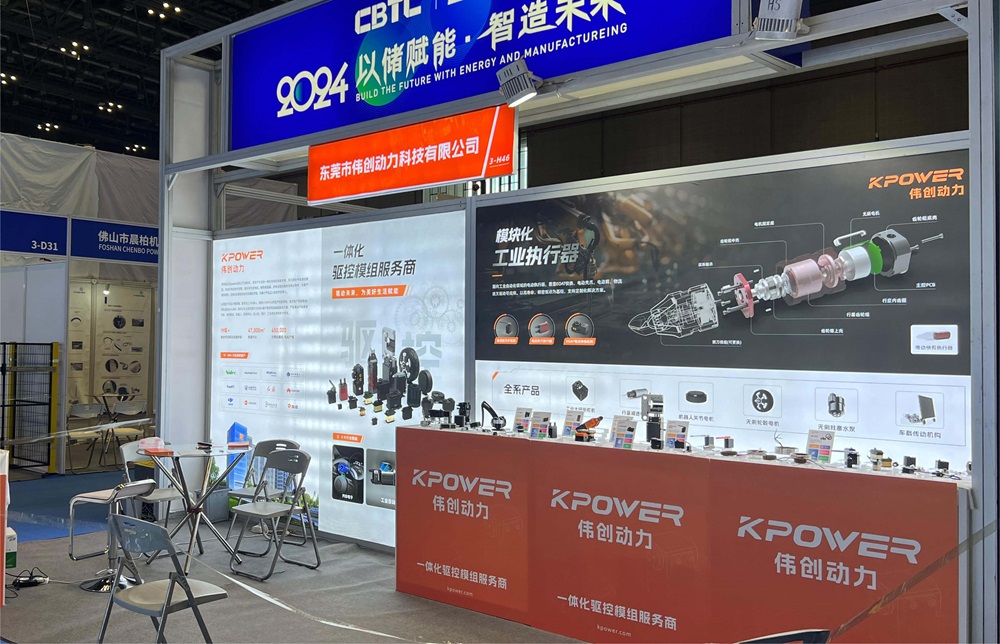
Established in 2005, Kpower has been dedicated to a professional compact motion unit manufacturer, headquartered in Dongguan, Guangdong Province, China. Leveraging innovations in modular drive technology, Kpower integrates high-performance motors, precision reducers, and multi-protocol control systems to provide efficient and customized smart drive system solutions. Kpower has delivered professional drive system solutions to over 500 enterprise clients globally with products covering various fields such as Smart Home Systems, Automatic Electronics, Robotics, Precision Agriculture, Drones, and Industrial Automation.
Update Time:2026-01-22

Contact Kpower's product specialist to recommend suitable motor or gearbox for your product.


